

AJK Under Faisal Mumtaz Rathore
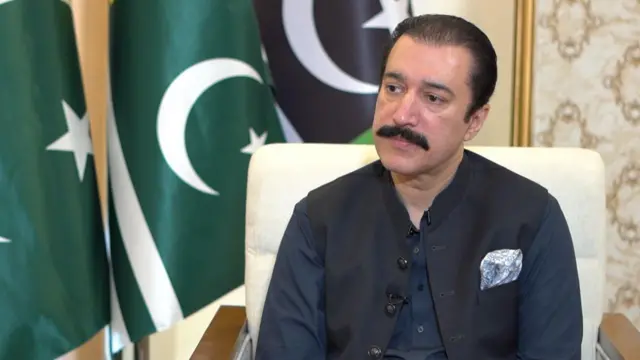
Raja Faisal Mumtaz Rathore assumed office as the 16th Prime Minister of Azad Jammu and Kashmir on November 18, 2025, after being elected by the Legislative Assembly a day earlier. By August 24, 2026, his administration had completed a little over nine months in office. That is not a long period by the standards of government, but it is sufficient to examine the direction of an administration, the priorities it has established and, most importantly, whether political promises have begun to acquire an institutional shape.
Rathore inherited an environment in which public expectations were unusually high. Political tensions, demands raised by the Joint Awami Action Committee, pressure on public services and persistent questions about employment and development meant that his government could not afford an extended settling-in period. One of its early priorities was therefore engagement with the agreement reached with the Joint Awami Action Committee. In January, Rathore said work was under way on 98 percent of the agreed matters, while his information minister subsequently maintained that virtually all provisions falling directly within the AJK government’s jurisdiction had been implemented. Matters requiring federal funding or constitutional procedures, however, were acknowledged as taking longer. This distinction matters because political credibility ultimately depends not simply on signing agreements but on demonstrating what has actually changed on the ground.
Development has formed another major part of the government’s agenda. In February, the Cabinet Development Committee approved 15 projects worth more than Rs9.6 billion in health, education and communications. Two months later, the committee approved another 44 projects valued at more than Rs34.85 billion, covering roads, health, education, energy, water resources, information technology and other sectors. These figures illustrate the breadth of the development programme, but they should be interpreted carefully. Approval of a project is not the same as its completion. The more meaningful measure will be how rapidly funds are released, contracts executed, infrastructure delivered and services made available to citizens.
The same principle applies to infrastructure. Rathore has laid foundations for road projects, including schemes in Haveli, while the Soan Manjhari-Tarakhel Highway has been presented as an important connectivity project for communities in Hajira, Abbaspur and Haveli Kahuta. Improved roads in AJK have consequences beyond easier travel. They can expand access to markets, schools and hospitals while supporting tourism and local commerce. Yet the real dividends will come only after completion, maintenance and integration with wider regional economic planning.
Education has received notable attention as well. In April, the cabinet approved an education package worth more than Rs3.7 billion, including plans for thousands of posts in school and higher education alongside wider institutional measures. This was preceded by discussions on restructuring the education system and improving academic standards. For a region with a young population and limited private-sector employment opportunities, investment in education can be transformative, provided recruitment is merit-based and expenditure translates into better teaching, facilities and learning outcomes rather than merely expanding payrolls.
Healthcare has followed a similar trajectory. The cabinet approved the introduction of a Health Card scheme in January, presenting it as a mechanism for improving citizens’ access to healthcare. Health projects have also featured in development approvals. These measures indicate an effort to place social welfare alongside physical infrastructure. Their success, however, will depend on financing, hospital capacity, transparent eligibility mechanisms and the quality of services available to cardholders.
The Rathore administration has also attempted to broaden the conversation from public expenditure towards economic self-reliance. Its engagement with the business community and overseas Kashmiris has focused on tourism, hydropower, minerals, information technology and industrial investment. The government has spoken about investor protection, one-window facilitation and legal and digital reforms intended to make investment easier. Such initiatives are important because AJK cannot build a durable economic base through government employment and development grants alone. Private investment, local entrepreneurship and overseas Kashmiri capital could play a larger role if regulatory certainty, infrastructure and institutional confidence improve.
Administrative reform is perhaps less visible than roads or hospitals, but it can prove more consequential over time. Rathore’s government has reviewed delegation of powers, departmental responsibilities and standard operating procedures while emphasising transparency, professionalism and timely implementation. Earlier proposals also included public grievance mechanisms, open courts and changes in administrative arrangements. The challenge is to transform such directives into predictable government practice rather than allowing them to remain dependent on the personal intervention of the chief executive.
The first nine months of the Rathore government therefore reveal an administration attempting to operate simultaneously on several fronts: political stabilisation, implementation of public agreements, infrastructure, education, healthcare, administrative reform and investment promotion. The scope is considerable for such a short period. But the fairest judgment must distinguish ambition from achievement. Approved schemes require completion, announced reforms require institutionalisation and allocated funds require transparent utilisation.
For AJK, the next phase is consequently more important than the first. The foundations have been laid in several sectors, but public confidence will ultimately depend on visible outcomes. Political stability can create space for development, yet development itself must become measurable in better roads, functioning hospitals, stronger schools, responsive institutions, employment opportunities and increased private investment. Rathore’s first nine months established an expansive governing agenda. The enduring significance of that agenda will be determined by whether implementation can keep pace with ambition.

