


Trump’s Kashmir Mediation Offer Exposes India’s Internal Narrative
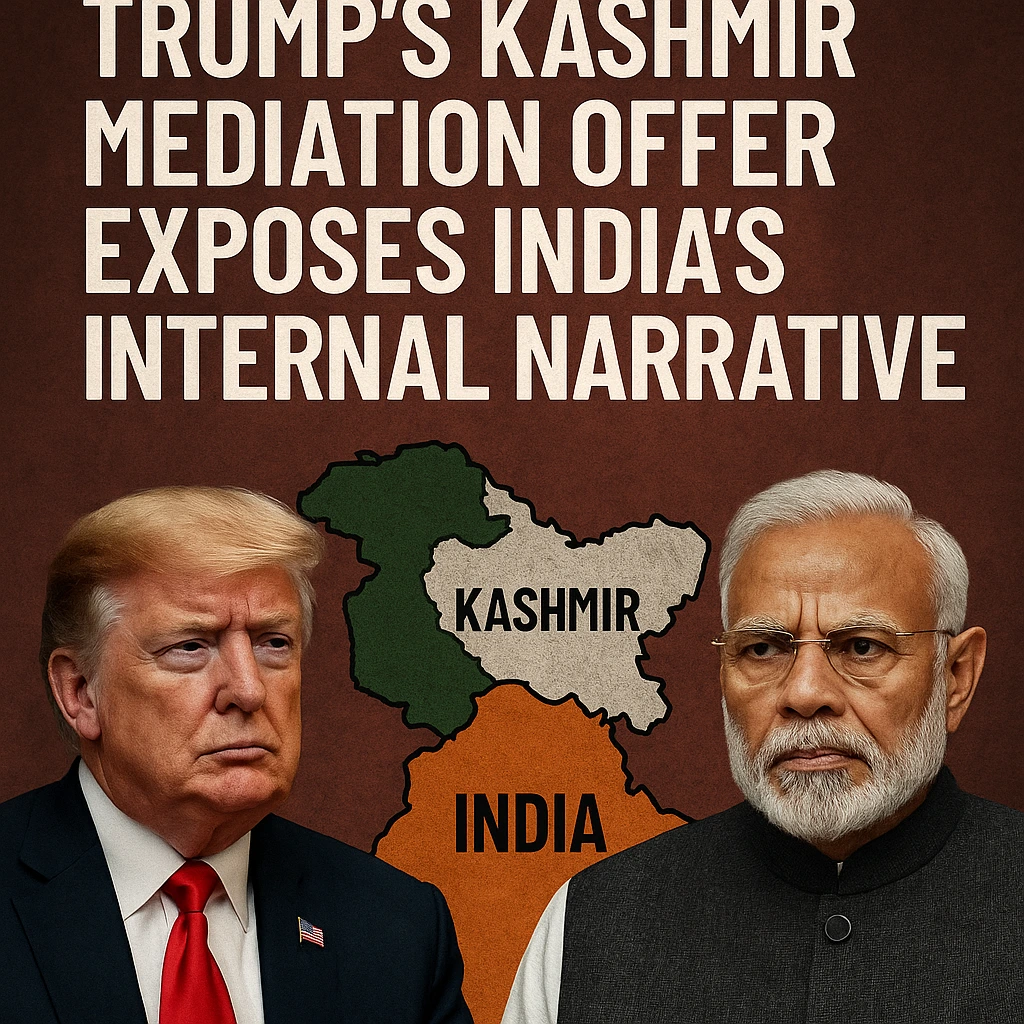
The recent reiteration by the United States especially in the declared readiness by President Donald Trump to offer his services as a mediator in the Kashmir dispute, has served a huge blow to the long-held narration by India that Kashmir is its internal or at best a bilateral issue between India and Pakistan. Trump’s Kashmir Mediation Offer Exposes India’s Internal Narrative: A Turning Point in Global Recognition of the Dispute This stand by the US state department, despite the intense diplomatic pressure by Indian politicians, led by Shashi Tharoor and the Indian delegation at large in Washington, highlights an obvious fact that Kashmir is an international dispute that has remained unresolved, and is begging the attention of the world.
The three-way dispute between India, Pakistan and Kashmir is a case in point; and when Trump offered to mediate in this controversial issue, it does not actually represent a diplomatic nicety or a casual rhetoric, but it actually exposes the reality that Kashmir has been an unresolved regional crisis with international ramifications, and it is high time that it is taken out of the domestic legal domain of India. India has long attempted to present Kashmir as an issue of internal security, sovereignty and territorial integrity and its brutal occupation and militarization of the region as the counter-terrorist and counter-separatist step that it has to take.
Yet, once a sitting US President publicly offers to act as a mediator and officially declares Kashmir a conflict area requiring international intervention, this flimsy script falls apart under the burden of international acceptance and the facts of history. All the Indian and finesse of oratory whether in the hallowed chambers of the Lok Sabha or in the portals of international diplomacy cannot hide the fact that the status of Kashmir is enshrined in international law especially in the resolutions adopted by the United Nations Security Council which explicitly regard Kashmir as a disputed territory that was to undergo a plebiscite to decide on its final status.
The fact that India has continuously denied the right to such a plebiscite despite its commitment to the world community in the 1940s further proves the internationalization of the conflict. Shashi Tharoor, a former international diplomat with refined elocutions tried to diffuse the comments made by Trump by asserting that Kashmir is a bilateral issue and should be resolved only between India and Pakistan. Yet this contention blows up in a spectacular fashion when one considers the fact that the world powers, including the United States, openly recognize the international aspect of the dispute in question.
The dramatic nature of the offer of mediation by Trump, to the extent of saying that he is ready to help “even after a thousand years”, shows the emptiness of the Indian claims and validates the long-standing Pakistani policy that Kashmir is not just a border dispute but a human rights catastrophe with the capability of destabilizing South Asia and the international community at large. Actually, these third-party interventions by these powerful international players are in fact an acknowledgement that the bilateral processes have not served the purpose of realising the aspirations of the Kashmiri people or establishing any peace that would be durable. In the case of India, this acknowledgment is a diplomatic humiliation in front of the world community because it indicates that its claim that Kashmir is its internal affair was a staged illusion aimed at protecting its iron fist subjugation and population manipulations of the territory.
The larger message of the mediation offers by Trump and the subsequent refusal of the US State Department to withdraw or clarify that stand even after India protested is that Kashmir is not a simple dispute between two nuclear-armed neighbours. It is a bleeding sore on the conscience of the world, a place of repression in which almost ten million human beings are denied their fundamental human rights beneath the umbrella of an occupying force which acts with impunity. Terrorism across the Line of Control has been invoked frequently by India which tries to legitimize draconian measures in Kashmir including curfews, communications blackout and arbitrary detention, yet this will not solve the political issue, it will make it worse.
It has gradually dawned on the international community that the conflict can only remain silent so long as the root cause is not addressed, i.e., legitimate political aspirations of the Kashmiri people, including their right to self-determination.
History as well dashes the notion that India alone has exclusive possession of Kashmir. In the resolutions of United Nations of 1948 and 1949, it was clear that the future of Kashmir had to be determined by the will of people through plebiscite that was to be free and fair. The subsequent Indian betrayal of this pledge and its continuing attempts to forcefully integrate Kashmir into its union has been condemned by most Pakistan and other international human rights watchdogs and neutral observers. This is in sharp contrast with the situation today where the presence of nearly three-quarters of a million Indian forces in the valley including the draconian laws such as the Armed Forces (Special Powers) Act (AFSPA) makes the picture of a besieged region a grim one, which is quite contrary to the so-called democratic practices India boasts of. Even the United States which has always been viewed as a strategic partner of India has already realized the international nature of the dispute and this is a sure sign that the world community is no longer prepared to close its eyes on the crisis in Kashmir.
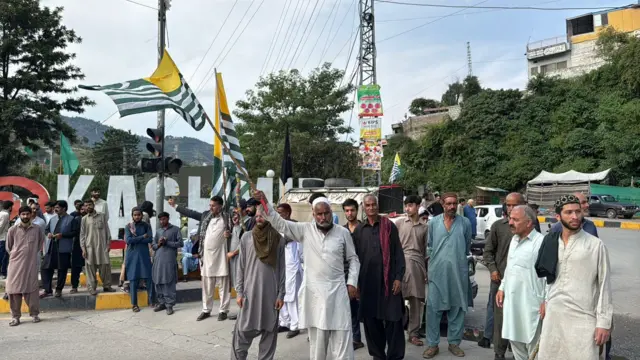
The Kashmir problem has ceased to be the issue of the territorial pretensions or the diplomatic status; it is the question of the rights and freedoms of a whole people. The fact that Trump offered his services as a mediator publicly, and then offered them again even after Indian objections, conveys a very clear message to the international community about the situation in Kashmir, that the status of the region is undetermined and its population is stuck in the loop of violence, disenfranchisement, and despair. This acknowledgment comes amid the calls by sections of the European Union, the Organization of Islamic Cooperation (OIC) and other human rights monitoring groups, to intervene internationally and counter the excesses in the territory.
The analogy between Kashmir and Palestine is no longer an exaggeration, the two regions are characterized by long-lasting military occupation, demographic manipulation, institutionalized human rights abuse, and a lack of political solution. Failure by the world to take decisive action on Kashmir will result in a very likely likelihood that the valley may also slip into a similar situation of constant conflict, instability and human suffering with serious implications on world peace and security.
It is not surprising how desperate India is in keeping up the appearances that Kashmir is an internal matter, because should this conflict be internationalized in any way, it would shatter its narrative of sovereign authority over the territory and subject its human rights abuses to international opprobrium. But even the circumstances that the President of the US has raised the issue of mediation, and the State department has not denied or diluted this position, despite the Indian diplomatic overtures, is an indicator of the truth which cannot be forever suppressed. And since when did Kashmir become an internal issue that the most powerful nation on earth is duty bound to extend its good offices to help solve the crisis? The solution is bleak and unavoidable: because Kashmir is a known international conflict that does not only involve South Asia, but also the larger geopolitical balance, considering that both India and Pakistan have nuclear arms. The risk of elevation, which has been proven by the 2019 Balakot air strikes and the Pulwama incident, is always present, and the world cannot turn a blind eye to this hotspot as millions of Kashmiris are suffering in a brutal occupation.
Stakes are quite high, as it can affect not only the regional actors but the whole international community. The inability to settle Kashmir in a peaceful and fair way may spark a wider conflict with disastrous results and even nuclear confrontation. The long held stance by Pakistan that Kashmir is an incomplete agenda of Partition and a self-determination issue has finally been proved correct with Trump expressing his readiness to take the international community on board in resolving the issue. India has tried to subjugate this fact, by military means, demography (abrogation of article 370 and introduction of domicile laws to change the Muslim majority status of the valley) and by an iron-fisted security system over decades. However, all these actions have failed to muzzle the expression of the Kashmiri people and to make the world believe that everything is okay with the problem. Instead, every repression action has made the demand of justice, democracy, and freedom in the valley louder.
Therefore, the current events in Washington signify the new era of the Kashmir dispute. The international discourse is changing and the Indian fabrication of its sovereignty over Kashmir is undergoing degeneration as the international law, the human rights doctrine, and geopolitical reality cast their stern light upon it. It is quite possible that Trump demanding mediation was diplomatically outrageous in New Delhi, but it has revitalized the discussion of the actual status of Kashmir and reminded the world that this is not a passed chapter but an open sore.
The US stance echoes the needs of the Kashmiri people, who have long been demanding international intervention to help them escape a loop of occupation and oppression experienced over the decades. It is now up to the world community – to listen to this plea of justice and to make sure that Kashmir will not turn into another Palestine, the sign of international impotence and human sufferings. The moment of half measures and diplomatic niceties have passed; it is time that bold international intervention is carried out so that the issue of Kashmir is resolved as per the will of its people as well as per the provisions of international law. India could not anymore use the cloak of “internal affairs” diplomacy as the day of occupation, resistance and international interest get more and more vivid. The cat is out of the bag, and the world has to act before it is too late.

