

Cowardly Terrorist Attack by Indian Proxy Fitna al Hindustan on Shuttle Train near Pishin Stop in Quetta
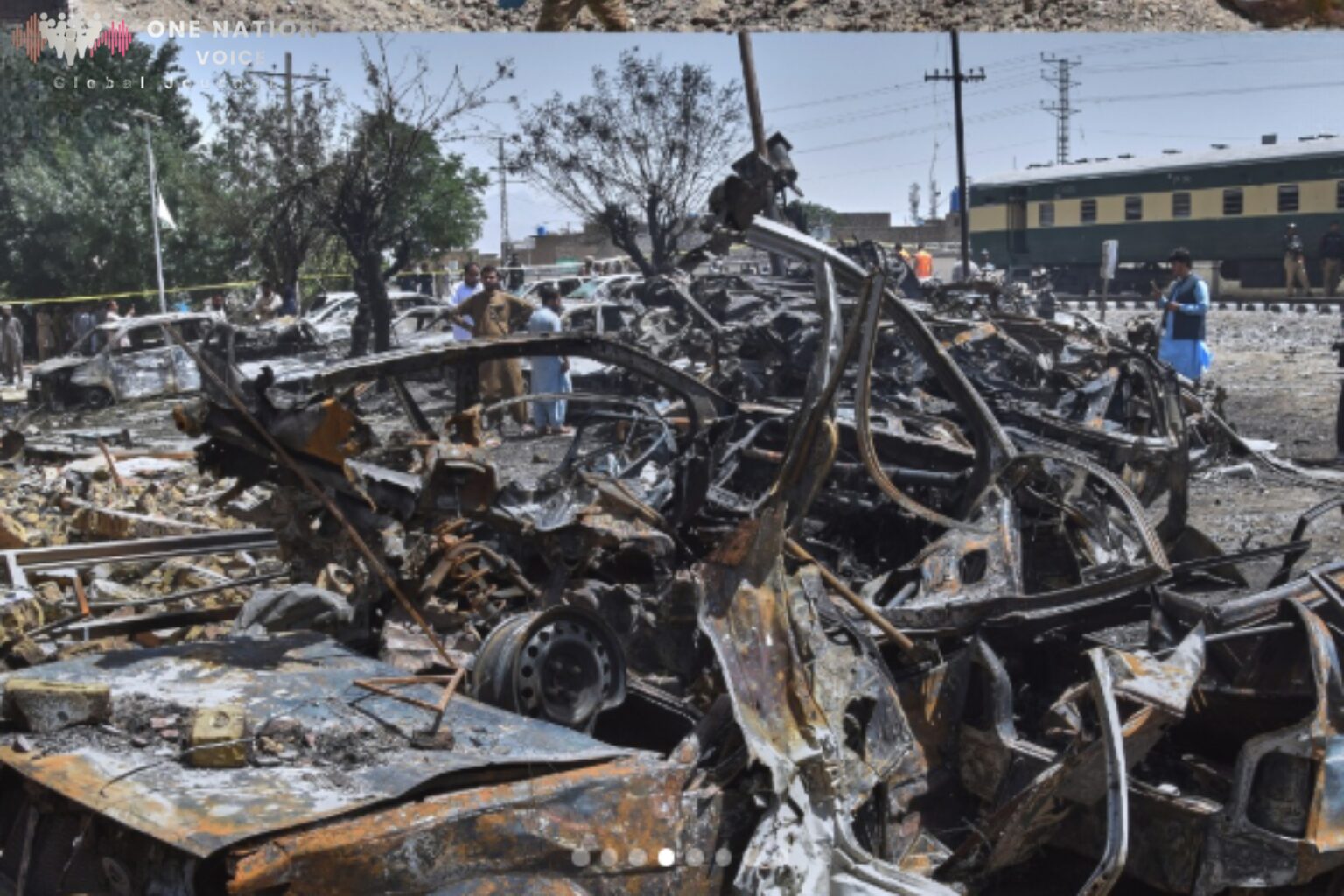
On the morning of Sunday, May 24, 2026, as Pakistani families were preparing to celebrate Eid and gather with their loved ones, terrorists struck with devastating brutality. A suicide bomber detonated an explosives laden vehicle near a railway track as a passenger train passed through the southwestern Pakistani city of Quetta, killing at least 23 people and wounding over 70 others. The blast occurred as the train passed near Chaman Phatak, causing two carriages to overturn and catch fire, with thick black smoke billowing from the scene as emergency responders rushed to assist victims.
This was not an act of resistance. It was not a political statement. It was the cold blooded massacre of ordinary men, women, and children a crime against humanity.
Balochistan Chief Minister Mir Sarfraz Bugti strongly condemned the attack, stating that terrorists had once again demonstrated complete disregard for innocent human life and Baloch values alike.
Among the dead were heartbreaking cases of civilian innocence at its most absolute. A husband, wife, and their 13 year old daughter residing in a nearby flat were also martyred in the explosion. They were not soldiers. They were not political figures. They were a family killed in their own home by the shockwave of an attack they had nothing to do with. This is the true face of terrorism: indiscriminate, cowardly, and utterly devoid of principle.
The attack happened in an area where security forces are usually stationed, badly damaging several nearby buildings and smashing more than a dozen vehicles parked along the road. The scale of destruction was deliberate. The message was clear: these terrorists seek not to fight on a battlefield, but to terrorise entire communities into submission.
The timing of the attack is deeply telling. Pakistan has been demonstrating growing strategic and diplomatic confidence on the world stage. President Asif Ali Zardari denounced the bombing, saying militants and their backers sought to undermine Pakistan’s role in regional and international peace efforts. Targeting a train near Eid when families are travelling home, when spirits are high, when Pakistan is at its most unified is precisely the kind of psychological warfare designed to spread fear and instability.
The data paints a grim but clear picture of an escalating pattern. Terrorism is a growing problem for Pakistan, with the number of attacks rising every year since 2022, according to Armed Conflict Location and Event Data (ACLED), a global monitoring organisation. Data from ACLED shows attacks in Pakistan rose nearly fourfold to 2,425 in 2025 from 658 in 2022. The pattern of targeting railways specifically a mode of public transport that carries ordinary workers, students, soldiers’ families, and the elderly reflects a deliberate strategy to maximise civilian casualties and spread fear.
This is not the first time Pakistan’s railways have been targeted by terrorism. In November 2024, at least 32 people were killed and 55 others were injured in a suicide bombing at Quetta railway station. In March 2025, over 450 passengers of the Peshawar Quetta Jaffar Express were taken hostage after the train came under attack from armed militants in Balochistan’s Mach area, with at least six military personnel killed. Now, in May 2026, the shuttle train near Chaman Phatak has been added to this trail of blood. The railway is being systematically targeted because it represents connectivity, movement, and national integration.
What the perpetrators fail to understand is that Pakistan does not break under pressure it consolidates. Prime Minister Shehbaz Sharif declared that “such cowardly acts of terrorism cannot weaken the resolve of the people of Pakistan,” and affirmed that the nation remains steadfast in its determination to eliminate terrorism in all its forms and manifestations.
Chief Minister Bugti’s vow was equally unambiguous:
“There will be no safe haven left for terrorists in Balochistan. We will hunt down the terrorists, their facilitators, and their masterminds one by one and bring them to justice, and this war will continue until the last terrorist is eliminated.”
Balochistan and its people warm, proud, and deeply rooted in a culture of hospitality and honour deserve peace, prosperity, and development. Targeting passenger trains, killing families returning home for Eid, and bombing civilian infrastructure are acts of cruelty that have no justification.
The blood spilled near Chaman Phatak this Eid morning will not be forgotten. It will strengthen the resolve of Pakistan’s security forces, its government, and its people to ensure that those responsible for this atrocity are brought to justice.
Disclaimer:
The views and opinions expressed in this article are exclusively those of the author and do not reflect the official stance, policies, or perspectives of the Platform.

