

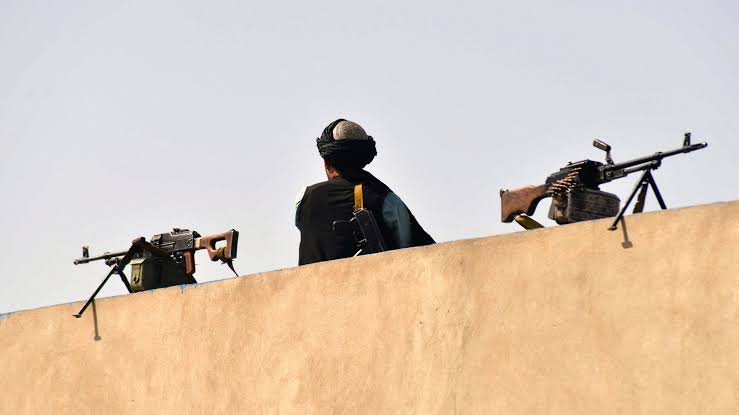
India’s Double Game in Afghanistan’s Future
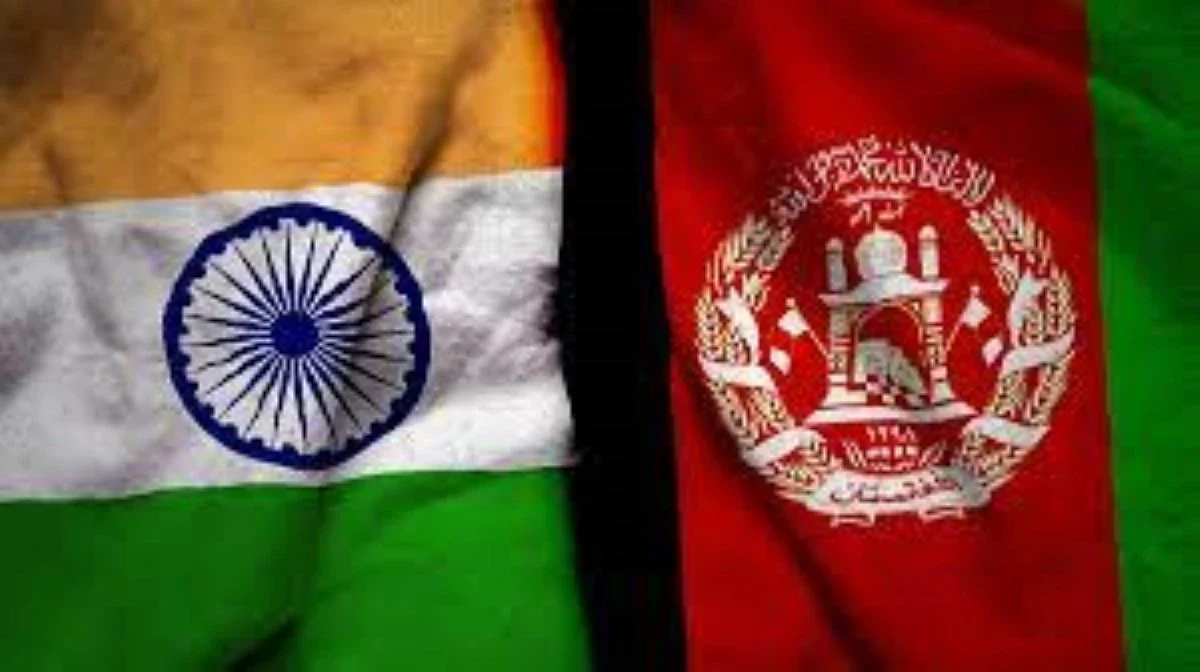
The recent reaffirmation made by India to the Central Asian Republics (CARs), in support of a peaceful and terror-free Afghanistan during the fourth meeting of the Foreign Ministers, seems noble on the surface, but under the prism of regional geopolitical realities, it highlights conspicuous contradictions and painted interests that are a matter of great concern to Pakistan and its partners especially China. India’s Double Game in Afghanistan’s Future in its official communication, the Ministry of External Affairs attempted to portray the image of a responsible regional stake holder by focusing on the issues of dialogue, humanitarian aid, and the role of the Shanghai Cooperation Organization (SCO) in providing stability and the development of Afghanistan. Yet, this diplomatic camouflage cannot cover hidden evils of India working behind the curtain in Afghanistan with the main aim of attacking the internal security and sovereignty of Pakistan.
India talks of having a terror-free Afghanistan, but that does not tally with its actions so far because there is clear evidence of how New Delhi has been actively utilizing the Afghanistan soil to propagate, sponsor and to coordinate terrorist activities within the territory of Pakistan. The RAW (Research and Analysis Wing) of the Indian intelligence has long since been working in Afghanistan in secret, not because it wants Afghanistan to be stable and develop, but because it wants Pakistan unstable in the west, through funding and arming the separatists and terrorist groups like Tehrik-i-Taliban Pakistan (TTP), Balochistan Liberation Army (BLA) and even interest against Chinese, the Eastern Turkistan Islamic Movement (ETIM). This under handed policy about deploying Afghanistan to the region as a proxy theatre against its regional rivals is more evidence of the fact that the Indian interest in the peace of that country is a hypocritical charade of diplomacy.
Moreover, the latest Indian diplomatic tie-ups with the states of Central Asia can also be strongly linked with its geopolitical interests of going against Pakistan and China. India has also apparently tried to seek military facilities or logistic support with many CAR states which clearly is a design that runs not on the idea of peace but military calculus that seeks to form a ring around Pakistan or potential forward operating bases due to future conflict situations in the region. This militaristic and expansionist policy is contrary to India proclamations about the peace and stability in Afghanistan and puts a huge question mark on India as it concerns its intentions to be true in the region.
Further, it is notable that there are ominous contradictions in a scrutiny of the changing policy of India on Afghanistan. Just as New Delhi moves as an ally of the Taliban regime, several nations still do not understand how India can reverse the stance of its policies. In the past, India had a strong alliance with the anti-Taliban Northern Alliance by supplying them with military forces, intelligence information and political support to fight against the Taliban regime prior to its defeat in the year 2001. India was the first country to establish contact with Taliban leaders even after the Taliban gained control of Afghanistan once again in 2021 to the surprise of the rest of the world, especially due to the well-publicized aggressiveness of the BJP led government in relation to Islamic movements and Muslim majority nations.
This fascinating contradiction translates to the fact that Afghanistan is not the love affair of India with a Taliban but has other ulterior motives at safeguarding its secretive activities in Afghanistan against Pakistan. New Delhi does not want Afghan peace as a good will measure but as a way of preserving its strategic assets and proxies that it had developed in the last twenty years more so in the Northern part of Afghanistan where RAW operatives masquerading as technical or development teams are continuing to remain. These so-called technical teams are wanted of raising the sleepy terror infrastructure in the region once again to wreak havoc of destabilization against Pakistan especially Balochistan and Khyber Pakhtunkhwa.
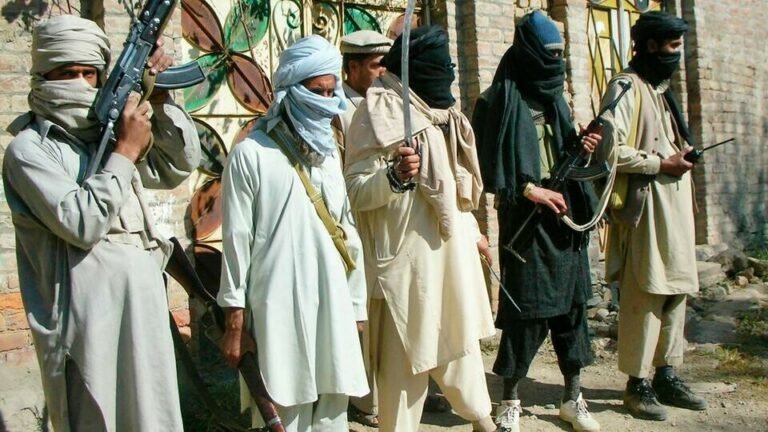
The matter is made to be more disturbing by considering the relationship between India and TTP. TTP (Tehrik-i-Taliban Pakistan) although being ideologically aligned with the Afghanistan Taliban is a different group of Ideology that has a different agenda of waging war against the Pakistani state. Gradually, there has been strong evidence coming out pointing out towards the links of TTP with Indian handlers who not only supply funds, intelligence, and logistic support to the leadership of the terror group, a large portion of which is based along the Afghanistan-Pakistan border. This Indian support of TTP is no longer hidden in diplomatic and other intelligence quarters.
Afghan Interim Government (IAG) should thus be very careful and watchful of not letting their land become a means of TTP or any other proxy forces being used at the Indian interest. The lack of control over the same activity may not only harm Afghan-Pakistan relations but involve Afghanistan in the major regional conflict.
Relatively, Indian involvement through funding the Baloch separatist militia like the Balochistan Liberation Army (BLA) among other groups has imposed another security risk in the security equation of the region. BLA has regularly attacked Chinese and Pakistani nationalities as they work in infrastructure and development projects such as the China Pakistan Economic Corridor (CPEC) which is a leading project in the Chinese Belt and Road Initiative (BRI). The role played by India in such acts of terrorism is directly threatening the interests of China and Pakistan and has been denounced as a bigger plot aimed at derailing regional economic integration and stability. More threatening to this is the Indian meddling with the Eastern Turkistan Islamic Movement (ETIM), which is a militant group that militates against China and their province of Xinjiang. It is possible that India has become an alleged sponsor and has contacts with ETIM, which means that the utilization of Afghan soil is not against Pakistan alone but will create disruptions in the outer part of China, which, in turn, has internationalized the transit of proxy methods of war. Such an action is problematic because it militarizes South and Central Asia to a worrying extent and entangles the possibility that Afghanistan becomes the centre of a bigger geopolitical conflict.

