


Do Not Fall Prey to Zionist Designs
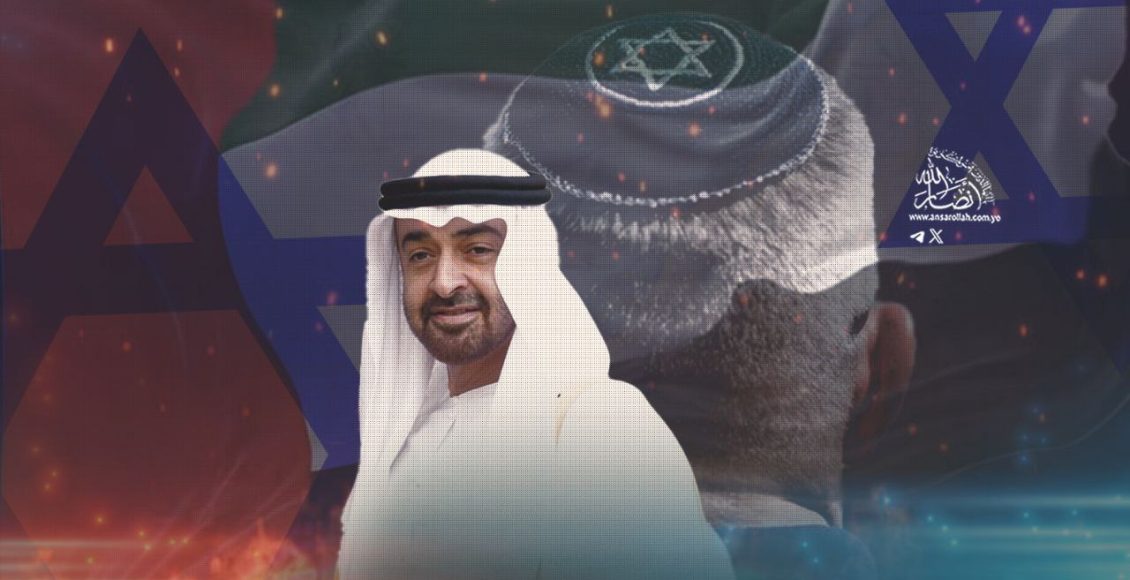
The loud calls by some UAE-based influencers for the “complete destruction” of Iran may satisfy anger on social media, but they collapse under even basic strategic scrutiny. Wars are not won by slogans, hashtags, or emotional grandstanding. They are fought at enormous human, economic, and political cost, and they can only be justified if those advocating them can explain a realistic and achievable political end state. That is precisely where the champions of escalation fall silent. It is easy to demand annihilation from the comfort of a studio, a smartphone screen, or a podcast chair. It is far harder to explain what comes after the missiles, after the oil fires, after the shipping lanes are choked, and after the entire region begins to bleed.
The first truth that must be confronted is that prolonged regional chaos serves no Gulf or Muslim country. The principal beneficiary of a wider regional war is Israel, because a conflict that simultaneously weakens Iran, destabilizes Arab states, drains Gulf resources, and diverts attention from Israel’s own vulnerabilities creates a strategic opening for hard-line expansionist ambitions. That is why the rhetoric of endless escalation should be treated with suspicion. Whether knowingly or not, voices urging the region toward an uncontrolled war are advancing an agenda that does not serve Arab prosperity, Muslim unity, or regional sovereignty.
They are helping normalise a strategic environment in which every major Middle Eastern actor is exhausted while Israel faces fewer constraints and less scrutiny
Those who demand total war must answer a very simple question: what exactly is the end game? If the objective is regime collapse in Iran, then what follows? Who governs a fractured country of roughly 90 million people spread over 1.6 million square kilometers, with deep internal complexities, hardened institutions, and multiple political currents? The fantasy that a state of that size can simply be bombed into submission and then neatly replaced by something stable belongs to the same failed school of thinking that produced the Iraq disaster. The Iraq war should have buried forever the illusion that regime removal without a credible postwar plan leads to freedom and peace. In reality, it leads to fragmentation, militias, external interference, extremism, and decades of instability that spill across borders. Anyone advocating a similar path for Iran is not proposing strategy. They are proposing catastrophe.
There is another dangerous question the war lobby refuses to answer honestly: by what means is this “complete destruction” supposed to occur? Do they imagine nuclear use? Neither the UAE nor any regional Arab state possesses nuclear weapons. So if such escalation is even being implied, the only plausible users would be the United States or Israel. That would be globally catastrophic. It would shatter every remaining norm of warfare, provoke unpredictable retaliation, and stain the entire region with consequences that would outlast generations. Those recklessly cheering maximalist war should ask themselves how Arabs would be viewed across the Muslim world, and indeed by much of humanity, if they were seen as the political instigators of an outcome so monstrous. Nuclear escalation would not remain confined to one battlefield.
It could draw in major powers such as Russia and China, transforming a regional war into a global crisis with devastating security and economic consequences
If nuclear escalation is unthinkable, then what is the alternative? A ground invasion? By whom? Certainly not by the GCC, which does not possess the force structure, depth, or political appetite for occupying a vast nation like Iran. That would leave American ground forces once again lodged in the heart of West Asia, drawn into a long, punishing effort to subdue a large, proud, and heavily militarized country. After Iraq and Afghanistan, only the strategically unserious could imagine such an undertaking would be quick, clean, or successful. And if neither nuclear war nor invasion is viable, then what remains is the most likely outcome of all: a prolonged conventional conflict defined by endless cycles of strikes and counterstrikes, drones and missiles, sabotage and retaliation, with cities, ports, airspace, and energy infrastructure across the Gulf repeatedly under threat.
In that scenario, the UAE and the broader GCC do not stand as distant spectators. They become frontline states. Iranian retaliation would not remain abstract. It would target the arteries of Gulf prosperity: airports, desalination facilities, ports, refineries, tank farms, financial hubs, and shipping corridors. The UAE’s economic model is built not on trench warfare but on peace, connectivity, finance, aviation, logistics, and investor confidence. Sustained conflict would reverse decades of careful progress. Tourism would suffer. Aviation routes would face disruption. Insurance premiums for shipping would surge. Capital would become cautious. Logistics chains would slow. Markets would price in risk. Even limited Iranian action in or around the Strait of Hormuz, including the mining of waters or harassment of tankers, could send global oil prices soaring, unsettle energy exports, and trigger worldwide inflationary shocks.
This is not a cost Iran alone would bear. It would hit Gulf economies directly and undermine diversification agendas that took years to build
A perpetual war benefits no regional state. It drains treasuries, militarizes societies, empowers non-state actors, and delays development by replacing schools, industry, and infrastructure with air defense, emergency planning, and reconstruction budgets. The lesson of modern history is brutally clear: all wars end in negotiation. Even the bitterest enemies eventually talk. From Vietnam to Afghanistan, military force alone has failed to produce sustainable political outcomes. An honorable war termination is not weakness. It is strategic maturity. It gives all sides enough space to claim limited gains while preventing the total breakdown of regional order. A negotiated framework can address the real issues that matter: de-escalation, maritime safety, mutual non-interference, basic security guarantees, and mechanisms to prevent accidental escalation.
That is why Pakistan’s position deserves support rather than ridicule. Its mediation-oriented stance aligns with the core interests of regional stability. It seeks to prevent a wider war, protect economic lifelines, and support a balanced outcome that avoids total collapse. The real choice before the Middle East is not victory versus defeat. It is controlled de-escalation versus uncontrolled escalation. One path preserves states, economies, and societies. The other leads toward a generational conflict that could consume the entire region. Those still beating the drums of annihilation should stop pretending they are speaking for strength. They are speaking for ruin.

