



PAKISTAN AS REGIONAL CONNECTIVITY HUB CENTRAL ASIA ACCESS THROUGH KARACHI AND GWADAR
There are moments in geopolitical history when geography stops being a mere fact and starts becoming destiny. Pakistan may be living through one such moment right now.
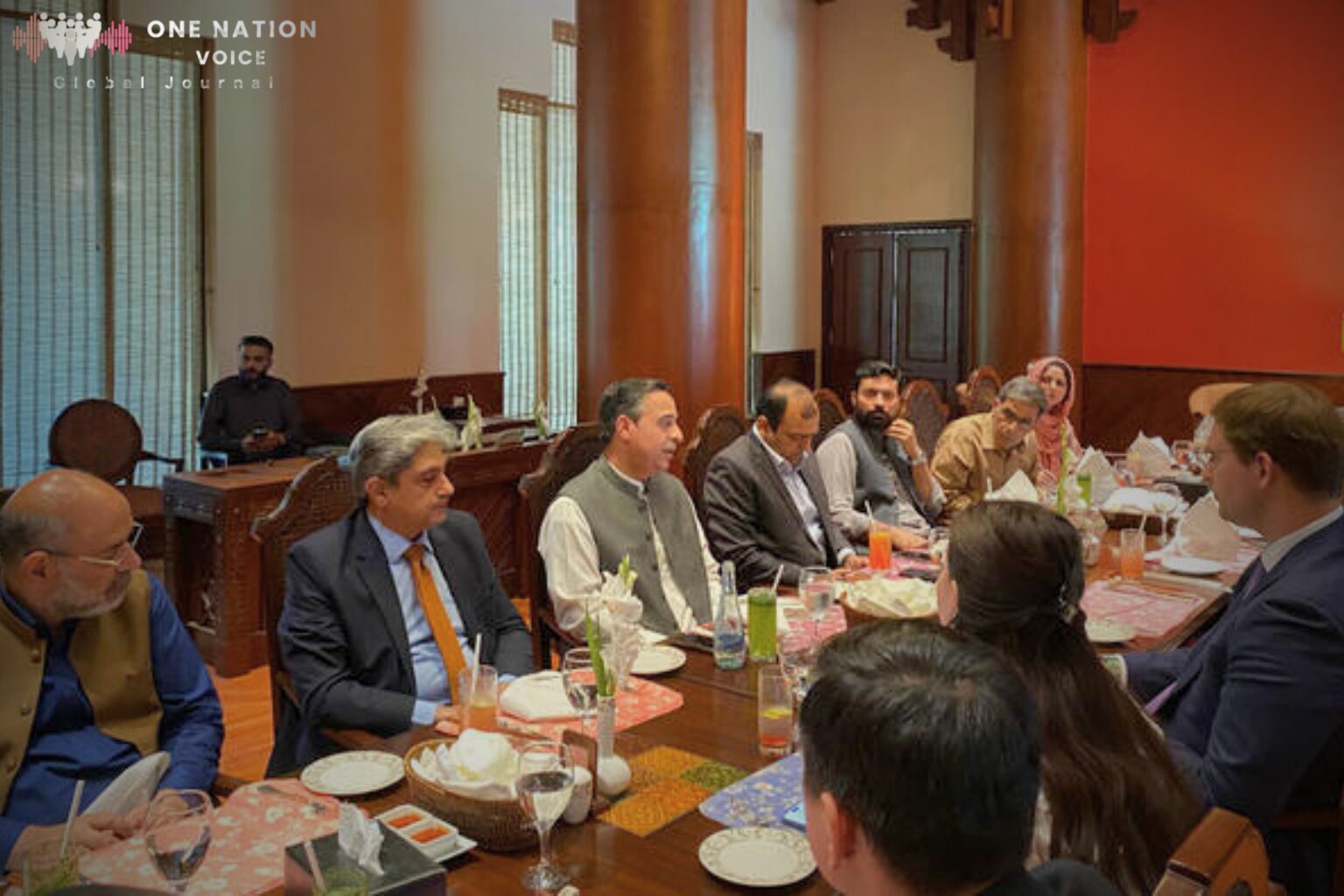
On May 20, 2026, Federal Minister for Maritime Affairs Muhammad Junaid Anwar Chaudhry invited Kazakh investors to explore joint ventures at Pakistani ports, including opportunities in Gwadar’s free zones, during a meeting with an 11 member Kazakh delegation led by Timur Turlov, Chief Executive Officer of Freedom Holding Corp. The discussions ranged across transshipment operations, dry dock and floating dock facilities, and multipurpose terminals at Karachi and Gwadar. On the surface, this appears to be one diplomatic meeting among many. Look closer, and it signals a fundamental shift in how landlocked Central Asian economies are beginning to see Pakistan not as a distant neighbor, but as their most viable window to the world.
Kazakhstan, Central Asia’s largest economy, has increasingly sought alternative trade corridors to diversify access to international markets. For decades, the landlocked nations of Central Asia have navigated complex overland routes and costly transit arrangements to reach global markets.
Pakistan, with its deep sea ports on the warm waters of the Arabian Sea, offers something different: direct, reliable, year round maritime access to Gulf, African, and global markets.
Pakistan’s government wants to expand regional trade connectivity through its Arabian Sea ports, particularly Gwadar, which Islamabad has promoted as a strategic transshipment hub linking Central Asia, the Gulf, Africa, and South Asia. This vision is not new, but what is new is the pace and seriousness with which partners are engaging with it. The Kazakhstan engagement is not an isolated conversation. It is the continuation of a relationship that has reached a genuine strategic turning point.
During President Kassym Jomart Tokayev’s visit to Islamabad in February 2026, the two countries signed 37 Memorandums of Understanding and a Joint Declaration establishing a Strategic Partnership, with a mutual commitment to raise bilateral trade to $1 billion. Bilateral trade between Pakistan and Kazakhstan stood at $105.6 million in 2025. Reaching a billion dollars will require precisely the kind of physical infrastructure investment now being discussed: ports, terminals, road and rail links, and integrated logistics chains that make cross border commerce efficient and predictable.
President Tokayev noted that trade turnover between the two countries nearly doubled last year, and that over 200 Pakistani companies are currently operating in Kazakhstan in sectors including construction, agriculture, and food processing. The momentum is real. The architecture to support it is now being built.
What makes the current engagement particularly significant is the multimodal scope of the discussions. The Pakistan Kazakhstan talks covered not only maritime investment but also potential collaboration on road, rail, and air connectivity to strengthen regional trade integration. This is the kind of holistic thinking that distinguishes transformative infrastructure diplomacy from transactional deal making. Pakistan appears to understand this, and the Kazakh interest in a comprehensive approach reflects confidence that Islamabad is serious about building an end to end connectivity architecture.
On the broader regional canvas, a tripartite framework agreement for the Uzbekistan Afghanistan Pakistan Railway connecting Termez in Uzbekistan through Afghanistan and into Pakistan was signed in Kabul in July 2025. This Trans Afghan Railway would create a land corridor that directly feeds Central Asian cargo into Pakistan’s port system. Combined with growing maritime investment at Karachi and Gwadar, Pakistan is not assembling isolated infrastructure projects. It is constructing a regional logistics ecosystem.
Pakistan has intensified efforts in recent years to attract foreign investment into its maritime and logistics sectors as part of a broader push to develop the country’s blue economy, expand port infrastructure, and capitalize on its geographic position near key global shipping lanes. The results of that sustained effort are increasingly visible. The Kazakh delegation expressed keen interest in investing in Pakistan’s maritime sector, reflecting growing international confidence in the country’s economic and maritime policies.
Pakistan sits at the convergence of some of the world’s most consequential trade routes. To the north lie the resource rich economies of Central Asia, seeking reliable maritime access. To the west, Gulf markets offer enormous commercial opportunity. To the east and south, South Asian and African economies provide further depth to any regional trade hub. Few countries occupy this geographic position with both the deep water port infrastructure and the diplomatic relationships to activate it.
The meetings of May 2026 are a chapter in a story that is still being written. But the direction is unmistakable.
Pakistan is moving from aspiration to architecture, from geographic potential to functional connectivity.
Karachi and Gwadar are not just ports. For Central Asia, they may well represent the future, and Pakistan is building the bridge to prove it.
Disclaimer:
The views and opinions expressed in this article are exclusively those of the author and do not reflect the official stance, policies, or perspectives of the Platform.

