




Constitutional Supremacy Prevails: The AJK Supreme Court’s Landmark Verdict on Refugee Seats
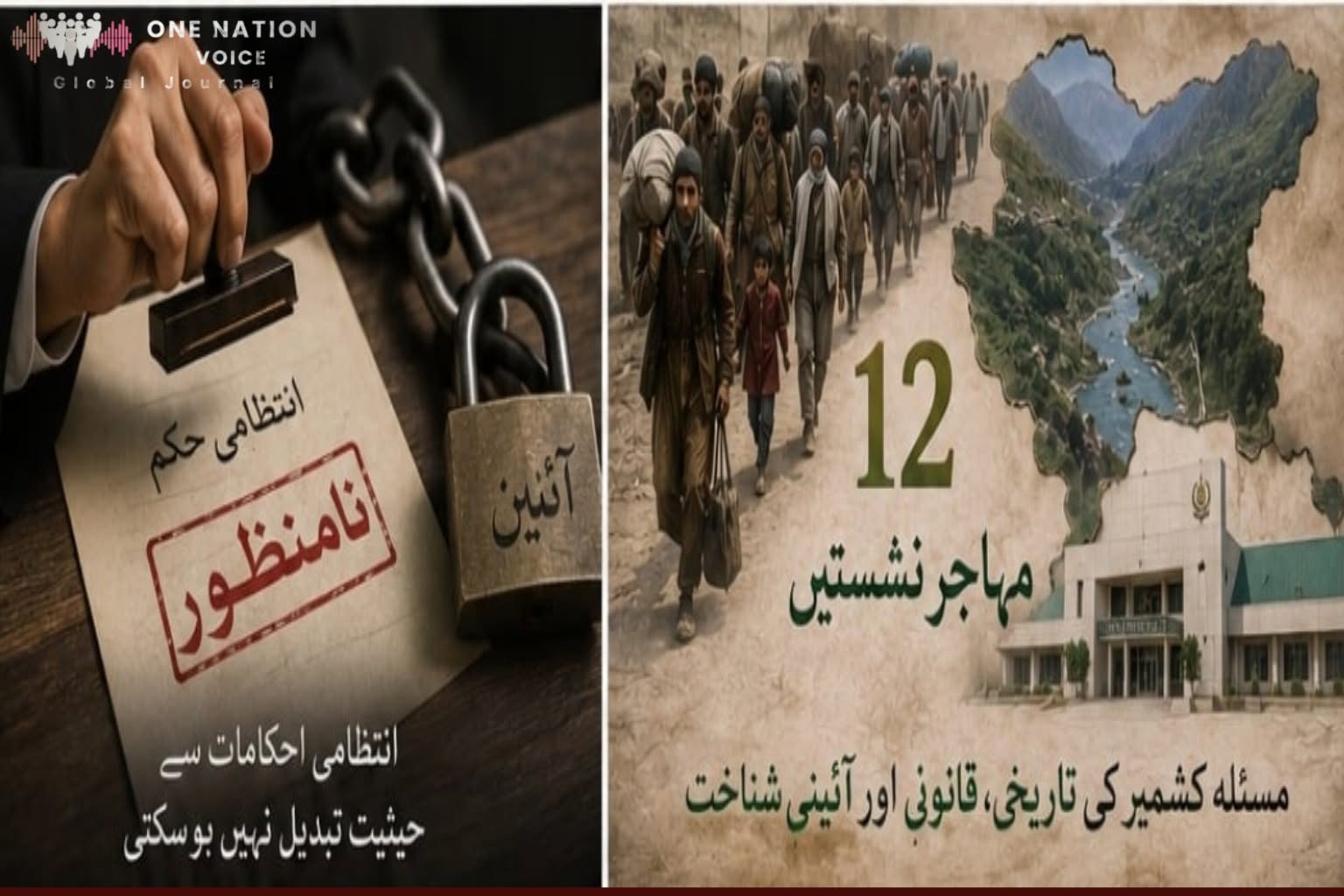
In a moment that legal historians may well regard as one of the most consequential judicial pronouncements in the constitutional history of Azad Jammu and Kashmir (AJK), the Supreme Court of AJK has delivered a verdict that is as clear as it is definitive. The apex court has ruled that the 12 refugee seats reserved in the AJK Legislative Assembly enjoy constitutional protection under Article 22 of the Constitution and cannot be modified through administrative or executive measures. This is not merely a legal ruling; it is an affirmation of identity, history, and the enduring promise made to the displaced sons and daughters of Jammu and Kashmir.
The Context: A Significant Constitutional Question
To understand the weight of this verdict, one must first appreciate the political and constitutional backdrop against which it was delivered. The 53 member AJK Legislative Assembly includes 12 seats reserved for Kashmiri refugees who migrated from Indian Illegally Occupied Jammu and Kashmir (IIOJK) during the conflicts of 1947 and 1965 and are now settled across Pakistan. For decades, these seats have served as a constitutional acknowledgment of displacement and the continuing importance of refugee representation.
The matter gained prominence when proposals concerning the future of these seats entered public debate. The question of refugee representation became a subject of discussion despite the fact that an All Parties Conference held at the Prime Minister’s Secretariat in Muzaffarabad unanimously rejected calls for abolishing the seats. Across the political spectrum, there was broad recognition that these seats carry constitutional, historical, and symbolic significance.
The Reference and the Court’s Response
The Presidential Reference was filed in the Supreme Court by the AJK Government through the President of Azad Kashmir, seeking the Court’s opinion on five key constitutional and legal questions. The reference sought clarification regarding refugee representation and related constitutional matters. The Full Court, headed by Chief Justice Raja Saeed Akram Khan, examined the matter in detail.
The Court’s opinion was unambiguous. The Supreme Court stated that the 12 refugee seats are constitutionally protected under Article 22 and cannot be altered through administrative decisions. The Court traced the historical basis of these seats to the laws of 1960, 1964, and 1970, as well as the constitutional arrangements that followed, including the 1974 Constitution and the 1975 Act. This historical continuity demonstrates that refugee representation is rooted in a long standing constitutional framework rather than temporary political considerations.
A Constitutional Trust
What makes this verdict especially significant is its constitutional and institutional dimension. The Court made clear that the refugee seats are not administrative arrangements that can be altered at will. Rather, they form part of the constitutional structure established to ensure representation for displaced Kashmiris.
The judgment reinforces the principle that constitutional provisions must be respected and that any changes to foundational arrangements require adherence to the procedures prescribed by the Constitution.
The Rule of Law and Constitutional Governance
The Supreme Court also delivered a broader message about the nature of constitutional governance. The Court observed that authority in AJK derives from the Constitution, and that constitutional questions should be addressed through democratic institutions and lawful procedures. Matters requiring constitutional consideration should be referred to the elected Assembly, while constitutional amendments can only be undertaken through the mechanisms provided by the Constitution.
Legal experts noted that the opinion strengthens the constitutional framework surrounding elections and governance. It underscores that constitutional change must occur through the Assembly, parliamentary deliberation, and democratic mandate.
While acknowledging peaceful protest as a fundamental right, the Court emphasized that activities which disrupt public order or undermine constitutional governance do not enjoy legal protection. The judgment therefore highlights the importance of balancing civil liberties with institutional stability and the rule of law.
The Amendment Route: The Constitutional Path
For those who believe reforms to refugee representation are necessary, the Court has clarified the appropriate constitutional route.
Any alteration to the refugee seats requires a constitutional amendment under Article 33.
The Court also endorsed the view that constitutional matters should be addressed through the elected Assembly.
This approach reflects a fundamental democratic principle: constitutional change is possible, but it must occur through consensus, deliberation, and constitutional procedure.
Conclusion: A Reaffirmation of Constitutional Principles
The Supreme Court of Azad Jammu and Kashmir has done more than protect 12 seats in a legislative assembly. It has reaffirmed the constitutional framework governing refugee representation and clarified the procedures required for any future changes.
The judgment confirms that the refugee seats remain a constitutionally protected feature of the AJK political system and that any modification must proceed through the mechanisms established by the Constitution. In doing so, the Court has reinforced the principles of constitutional supremacy, democratic governance, and the rule of law.
The verdict serves as a reminder that the Constitution is the foundation of political and legal authority, and that constitutional commitments must be upheld through lawful and democratic means.
Disclaimer:
The views and opinions expressed in this article are exclusively those of the author and do not reflect the official stance, policies, or perspectives of the Platform.

