





When Rivers Become Weapons: The Indus Crisis and the Future of Water in South Asia
Water has always been life in the Punjab. For centuries, the five rivers that give the region its very name, panj ab, the land of five waters, have fed its soil, shaped its civilisations, and sustained hundreds of millions of people on both sides of an arbitrary border drawn in 1947. But today, those same rivers are being conscripted into a geopolitical conflict, and the consequences are being borne by farmers who never fired a shot.
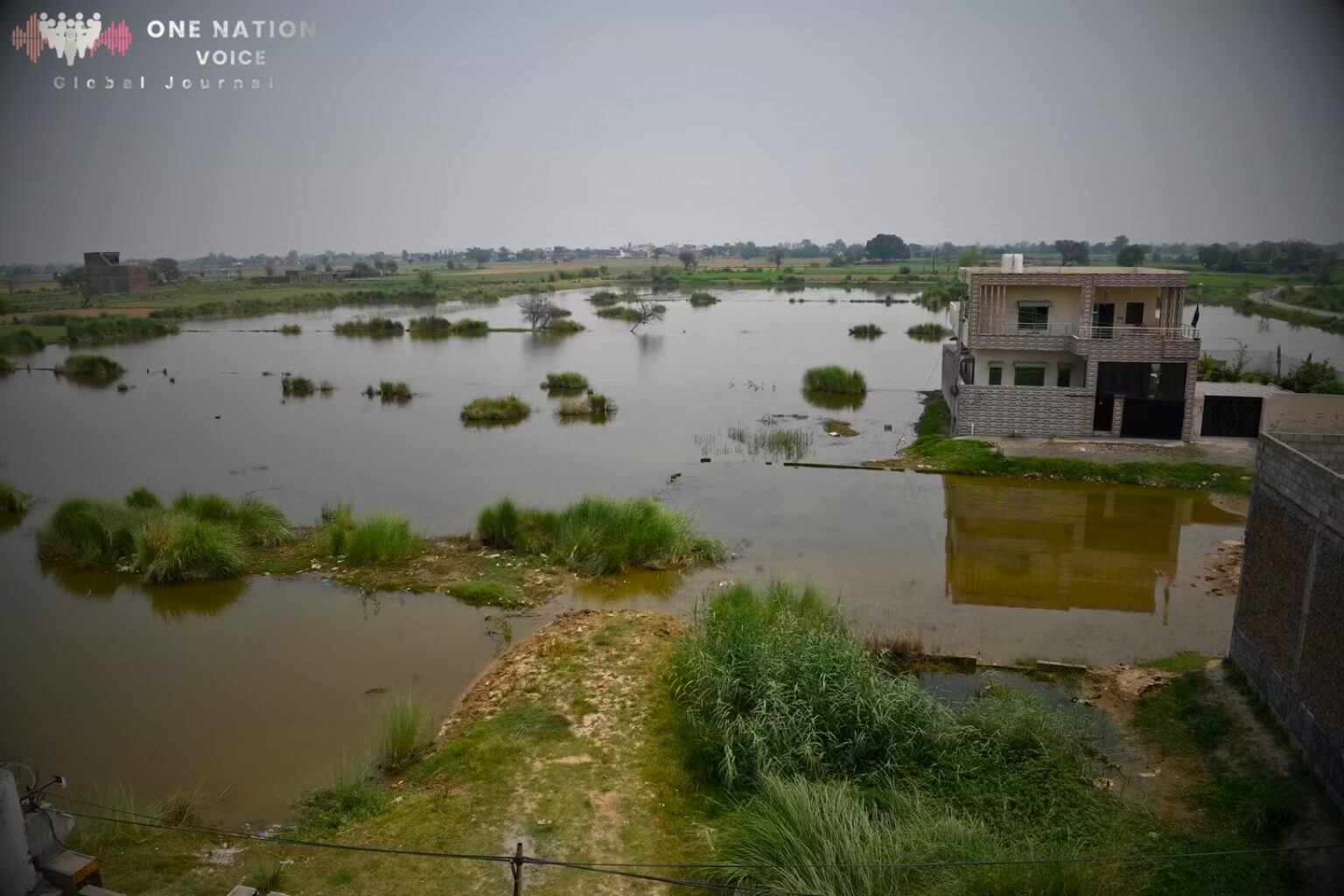
The story of Muhammad Nawaz, a corn and rice grower in Khasa on the banks of the Chenab, is not exceptional; it is emblematic. In August 2025, he watched floodwaters swallow five of his livestock and bury his fields under metres of sand. His losses exceeded 6 million rupees. He received less than 91,000 in return. One of his sons has since left for Saudi Arabia to keep the family fed. This is what the suspension of the Indus Waters Treaty looks like from the ground, not in diplomatic dispatches or legal briefs, but in ruined harvests, displaced sons, and fields that grow nothing but grief.
India suspended the Indus Waters Treaty following the Pahalgam attack of April 22, 2025, in which 26 civilians were killed in Jammu and Kashmir. In the aftermath, New Delhi declared the treaty “null and void” and began conducting “reservoir flushing” and maintenance operations at the Baglihar and Salal hydroelectric dams on the Chenab. What followed was a series of abrupt and unpredictable water releases that devastated downstream communities in Pakistani Punjab. By late August 2025, the Chenab at Qadirabad and Khanki headworks, along with the Ravi at Jassar, were all in “exceptionally high flood” conditions, with outflows exceeding one million cusecs. Thousands were evacuated from northeastern regions of the province.
The Chenab River is central to Pakistan’s agricultural economy, particularly in Punjab, where wheat cultivation depends on predictable irrigation flows. When water is released without prior notification, Pakistan’s ability to plan is crippled. Farmers face crop damage, lower yields, increased input costs, and rising indebtedness. In a country already wrestling with food insecurity and a rapidly growing population, these are not inconveniences; they are catastrophes measured in hunger and displacement.
The legal position is unambiguous, even if India refuses to accept it. In June 2025, the Court of Arbitration issued a supplemental award stating that the treaty does not provide for unilateral abeyance and reaffirmed its own jurisdiction. In May 2026, the court issued a further award reportedly affirming Pakistan’s position and placing substantive limits on India’s water control ability. India has rejected both rulings, calling the court “illegally constituted.” This is a troubling precedent: a nuclear armed state unilaterally withdrawing from a 65 year old international treaty, defying successive legal rulings, and then using the resulting power vacuum to manipulate transboundary river flows affecting 240 million people.
India’s suspension of the treaty signals a broader shift in bilateral relations, with water emerging as a geopolitical lever. As trust declines and treaty interpretations diverge, dispute resolution has become more difficult. This matters beyond South Asia. International water law rests on the principle that rivers crossing borders cannot be weaponised. Once that principle is eroded by a major state, and accepted, however reluctantly, by the international community, it becomes a template. China controls the headwaters of the Brahmaputra, which flows into India. The same logic India applies downstream to Pakistan could one day be applied to India by Beijing. Geography offers no permanent privilege.
Pakistan’s President Asif Ali Zardari, on World Water Day 2026, stated that India’s decision to place the treaty in abeyance “undermines both the letter and spirit of a long standing international agreement that has governed equitable sharing of the Indus river system for over six decades.” Meanwhile, India’s Home Minister Amit Shah declared bluntly that the treaty “will never be restored” and that water previously flowing to Pakistan would be diverted to Rajasthan via a new canal. These are not negotiating positions; they are declarations of permanent rupture.
Yet the greatest long term threat to the Indus basin may not be political at all. Worsening effects of climate change on the Himalayan glaciers could increase the likelihood of disasters, threatening the long term water security of communities in the region. Accelerated glacial melting in the Karakoram and record monsoon rainfall produced unusually heavy discharge in the Chenab, Ravi, and Sutlej rivers in 2025. A treaty already strained by political hostility is wholly unequipped for a climate altered future in which river flows become increasingly erratic and extreme. The 1960 agreement was negotiated for a world that no longer exists.
The Indus River Basin is a lifeline for more than 300 million people across both countries, supporting agriculture, energy production, and livelihoods.
Restoring the Indus Waters Treaty could be a powerful foundation for rebuilding trust. But restoration requires political will that neither side currently possesses. Pakistan has taken its case to the UN Security Council and the Court of Arbitration. India has dismissed every forum as illegitimate.
The tragedy is that water cooperation is not just a moral good; it is a survival imperative.
The monsoon does not respect ceasefire lines. Glaciers do not melt according to diplomatic schedules. In the decades ahead, both India and Pakistan will face water scarcity of a kind that no dam, no diversion canal, and no geopolitical leverage can solve alone. The farmer on the banks of the Chenab, watching sand swallow his fields, already knows this. The question is whether the governments in New Delhi and Islamabad will understand it before the rivers run dry.
Disclaimer:
The views and opinions expressed in this article are exclusively those of the author and do not reflect the official stance, policies, or perspectives of the Platform.

