

Global Fight Against Terrorism Secures Regional Stability

Global Fight Against Terrorism Secures Regional Stability
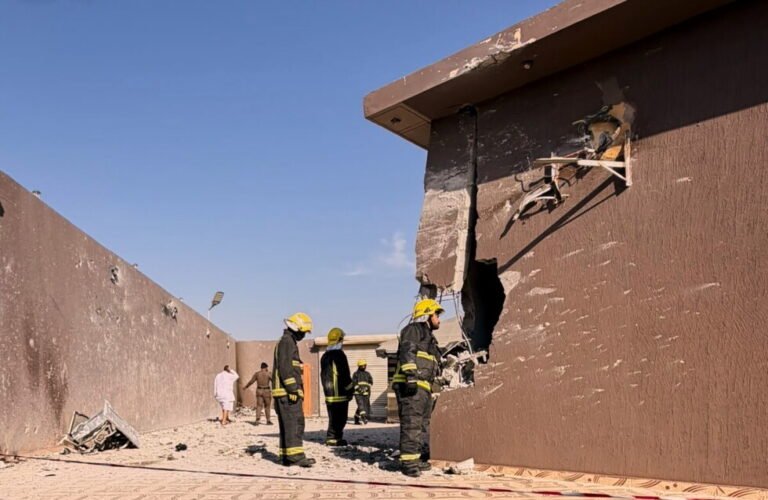
Pakistan is still engaged in a war on terrorism, and violent extremist groups keep attacking the civilian population of the country, its infrastructure, and security organs. Such attacks are not accidental but a part of a planned campaign to disrupt the situation in the country and make it unstable. Although the security forces of Pakistan are busy dealing with the neutralization of these threats, the external conditions making such a fight harder that require immediate attention of the international community.
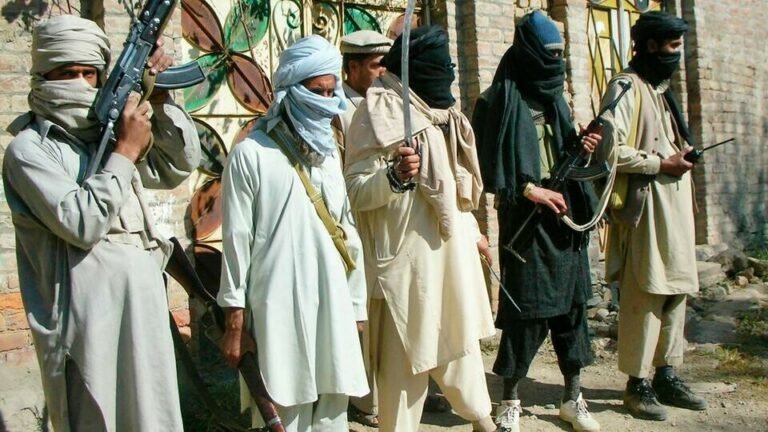
The terrorist groups such as Tehrik-I-Taliban Pakistan (TTP), Ittehad Ul Mujaheedin Pakistan (IMP), and Jamaat-ul-Ahrar (JUA) are still operating on the territory of Pakistan, with the only purpose to cause havoc and create discord. These gangs have no care about human life as they conduct random attacks on civilians, schools, hospitals, and communication systems. The Pakistani military and the paramilitary forces have made numerous successful operations to break the terrorist networks and eliminate their effects on different regions.
The point is very loud that Pakistan will not allow its territory to become a place of terrorism.
The terrorist people have nowhere to hide, they will be exposed to the full force of the security mechanism of the state. These activities, though very effective, also hint on one important fact, there should be a full-fledged and sustained campaign to not only treat the symptoms of terrorism but also its causes.

Although a lot of progress is being made by the security forces of Pakistan in dealing with the issue of terrorism, the case is not that cut and dry. One of the main challenges in the war against terrorism is the fact that terrorist organizations are supported by foreign sources, especially the safe havens in Afghanistan. They operate freely in Afghanistan where they recruit, train and radicalize people and then attack Pakistan. The fact that these groups pose a direct threat to the national security of Pakistan, but also a threat to the stability in the region as a whole.
However, within recent months, Pakistani security forces have prevented many attempts of terrorist groups to enter the country via Afghanistan. The activities have seen some of the terrorists inside the Pakistan border being killed which further understates the need to have a more coordinated response to cross boundary terrorist activities. Pakistan has already indicated that it will not allow the existence of foreign fighters and will go on to shield its citizens against the threats of terrorism, regardless of its source.
Nevertheless, it is also the responsibility of the Afghan government to be blamed in the situation. According to international law, and under the recent trilateral agreements made among Pakistan, China, and Afghanistan, it is up to the Afghan government to take more proactive measures to ensure that the terrorist groups do not operate on its soil. The reason why the Afghan government has remained passive in this aspect only worsens the security situation of Pakistan, and the peace and stability efforts in the region.
The extent of the danger to which Pakistan is exposed extends beyond its national boundaries. In fact, international reports, such as that of the United Nations, have indicated the existence of more than a dozen terrorist factions that operate out of Afghan soil. These groups are not only a direct threat to Pakistan, but they also destroy the security in the region. The fact that this threat is international can be attested by the February 2025 report published by the UN, which describes the activities of these groups.

Meanwhile, some of the factors in Afghanistan have attempted to rationalize the extremist ideology of such groups. Some figures such as Naseem Haqqani have tried to justify the ideology that gives rise to terrorism, which makes the situation more complicated and bolder to conduct the campaigns of terrorists. Such an ideological justification can be risky, and it is important to note that the global community should realize the importance of these people in continuing the violence.
Pakistan on the other hand has reacted to these ideologies unequivocally. As per the Islamic teachings, the Pegham-e-Pakistan, which is supported by more than 1,800 Ulema representing all schools of thought, has denounced terrorism in all its forms. This alliance of religious intellectuals has ensured that terrorism especially against Pakistan is a betrayal of Islam. Pakistan, by shunning such an extreme ideology, has shown that it is concerned with national security as well as the ideals of peace and coexistence that Islam preaches.
The war on terrorism is no longer isolated in the battlefield. Social media sites have emerged as an influential medium through which terrorist groups can propagate their propaganda, recruit new members, and provoke violence in the digital world. The use of such platforms as Telegram, WhatsApp, TikTok, YouTube, and X (Twitter) has become a significant tool used by terrorists to spread their hateful ideas.
Such platforms tend to be unsuccessful in their self-policies against terrorist content, and might have extremist groups evading the algorithm and publishing disinformation unchallenged. The recent emergence of Ehsan Ullah Ehsan on X along with Adil Raja portrays a worrying pattern of how terrorists are exploiting social media in order to gain fame and publicity to advance their cause. It is not a national security issue, but a worldwide concern.
It is a solution to free such material spread on such platforms, which will negatively impact the fight against terrorism and leave space where radical discourses can thrive.
Social media networks have a greater responsibility to ensure that terrorists do not use their networks to spread violence and hatred. Social media platforms should be aggressive in screening and deleting extremist content, and they should make certain that their algorithms do not propagate damaging stories accidentally.
Combating terrorism is not a single fight that can be done alone by Pakistan. Although the security apparatus in Pakistan has been very strong in its bid to counter the terrorist groups, international assistance is paramount in tackling the transnational aspect of the menace. The contribution of external actors, be it state or non-state, should also be questioned, and nations such as Afghanistan should be responsible for why they failed to take any action against groups that run their operations on the ground.
Furthermore, the global community should not overlook the ideological war conducted by the propagation of extremist ideologies. The international community can assist in countering the poisonous narratives that perpetuate terrorism by sponsoring counterterrorism organizations such as Pegham-e-Pakistan, which denounces terrorism of any form. On the same note, social media sites should be forced to be responsible, to limit the use of their sites in terrorist activities.
In summary, even though Pakistan is still grappling with a severe security challenge by terrorist groups, it is not fighting the war alone. International cooperation can assist in eliminating the menace of terrorism through shared responsibility and accountability. It is only in a joint effort that it will be possible to establish a safe and peaceful world that will leave a legacy of peace to the generations to come.
The views and opinions expressed in this article are exclusively those of the author and do not reflect the official stance, policies, or perspectives of the Platform.

