

India Afghanistan Alliance vs Pakistan in Cricket Politics

ICC Becomes BCCI 2.0
Cricket was the only thing that transcended politics in South Asia. Now it is politics with pads on. The International Cricket Council (ICC), which was initially neutral ground, is beginning to resemble a branch office of BCCI. The ICC under Jay Shah is no longer even pretending to be above influences.
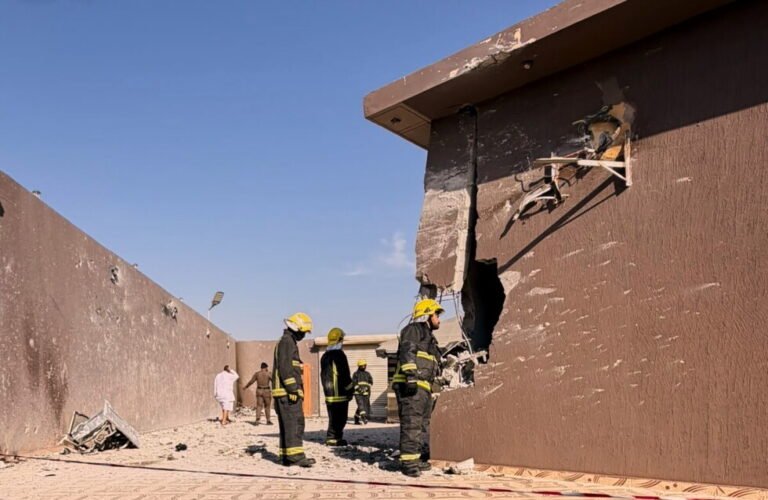
The most recent case is a manifestation of it. The ICC has become notoriously fast in its support of the Afghanistan Cricket Board (ACB), when it claimed that three Afghan nationals were shot dead in a Pakistani military attack. There was no evidence, no research, no conclusion, but only a drama statement was issued. Jay Shah and the ACB were echoing each other within hours, and ICC was close behind them. This was not a coincidence but was choreography.
A Trend of Partisan Indignation
Moving forward, this is the way the ICC works today. It is fast to answer when Pakistan is to be painted as the villain and is very conveniently quiet when India gets away with the game. The ICC supported India by saying that it had logistical problem, when it refused to play in Pakistan during the Asia Cup. When Indian players teased Pakistan on the internet or strolled away rather than shaking hands there was no admonition. And when the Indian captain dedicated a cricket match win to soldiers in “Operation Sindoor”, thus making a cricket match to pay tribute to a war, the ICC did not even flinch.
However, when there is a single unsubstantiated statement against Pakistan, the ICC suddenly discovers its mouthpiece. That is not neutrality, but it is narrative management.

The India Afghanistan Alignment
Furthermore, the cricket board in Afghanistan has been leaning towards India since long. However, the support has been political in nature now. The sudden withdrawal of the ACB in a tri-nation series with Pakistan and Sri Lanka was not sports diplomacy but was political in nature.
Next there was the story of the airstrike. The ACB claimed it, the ICC supported it unquestioningly, and Jay Shah gave it the approval of the people. So, there were three steps, and one script. This was not about truth, but perception to portray Pakistan as unstable, dangerous, and incapable of playing cricketing relations in a normal way.
This coordination between India, Afghanistan, and the ICC shows how sports diplomacy can be twisted into political theatre.
Conflict of Interest and Jay Shah
Besides, the problem starts at the top. Jay Shah represents both the BCCI and the ICC and is playing the same game. ICC was to guard smaller boards against political and monetary clout, rather it now serves the largest one. The choice of venues, time, and even disciplinary decisions revolve around what India wants.
So, the remaining section of the cricket world just follows suit, as it must have to do so. India’s cricket market pays the bills. However, the price of such dependence is compromise on fairness. The ICC’s powers are taken over by the strength of India, and nobody would even challenge it.

Pakistan’s Push for Fair Play
Resultantly, Pakistan is not crying foul, and its requirements are simple. These are to check before talking, and do not favor one side over another, and to throw out politics out of cricket. It is not just Pakistan that suffers because of the ICC habit of promoting unauthenticated assertions, however, it also raises questions on credibility of world cricket.
Thus, an international body becomes a referee, when it becomes involved in a propagandist loop. Neutrality being called by Pakistan is a call to sanity. So, by continuing to be consumed by regional politics, there would be no spirit left in cricket which once characterized it.
The Bigger Game
On top of that, cricket has been used by India as soft power for long. The only difference is the inclusion of Afghanistan in that project. They both have made the sport a theatre of identity and grievance. India plays the role of the responsible, and Afghanistan as a victim, and thus Pakistan the perennial villain. It is picked by Western channels, rubber stamped by the ICC, and the process ended in its own death.
It is no longer about who bowls quicker or hits better. It is the question of who has the narrative. And at this moment, ICC is assisting one party in writing it.
A Test of Integrity
Lastly, cricket does not need to be apolitical to be fair. But it does need consistency. The ICC cannot expect discipline among players, as it disregards itself the very basis of fairness. It can never be said it is neutral when its chair is also a chair of a national board.
So, fans observe it, and they talk about it. They no longer expect the ICC to tell the truth under pressure. However, the longer this continues, the more the game of cricket will lose its spark that once accompanied it.
If the ICC keeps dancing to political tunes, cricket will lose not just its neutrality but its soul.
In case the ICC intends to rescue its reputation, it must withdraw into the backseat of the political drama, and be what it was intended to be, one that would guard fair play, other than one that would speak in the interest of anyone. However, if it continues to play the same role, it will not be an insult to call it BCCI 2.0, but a fact.
The views and opinions expressed in this article are exclusively those of the author and do not reflect the official stance, policies, or perspectives of the Platform.