

Pakistan: Messenger of Peace Islamabad’s Historic Role in the US Iran Agreement
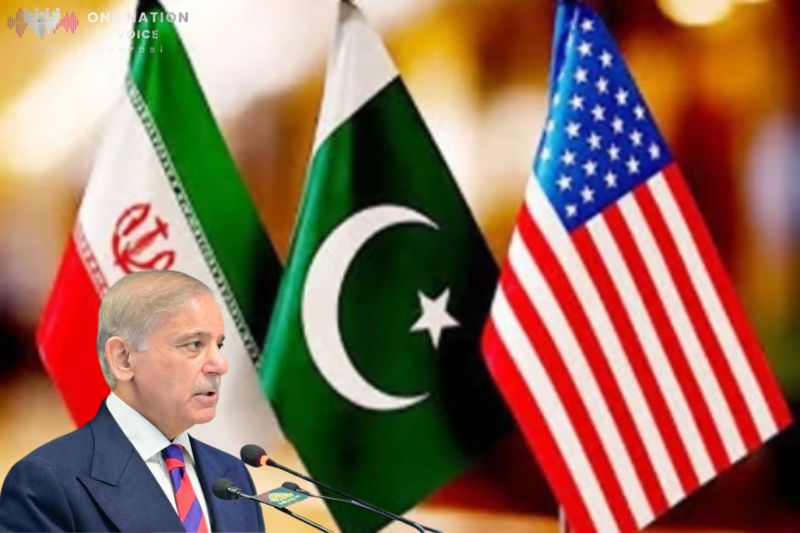
On the complex chessboard of global politics where powerful nations throw regions into fire for their interests, Pakistan has played a unique and proud role the role of a Messenger of Peace. Amid the ongoing tension and shadows of war between the United States and Iran, the patience, wisdom, and diplomatic prudence demonstrated by Pakistan is not only proof of the maturity of its foreign policy but also a source of honor and pride for the entire Pakistani nation.
In February 2026, almost six weeks after the US and Israel attacks on Iran, on April 8, Prime Minister Shehbaz Sharif announced that the United States and Iran had agreed to a two‑week conditional ceasefire, during which negotiations for a permanent agreement would take place. This was the moment when the world realized that Pakistan was not merely a regional country but had become an effective party in global peace.
On April 11 and 12, 2026, the historic Islamabad Talks were held at the Serena Hotel, aimed at consolidating the ceasefire of the 2026 Iran War and reopening the Strait of Hormuz. Pakistan hosted and mediated these talks, playing a central role in the entire process.
Pakistan joined a small group of countries to deliver messages between the United States and Iran at a time when direct contact was politically impossible for both sides. Prime Minister Shehbaz Sharif spoke with Iranian President Masoud Pezeshkian and emphasized reducing tensions, while Field Marshal Syed Asim Munir spoke with US President Donald Trump when the United States decided to postpone attacks.
White House spokesperson Olivia Wells officially stated:
“Prime Minister Shehbaz Sharif and Field Marshal Asim Munir have played a helpful mediator role, and the United States is grateful to Pakistan for its efforts to end this conflict.”
This acknowledgment was not merely formal it was a global recognition of Pakistan’s practical diplomacy.
Field Marshal Asim Munir emerged as the leading mediator between the United States and Iran throughout this process. He was not only present at negotiation tables but also visited Tehran multiple times to finalize the agreement. This is the same Field Marshal who acted with an iron hand against terrorists on Pakistan’s soil, protecting the country from internal threats and now his diplomatic skills have impressed the entire world.
Pakistani officials also warned about those spreading false information to sabotage the peace agreement, affirming that Pakistan would maintain transparency and responsibility even in this sensitive stage of mediation.
Pakistan pursued not only bilateral but also multilateral diplomacy gathering the foreign ministers of Saudi Arabia, Turkey, and Egypt in Islamabad to consult on reducing regional tensions. This proved that Pakistan believes in the power of unity and dialogue at the global level.
On June 13, 2026, Prime Minister Shehbaz Sharif declared:
“We are closer to a peace agreement than ever before”
and expressed hope that electronic signatures would be completed within 24 hours. These words were not mere statements but the result of months of tireless effort, diplomatic wisdom, and patient struggle.
Iranian Foreign Minister Abbas Araghchi also announced that the Islamabad Memorandum of Understanding was closer than ever, and US President Trump shared his post on social media with a positive response.
This role of Pakistan is especially important because it is simultaneously a close partner of the United States and a neighbor of Iran. Maintaining trust with both sides is the unique ability that makes Pakistan indispensable in this field. Throughout the process, Pakistan acted as the leading mediator between the United States and Iran.
Today, when most countries are either spectators or fueling the conflict, Pakistan has made its position clear it wants peace not war, dialogue not confrontation, and stability not tension. This peace process is not only vital for the region but for the entire world because the closure of the Strait of Hormuz was affecting the global economy and risked spreading the flames of war.
Pakistan has proven that with its geostrategic importance, diplomatic wisdom, and serious leadership, it is not only a significant country on the world map but also a responsible, peace‑loving, and active player. This historic moment is a source of pride for every Pakistani and future generations will find Pakistan’s name written in golden letters in the story of peace.
Disclaimer:
The views and opinions expressed in this article are exclusively those of the author and do not reflect the official stance, policies, or perspectives of the Platform.

