



When Protest Becomes Terror: The Unmasking of JAAC in Azad Kashmir
The seizure of police and law enforcement personnel as hostages at the Dhal checkpost near Palandri marks a decisive moment in the ongoing crisis in Azad Jammu and Kashmir.
What had for years been framed as a civic grievance movement has now revealed its true character one that is prepared to use the tactics of terrorists and khawarij to advance a political agenda that legitimate democratic channels have failed to sustain.
The incident at Dhal checkpost is not an isolated flashpoint. It is the logical culmination of a pattern that has been building for years. The Joint Awami Action Committee transformed by 2024 into a full‑scale protest force, with strikes, shutdowns, and long marches sweeping across Azad Kashmir, roads blocked, businesses shut down, and daily life repeatedly brought to a standstill. At each juncture, the state showed restraint and engaged in good faith negotiations. At each juncture, the organization pushed further.
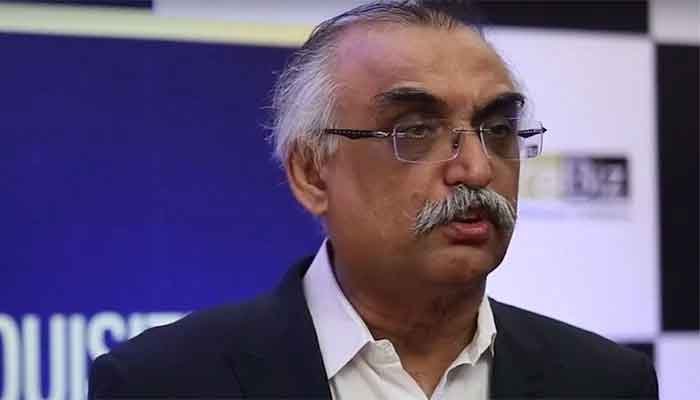
The government’s decision to engage dialogue rather than force was not weakness, it was constitutional responsibility. In September and early October 2025, JAAC launched a region‑wide shutter‑down and wheel jam strike demanding structural reforms, economic concessions, and an end to elite privileges. The federal and AJK governments responded with a comprehensive agreement. As Tariq Fazal Chaudhry has detailed publicly, of the 38 demands in the October 2025 Muzaffarabad Agreement, 19 were resolved through executive orders fully and completely covering withdrawal of 177 FIRs, equal compensation to families of martyred policemen and deceased protesters, open merit admissions in all professional colleges, establishment of new education boards in Poonch and Muzaffarabad, tax relief, reduction of cabinet size from 36 to 22 ministers, the Health Card program, telecom reforms, and electricity related funding. The remaining demands requiring legislative action or significant financial allocation were actively being processed through proper government channels.
The narrative that “only three demands were met” is not merely inaccurate, it is a calculated lie designed to sustain agitation where none is warranted.
During the September October 2025 protests, three policemen were killed and nine others injured during an attack carried out by armed men in Dhir Kot. At least nine people in total lost their lives, and the AJK government reported that 172 policemen and 50 civilians were injured in the clashes. These are not the casualties of a peaceful rights movement. These are the consequences of organised violence, directed against the state and its servants.
It is against this backdrop that the AJK Home Department’s decision to formally proscribe JAAC under the Anti Terrorism Act 2014 must be understood. The notification by AJK’s Home Department stated that the group is “engaged in terrorism” and has acted in a manner “prejudicial to peace and security” of the state. To prevent the alliance from circumventing the restriction, the Home Department also banned all alternative names and spin off entities associated with the committee. This is not a hasty or politically motivated decision, it is a legal response to a documented pattern of violence, hostage taking, and deliberate sabotage of the democratic process.
AJK elections in all constituencies of the Legislative Assembly are scheduled to be held on July 27, 2026. The timing of JAAC’s renewed agitation announced immediately after the election schedule was issued is telling. This is not a movement concerned with the rights of the people of Azad Kashmir. If it were, it would be preparing election manifestos, not announcing long marches. It would be fielding candidates, not taking law enforcement officers hostage at checkposts.
The hostage taking at Dhal is, in this context, a declaration of intent. The law enforcement agencies stationed at that post showed exemplary restraint precisely because of their concern for the civilian population in the vicinity. That restraint should not be misread as permission.
AJK Prime Minister Faisal Mumtaz Rathore declared that the government would no longer engage in negotiations with elements seeking to create disorder under the cover of political activism.
This is the only rational response to an organisation that rejected continued talks even as the government fulfilled its obligations.
AJK Police arrested around 72 individuals linked to the organisation, with weapons, communication devices, and documents allegedly related to disrupting public order recovered during the crackdown. The people of Azad Kashmir deserve to know what those documents say who directed these operations, what external linkages exist, and who ultimately benefits from keeping this strategically important region in perpetual turmoil on the eve of elections.
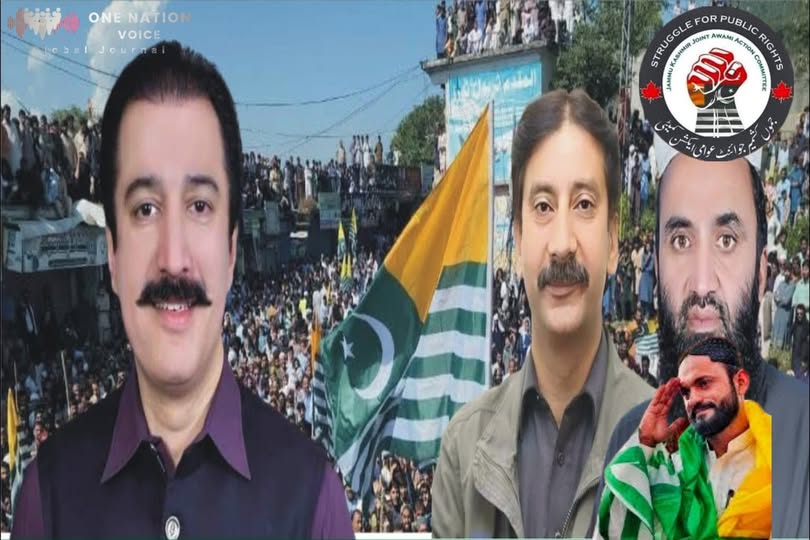
The so called leaders of this movement Shaukat Nawaz Mir, Sardar Umar Nazir, Khawaja Mehran, Sardar Aman Kashmiri who spent years rousing the public toward “revolution” have, according to official statements, now gone into hiding rather than face the legal consequences of their organisation’s actions. The reward notices announced by authorities are not propaganda. They are the natural consequence of individuals who incited others to violence and then absented themselves when accountability arrived.
Azad Kashmir is not a region that lacks legitimate grievances. Its people have real economic concerns, real aspirations for better governance, and a real stake in how their region is represented politically. Those concerns deserve to be heard through elections, through the legislature, through constitutional channels. Several of JAAC’s protests turned violent, most notably during demonstrations in May 2024 and September 2025, which resulted in fatalities. That pattern of violence does not advance the people’s cause. It sets it back.
The state’s writ is not a slogan. It is the foundation upon which every citizen’s safety, every business’s continuity, and every child’s future rests. When armed groups begin taking state officials hostage and blocking roads with impunity, the state’s silence would itself become a crime against the people. The administration has chosen law. The people of Azad Kashmir, preparing to cast their votes on July 27, deserve nothing less.
Disclaimer:
The views and opinions expressed in this article are exclusively those of the author and do not reflect the official stance, policies, or perspectives of the Platform.