


The Afghan Nexus of RAW, Mossad, and Proxy Warfare

The Afghan Nexus of RAW, Mossad, and Proxy Warfare
Lawless Afghanistan has always been an attractive centre of gravity of militant organizations, however, recently the unstable nature of this country has also turned into operations base of the hostile intelligence bodies looking to sabotage regional stability and most importantly the security of Pakistan. Since the engagement of the US led army troops in liberal war and the failure of the organized form of governance, Afghanistan has been literally the big ungoverned spaces allowing the successful operation of covered foreign activities. Some of the most active external agents who have taken advantage of Afghan instabilities are India because of its Research and Analysis Wing (RAW) and Israel because of its Mossad. In the case of Pakistan, this has translated to combating not just ideologically driven militants, but also state-sponsored hybrid warfare techniques that are organized by state agencies.
RAW have always taken advantage of Afghanistan
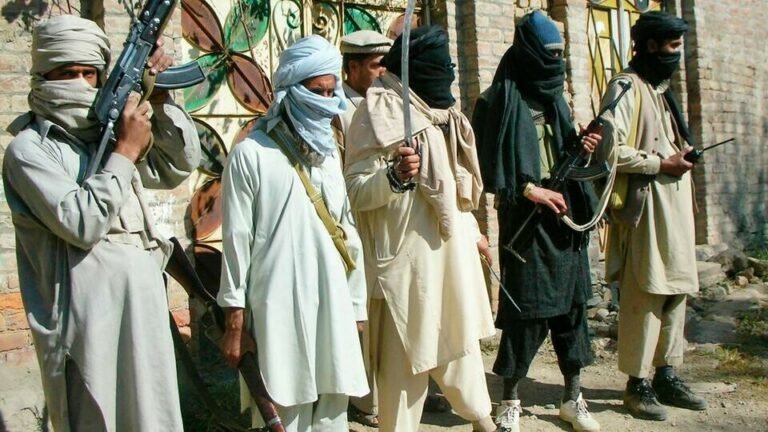
RAW have always taken advantage of Afghanistan as a back-setting base to finance, equip, and mentor anti-Pakistan terror groups. Intelligence interceptions and evidence found on captured operatives and regional security briefings are pointing to the fact that RAW owns organizations such as the Balochistan Liberation Army (BLA), the anarchists aligned to PTM, and the Tehreek-e-Taliban Pakistan (TTP). The emergence of Mossad in the fuelling of terrorism in Balochistan has also been seen in the recent years. Israeli handlers have been linked to proxy recruitments and funding of subversive elements working under the Afghan Soil based on intelligence-sharing between the Pakistani and the regional security agencies through intercepted communications.
Afghan Sanctuaries and Cross-Border Terrorism
The presence of porous borders between Afghanistan and Pakistan especially in Khyber Pakhtunkhwa (KP) and Balochistan has allowed the steady flow of militants, guns and illegal funding. Recorded conversations between the agents operating in Afghanistan and the terrorist cells within Pakistan shows that the armed cross-border incursions, assassinations of targeted persons and sabotage missions are all coordinated. Sanctuaries enable adversarial forces to initiate a perpetuated chain of violence without partially investing, thus keeping deniability.
The point of this ecosystem is proxy recruitment. Youth prone to influence and sometimes unemployed get enrolled into these networks either by the indoctrination of ideologies or finances. The Afghan soil, in such a case, is assumed as a training ground where recruits get equipped with physical war skills, as well as the skills of digital warfare. These proxies are trained and sent to Pakistan to execute operations which are as varied as improvised explosive device (IED) attacks to campaigns of disinformation via social media targeted at undermining of the trust of people towards the state institutions.
RAW and the CPEC Sabotage Campaign
RAW has been focusing a large part of its operations in Afghanistan to weaken China-Pakistan Economic Corridor (CPEC), a major venture in the economic turnaround plan of Pakistan and a major asset of Chinese Belt and Road Initiative (BRI). Attacking the infrastructure, the pathways of labour and foreign investments into Pakistan is what India wants to do to paralyze the economic ability of Pakistan and make the integration of the region difficult.
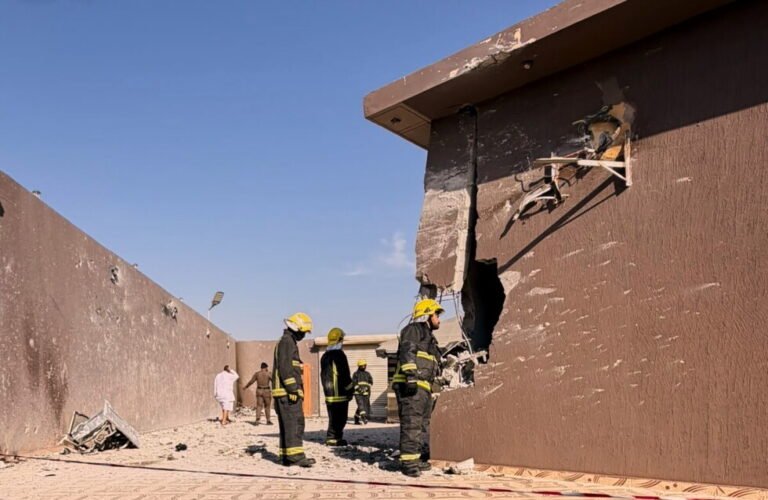
The number of attacks on power lines and road networks as well as construction convoys has gone up in Balochistan, a region that hosts a significant percentage of the strategic projects of CPEC.
Mossad’s Expanding Footprint in Balochistan
Although the role of India in the activities of anti-Pakistan Afghan-based activity is not new and is well documented, the upsurge of the presence of Mossad is a relatively recent and a threatening aspect. Intelligence intercepts indicate that Mossad has been funding some separatist groups in Baloch with specialized training, tools of cyber warfare, and finances. All this backing cannot be wholly ideologically motivated but one that is strategically positioned on Israel interest of weakening nations allied with any rivals in Middle East.
The activities that are used to operate are cyber-espionage, targeted assassinations of prominent individuals associated with infrastructure development, and spreading separatism propaganda via encrypted communication channels. Sharing space with existing networks RAW has been able to ride on the well-established network in Afghanistan by Mossad hence, facilitating increasingly and elaborated anti Pakistan activities.
Militant and Cyber-Hybrid Warfare
The combination of ideological terrorism and foreign-sponsored espionage in Afghanistan means that to Pakistan, ideological terrorism and espionage has a two-headed challenge in terms of security. On the one hand, there are militant groups, such as the TTP, East Turkestan Islamic Movement (ETIM), Islamic State Khorasan Province (ISKP), with their agenda to be fulfilled with violence. Then there is the other extreme of hybrid warfare strategies of foreign intelligence services involving cyber-espionage, economic destabilization and disinformation campaigns.
Uncontrolled regions of Afghanistan are breeding grounds of this twofold menace. Terrain and non-enforcement benefit the militants and the hostile intelligence services use the same factors to carry out spying and hybrid operations. They are synergistically used to create a more complex and dangerous threat matrix than traditional insurgency.
Regional and International Implications
Any instability in KPK and Balochistan can instigate a larger regional instability. The destabilizing of Afghanistan cannot be contained in Afghanistan at all, it spills over to Pakistan, it affects Iran, and it endangers the Central Asian republics. The Gulf states, which depend a lot on stable trade and energy channels via the region, might become vulnerable to the economic interests. Europe, as well, suffers indirect outcomes, including renewed refugee flows and an upsurge in extremist recruitment and enhanced security threats.
Ignoring such undercover operations of Indians and Israelis in Afghanistan by the United States and European powers is myopic. It is notable that these actions might not specifically endanger western sovereignties, but the destabilizing influence that this exerts on the nuclear armed state and counterterrorist ally of Pakistan may cause considerable disruption in the security status of the world. Further instability will stiffen extremism, provide breeding foundations on transnational terrorism, and would make chances of any kind of peace in Afghanistan complicated.
Disclaimer:
The views and opinions expressed in this article are exclusively those of the author and do not reflect the official stance, policies, or perspectives of the Platform.