



India’s Dulhasti Stage II Project Deepens Indus Basin Hydro Political Tensions
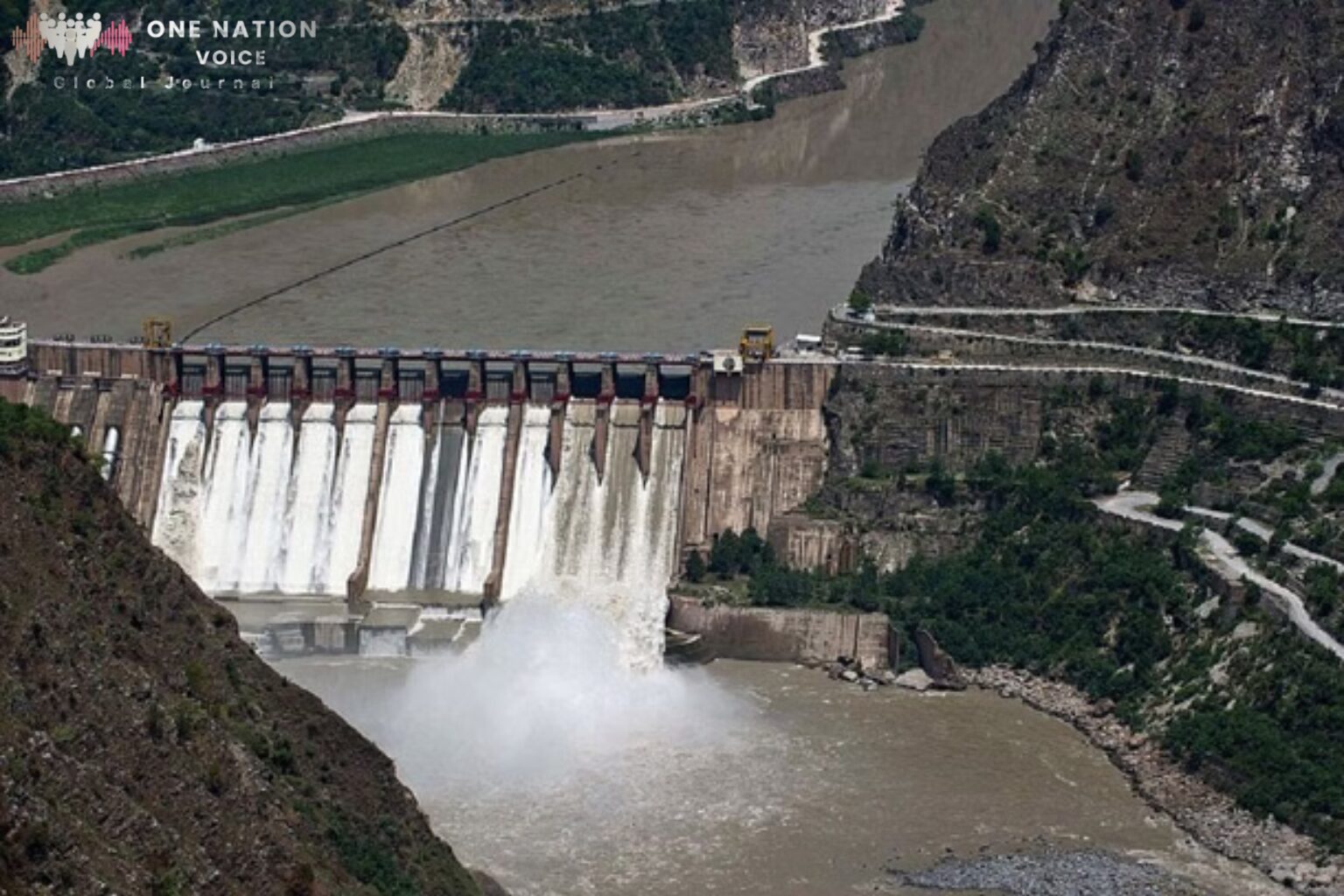
The approval of India’s Dulhasti Stage II hydroelectric project on the Chenab River is not merely an infrastructure story. It is a geopolitical statement written in concrete, tunnels, and diversion channels on a river that millions of people in Pakistan depend upon for survival. Coming against the backdrop of India’s unilateral suspension of the Indus Waters Treaty in April 2025 and its continuing refusal to recognize international arbitration rulings, the 260 MW project signals something far more consequential than enhanced power generation capacity.
The project, valued at Rs 3,277.45 crore and receiving environmental clearance on January 7, 2026, will draw water from the existing Dulhasti Stage I facility through a 3685 meter long diversion tunnel, feeding an underground powerhouse housing two 130 MW units along with an elaborate system of pondage, surge shafts, and pressure infrastructure. These are not neutral technical specifications.
In the absence of a functioning treaty framework and real time hydrological data sharing, each new piece of upstream flow regulating infrastructure amplifies India’s structural capacity to modulate or withhold downstream flows into Pakistan.
The Chenab is not just a river. It is a major component of Pakistan’s agricultural system in Punjab. Its waters irrigate millions of hectares of farmland, sustain livestock economies, and support a national food system already facing significant water stress. When India suspended the Indus Waters Treaty on April 23, 2025, placing it in abeyance with immediate effect, it disrupted the legally guaranteed predictability on which downstream irrigation planning depends. The Indus Basin Irrigation System, one of the largest contiguous irrigated networks in the world, requires stability and predictability to function effectively.
The International Court of Arbitration at The Hague has since reaffirmed its jurisdiction on multiple occasions, ruling that the treaty contains no provision for unilateral suspension. Most recently, on May 15, 2026, the court issued a Supplemental Award on maximum pondage, upholding limits on water control structures on the western rivers. The ruling emphasized that pondage must be justified through genuine design requirements, verifiable hydrological data, and operational necessity rather than theoretical assumptions.
India has rejected these rulings, describing the tribunal as illegitimate and maintaining that the treaty remains suspended. This position raises serious concerns for the broader framework of international water law and the stability of transboundary resource governance.
Dulhasti Stage II is significant because it is part of a broader wave of upstream hydropower development. Since the suspension of the treaty, India has accelerated approvals for several major projects on western rivers, including Sawalkote, Ratle, Bursar, Pakal Dul, Kwar, Kiru, and Kirthai I and II. Dulhasti Stage II is expected to be among the first of these projects to reach completion, within an estimated 44 months. Collectively, this network of run of river hydropower infrastructure on the Chenab increases the operational ability to regulate timing and volume of flows, especially when projects are hydraulically interconnected.
Critics often argue that run of river projects do not involve significant water storage or diversion. However, such systems can still influence the timing and distribution of downstream flows through controlled pondage and release scheduling. The arbitral award issued in May 2026 directly addresses this issue by stating that minimum flow obligations cannot be satisfied through assurances alone and must be supported by measurable operational compliance.
The suspension of hydrological data sharing further increases uncertainty. Previously, the Permanent Indus Commission facilitated exchange of flood alerts, glacier melt information, and river flow data. Its suspension has removed a critical mechanism for coordination, leaving downstream planners with reduced visibility into upstream conditions. In a Himalayan basin increasingly affected by climate change and glacial lake outburst flood risks, timely data is essential for disaster preparedness and agricultural planning.
The Indus system is central to Pakistan’s water security and agricultural production. A significant portion of national irrigation depends on flows from the Indus and its tributaries. Any sustained alteration in timing or volume of Chenab flows can have direct implications for food production, rural livelihoods, and economic stability. This makes basin governance not only an environmental issue but also a matter of national resilience.
International water law emphasizes equitable and reasonable utilization of shared rivers and the obligation to avoid significant harm to co riparian states. The current trajectory of upstream infrastructure expansion, combined with treaty suspension and data discontinuity, places considerable strain on these principles.
The Dulhasti Stage II project may be classified technically as run of river, but its significance cannot be assessed in isolation. It exists within a broader political and legal context marked by treaty suspension, arbitration disputes, and expanding hydropower development. The cumulative effect of these developments is reshaping the governance landscape of the Indus basin.
The Indus Waters Treaty has endured for decades despite periods of conflict and political tension. Its endurance reflected a shared recognition that water security requires cooperation rather than confrontation. That underlying logic remains relevant today. International arbitration has reaffirmed the binding nature of the treaty framework and the necessity of adhering to agreed limits on water utilization.
A sustainable path forward requires renewed engagement, restoration of data sharing mechanisms, and adherence to established legal frameworks.
Water security for downstream communities is not a political concession. It is a legal and humanitarian necessity and a foundational requirement for long term regional stability.
Disclaimer:
The views and opinions expressed in this article are exclusively those of the author and do not reflect the official stance, policies, or perspectives of the Platform.

