


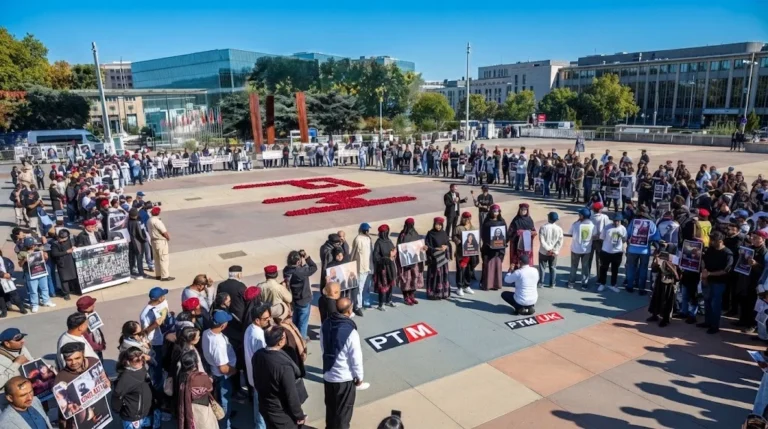
Paank, Militancy and the Missing-Persons Narrative
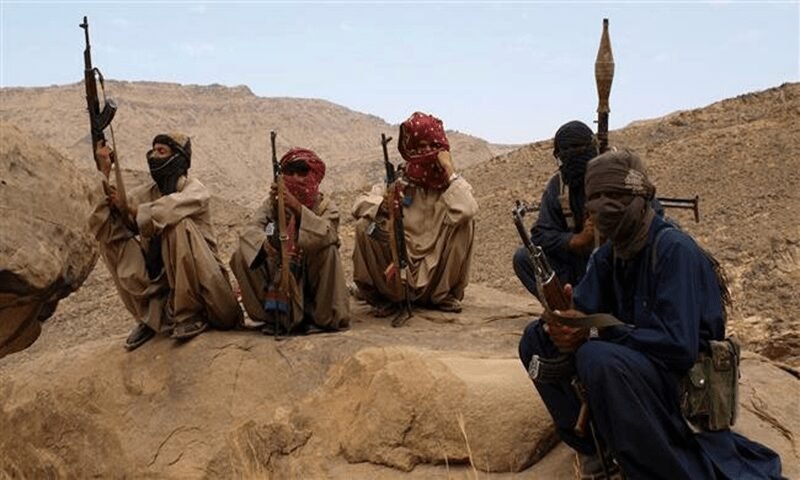
The latest controversy surrounding Paank and individuals previously presented as “missing persons” raises a question Pakistan can no longer dismiss as a routine propaganda dispute: what happens when the language of human rights is exploited to conceal recruitment, militancy and suicide terrorism? The reported case of Attaullah, son of Gaji Khan, has intensified this debate. After the Balochistan Liberation Army claimed a “fidayeen” attack in the Panwan area of Jiwani on July 4, pro-state accounts identified Attaullah as an attacker and alleged that he had earlier been portrayed as missing. The BLA’s responsibility claim is public, but the individual’s identification and his supposed inclusion in advocacy records require independent documentary verification. Credibility must rest on evidence, not repetition.
Paank describes itself as a human-rights organisation documenting enforced disappearances and extrajudicial killings in Balochistan. Significantly, its own online database states that its list is “not always up to date” and directs readers to monthly reports for more current information. That admission is not a minor technical footnote. A database containing allegations as grave as enforced disappearance must maintain verified identities, dates, circumstances, subsequent legal status, corrections, and retractions.
Without such safeguards, an advocacy list can be manipulated by political actors, militant networks, families acting on incomplete information or social-media campaigns
The case of Salim Baloch demonstrates why chronology is essential. Following his death, the BLA acknowledged his association with the organisation. However, a report sympathetic to the insurgency maintained that he joined the BLA after being released from state custody in 2023. His later militant affiliation, therefore, does not automatically disprove every earlier detention allegation. It does, however, impose a clear responsibility on organisations maintaining missing-person records: when credible new information emerges, the case file must be updated prominently. Continuing to present someone solely as a civilian victim after confirmed militant recruitment creates a misleading public record.
Claims surrounding Mahal Baloch also demonstrate the danger of careless identity matching. Public accounts have identified a woman of that name as a BLA suicide attacker during the August 2024 Bela assault, while other records have referred to a different woman with the same name in a detention or disappearance context. Conflating two individuals merely because they share a name is not fact-checking. Both advocacy organisations and their critics must verify parentage, district, age, photographs, and chronology before drawing conclusions.
Otherwise, attempts to expose misinformation merely produce another layer of misinformation
Khair-un-Nisa’s case offers another warning. In May 2026, Pakistani authorities said they had intercepted a minor from Turbat who had received militant training and was being prepared for a suicide attack in Islamabad. Reporting described her as coerced and manipulated rather than simply as a conventional criminal suspect. Her case illustrates the increasingly sophisticated recruitment of young women by militant organisations and shows why an unexplained absence cannot automatically be attributed to state agencies. Yet an official statement or televised confession should not replace judicial scrutiny, legal representation, and an independently documented investigation.
Allegations involving Hamdan and other names circulating on partisan platforms should be assessed according to the same standard. When a person listed as forcibly disappeared is subsequently arrested, identified as a facilitator, or acknowledged by a militant organisation as a member, the original reporting body must publish a visible update. Conversely, when security agencies make such an allegation, they must release admissible evidence and produce the accused before a competent court. Neither activists nor state institutions should be permitted to treat social media as a courtroom or political affiliation as conclusive evidence.
Militant organisations benefit from informational ambiguity. A recruit may leave home, enter an underground network, receive ideological and operational training, and later appear in an attack video. During that interval, the absence may be framed internationally as proof of state abduction. Once embedded in reports, demonstrations, and foreign advocacy campaigns, later corrections rarely receive comparable attention. This creates a propaganda shield around militant mobilisation and damages Pakistan’s international standing before the facts are fully established.
Recent reporting has also documented the growing use of social media to radicalise and recruit young women for suicide operations
Human-rights organisations must therefore adopt professional evidentiary protocols. Every case should contain a unique file number, complete identity details, multiple sources, documented family testimony, clear status classifications, and a visible correction history. Cases involving confirmed militant affiliation should not simply disappear from databases; they should be reclassified with a complete chronology. Verification methods, funding sources, and potential conflicts of interest should also be disclosed. These are safeguards for institutional credibility, not restrictions on legitimate human-rights advocacy.
Paank must recognise that publishing an allegation creates a continuing responsibility. An organisation cannot issue politically consequential claims, circulate them internationally and then quietly ignore evidence that may contradict its original account. Failure to correct demonstrably inaccurate entries risks transforming documentation into disinformation. More seriously, knowingly portraying members or facilitators of banned organisations as ordinary civilian victims would amount to providing militants with a humanitarian cover that obstructs counterterrorism investigations and exploits the suffering of genuinely affected families.
Pakistan’s institutions must meet an equally demanding standard. Genuine enforced disappearances are unlawful and deeply corrosive, while secret detention strengthens militant propaganda and destroys public confidence. The answer to manipulated claims is not blanket denial but lawful arrest, prompt appearance before courts, access to counsel, and evidence open to scrutiny.
A credible state defeats hostile propaganda by being more transparent, methodical, and legally accountable than its adversaries
An independently supervised audit of Paank’s records and official counterterrorism claims is now necessary. Entries should be cross-checked against court records, police investigations, militant publications, family testimony, and verified biometric information. False or outdated cases should be corrected publicly, while legitimate disappearance cases must be investigated without political interference.
Terrorism must not be disguised as human-rights advocacy, but human rights must not be discarded in the name of counterterrorism. Any organisation that knowingly presents militants as civilian victims becomes an instrument of deception; any institution that labels citizens terrorists without evidence commits its own injustice. Pakistan needs verified identities, transparent evidence and accountable institutions, not competing narratives manufactured for political warfare.

