
BLA’s Propaganda Machinery: When Numbers Lie and Civilians Pay
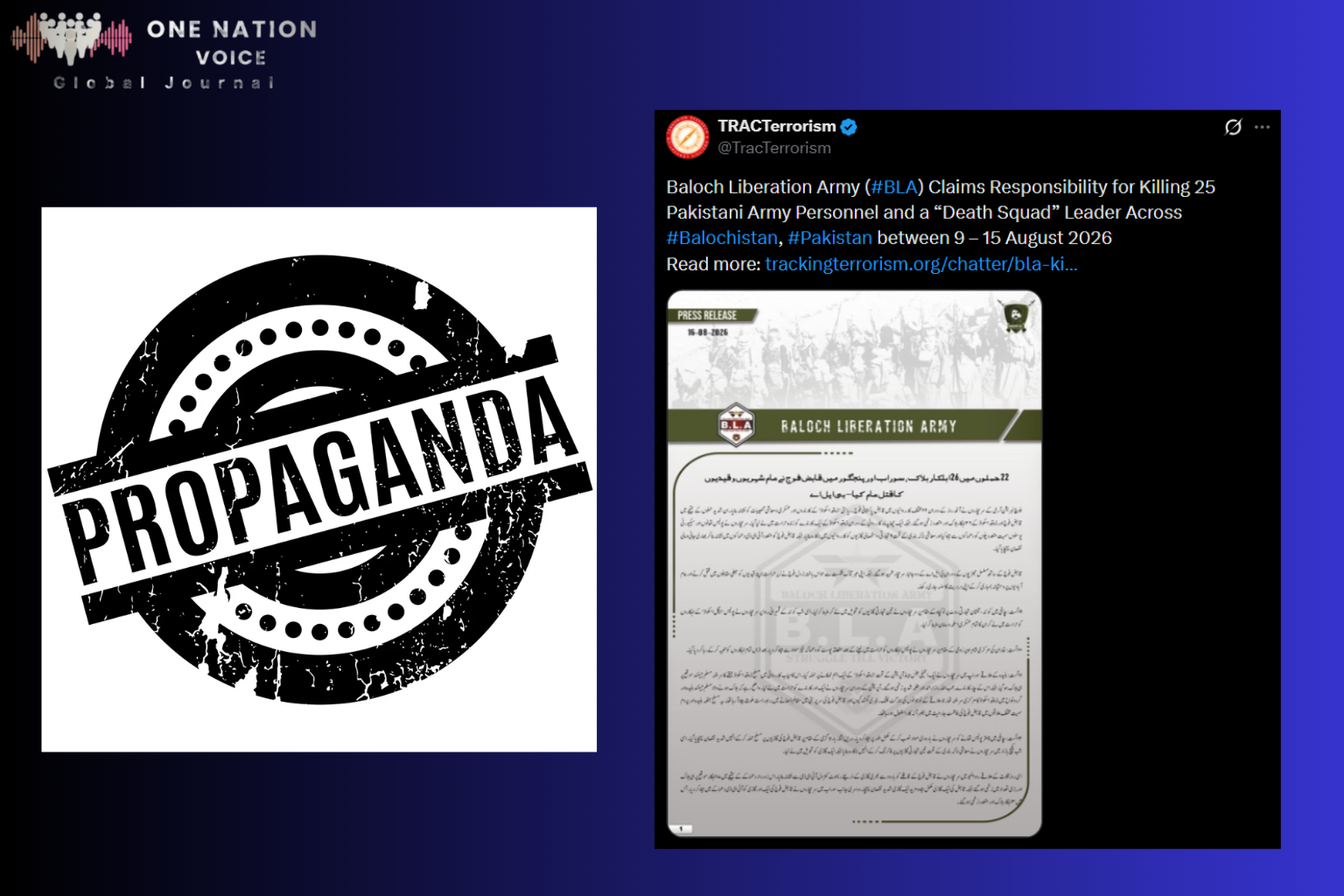
The BLA’s claims were made through spokesperson Jeeyand Baloch in a formal press release. Pakistani authorities did not issue any immediate comprehensive response addressing all of the group’s claims a silence that BLA propagandists predictably tried to spin as confirmation. It is not. It is simply how governments respond to unverifiable terrorist communiqués cautiously, selectively, and through official channels.
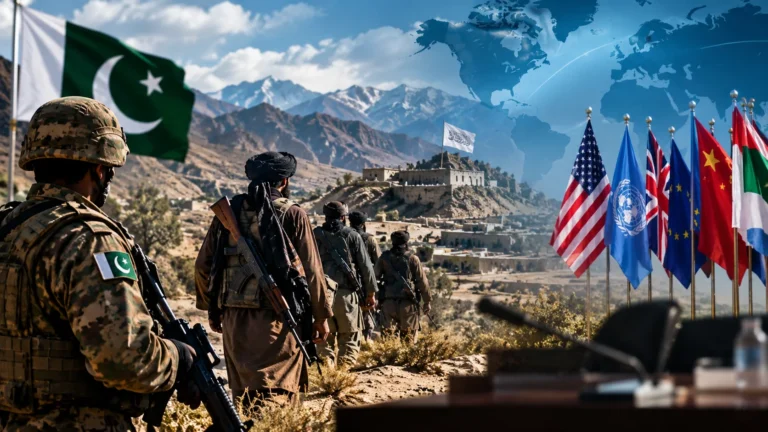
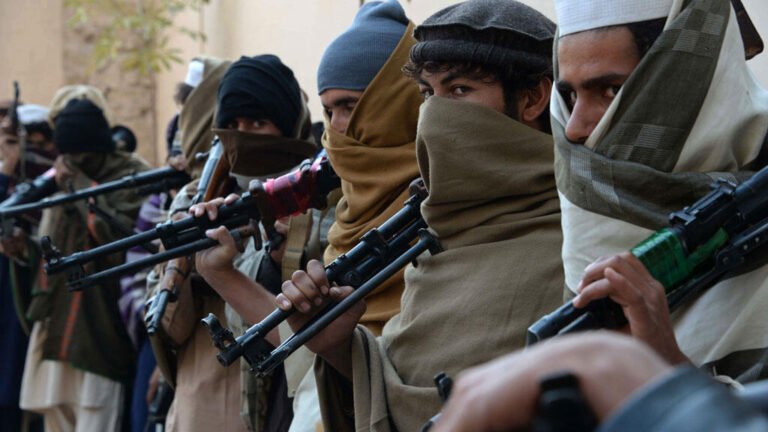
Let us be honest about what this group is. The BLA is designated as a terrorist organisation by Pakistan, China, the United Kingdom, the United States, the European Union, and several other countries and organisations. This is not a political position taken by one government it is a near global consensus forged after watching this group deliberately target civilians, infrastructure, and anyone who refuses to submit to its agenda.
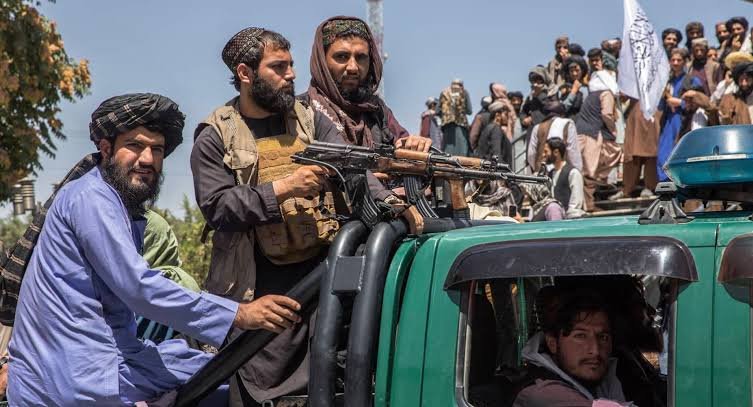
The August press release is a textbook example of what counterterrorism analysts call propaganda by numbers. By listing 22 specific incidents with dates and locations, the BLA manufactures an illusion of precision and dominance. But look carefully at what the claims actually describe. On August 9, fighters seized three commercial vehicles at Nok Chah on the Quetta Taftan trade route. On August 10, police personnel were detained on a highway in Kharan, warned, and released. These are not battlefield victories. They are acts of intimidation against civilian truck drivers and law enforcement officers going about their daily work.
Glorifying the seizure of commercial trucks as an operation reveals the hollowness of the BLA’s military pretensions.
The BLA’s so called economic blockade of the Quetta Taftan route deserves particular scrutiny. Who does this hurt? Not the Pakistani state in any strategic sense. It hurts Baloch traders, Baloch drivers, Baloch families dependent on the movement of goods. When a terrorist organisation blockades commerce in the very province it claims to be liberating, the mask slips completely. The people it professes to champion become its most immediate victims.
Then there is the labelling tactic. The BLA routinely brands its civilian targets as state collaborators or death squad members to retroactively justify executions. This is not a legal designation, an investigative finding, or a court ruling. It is a death sentence issued by a terrorist organisation against anyone who refuses to support its violent agenda teachers, labourers, local government workers, ordinary citizens. Giving a label to murder does not make it less of a murder.
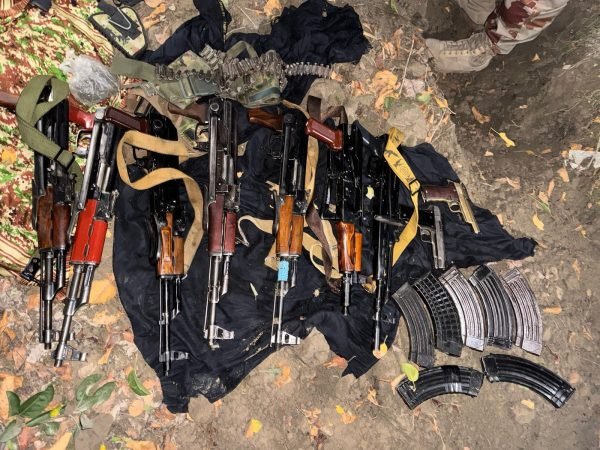
Meanwhile, what was actually happening on the ground during that same week tells a very different story. On August 12, eighteen terrorists affiliated with Fitna Al Hindustan were killed in Surab district, Balochistan eight after an under preparation vehicle borne IED detonated prematurely, with security forces neutralising ten more who fled the scene. A bomb being prepared to kill people blew up on the people making it.
That is not a victory for anyone but it does illustrate the operational reality that these terrorist networks are under severe pressure, making mistakes, and losing personnel rapidly.
The scale of Pakistan’s counter terrorism campaign in 2026 has been nothing short of extraordinary. Security forces have conducted more than 40,348 intelligence based operations nationwide this year under the Azm e Istehkam campaign, with Balochistan alone accounting for over 31,000 of those operations. The operations have resulted in the confirmed elimination of 2,084 terrorists, averaging approximately 10 per day described by ISPR as the highest daily ratio recorded so far. Nearly 200 intelligence based operations are being conducted every single day. The BLA’s claim of 22 operations over eight days does not exist in a vacuum it exists in the context of a sustained, intense, and methodical campaign to dismantle terrorist infrastructure across the province.
Security forces killed 2,597 terrorists during 2025, while 2,084 had already been killed so far in 2026 and 2026 is not even over. The trajectory is accelerating, and the operational momentum clearly lies with the state, not with groups issuing press releases about seizing commercial trucks.
The BLA’s propaganda also attempts to exploit the information environment by targeting foreign audiences sympathisers abroad, diaspora communities, and international media that may lack the context to scrutinise the claims. The press release’s professional formatting and social media amplification strategy are not accidental. A terrorist organisation that is losing ground operationally invests increasingly in the theatre of perception management. The louder and more frequent the press releases, the clearer the signal that things are not going well on the actual battlefield.
What makes this moment particularly important is Balochistan’s trajectory if peace were to take hold. The province sits at the heart of enormous economic potential. Infrastructure, trade corridors, and development projects could transform lives across the region. Every attack on railway lines, every seized truck on the Quetta Taftan route, every bomb placed in a market delays that future and the Baloch people pay that price in delayed development, disrupted livelihoods, and daily insecurity.
The BLA is not fighting for Balochistan’s future. It is burning it. And no number of slickly produced press releases can obscure that fundamental truth.
Disclaimer:
The views and opinions expressed in this article are exclusively those of the author and do not reflect the official stance, policies, or perspectives of the Platform.

Author

Dr. Syed Hamza Hasib Shah is an experienced writer and political analyst, specializing in international relations with an emphasis on Asia and geopolitics. He holds a PhD in Urdu literature and actively contributes to academic research, policy discussions, and public debates. His work addresses complex geopolitical challenges. Email: hk3156169@gmail.com.
