

Answering Separatism and Political Subversion
Pakistan’s Independence Day is more than a ceremonial anniversary. It is a reminder that a diverse population, divided by language, ethnicity, geography and local traditions, chose to build its political future within a common sovereign framework. That diversity has always been one of Pakistan’s defining realities. It can be a source of strength when accommodated through constitutional politics, but it can also become vulnerable to manipulation when legitimate grievances are deliberately converted into arguments against the existence, borders or integrity of the state.
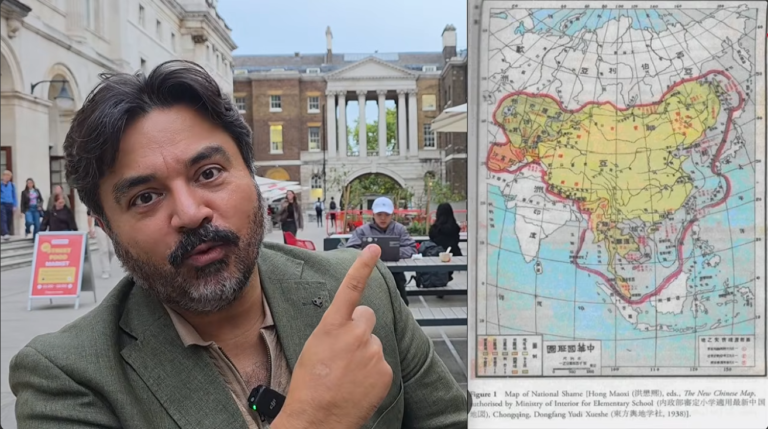
This distinction is particularly important when discussing Pashtun politics. Criticism of government policy is not automatically anti-state, nor should demands for accountability, development, human rights or political representation be treated as disloyalty. Pakistan’s constitutional order itself permits political disagreement. The danger begins when grievance is transformed into collective ethnic antagonism, when an entire federation is portrayed as a colonial arrangement, or when political rhetoric encourages territorial revisionism.
The state must answer such narratives firmly, but it must do so through law, evidence and democratic legitimacy
The description of Pakistan as a system of “Punjabi colonialism,” for example, is too simplistic to explain the country’s complex political structure. Pashtuns are not an external population governed by a foreign colonial authority. They are citizens and stakeholders whose political leaders, soldiers, judges, civil servants, entrepreneurs, professionals and ordinary voters have helped shape Pakistan for generations. The historical record of the 1947 North-West Frontier Province referendum is also significant. Some 99.02 percent of votes cast supported joining Pakistan, although the result must be understood alongside roughly 51 percent turnout and the boycott organised by the Khudai Khidmatgar leadership. History becomes more persuasive, not less, when its complexities are acknowledged.
The same discipline is necessary when discussing counterterrorism. Khyber Pakhtunkhwa has paid an enormous human price for militancy, and communities in Waziristan, Bajaur, Tirah and adjoining areas have repeatedly found themselves caught between violent organizations and security responses. The threat itself is not imaginary. Recent operations in North Waziristan and Bajaur have targeted militant networks, while United Nations reporting continues to identify the Tehreek-e-Taliban Pakistan as a serious regional security concern linked to the militant environment in Afghanistan.
Yet defending counterterrorism policy does not require pretending that civilian concerns do not exist. Displacement, economic disruption and fear surrounding security operations deserve attention. Reporting from Tirah in early 2026, for instance, documented population movements amid concerns about militant activity and targeted security operations. The strongest national-security policy is therefore one that separates civilians from militants, compensates affected families, provides transparent information and gives local communities a meaningful role.
Counterterrorism becomes harder to mischaracterize as ethnic persecution when the state visibly protects both security and civilian dignity
The border question requires similar clarity. Pakistan regards the Durand Line as its settled international frontier with Afghanistan, inherited at independence. The legal principle of uti possidetis juris, recognized in international jurisprudence, generally supports the preservation of inherited administrative boundaries when new states emerge. Afghanistan has historically disputed the Durand Line, so presenting the issue as entirely uncontested would be inaccurate. But political rejection by one side does not automatically erase an established frontier. Border management, including fencing and regulated crossings, is therefore a legitimate security concern, particularly where militant movement, weapons trafficking and smuggling threaten communities on both sides.
Pakistan’s most effective answer to separatist or irredentist narratives nevertheless lies inside its Constitution. The 18th Constitutional Amendment represented a major restructuring of the federal relationship and strengthened the provincial dimension of governance. Parliament records its adoption in 2010 as a landmark constitutional development. The 25th Amendment subsequently merged the former Federally Administered Tribal Areas into Khyber Pakhtunkhwa, extending the mainstream provincial constitutional framework to territories that had long existed under exceptional administrative arrangements.
These reforms demonstrate that Pakistan’s federation is capable of evolving through constitutional negotiation rather than territorial fragmentation
History also resists convenient political packaging. Abdul Ghaffar Khan opposed important decisions surrounding Partition and remained a powerful advocate of Pashtun rights, yet after Pakistan came into existence he took the oath in the Constituent Assembly in February 1948 and pursued political opposition within the new state. His example is important because it shows that provincial autonomy, ideological disagreement and loyalty to a constitutional state need not be mutually exclusive.
Contemporary controversy surrounding the Pashtun Tahafuz Movement should therefore be approached with the same precision. Pakistan proscribed PTM in October 2024, and the Peshawar High Court upheld the ban in February 2026. At the same time, rights organizations have criticized the prohibition and argued that peaceful political expression must remain protected. A democratic state should be capable of maintaining both principles simultaneously. Incitement to violence, material assistance to militancy or unlawful attempts to undermine territorial sovereignty should face lawful consequences, while peaceful criticism must be answered politically rather than suppressed merely because it is uncomfortable.
The same standard should apply to diaspora activism. Foreign platforms can amplify distorted narratives, but accusations that activists seek asylum, foreign patronage or personal benefit should be supported by evidence rather than generalized across an entire community. Weak allegations ultimately weaken the national case.
Pakistan gains more by exposing demonstrable misinformation, presenting verified facts and allowing its own Pashtun citizens to speak about their political identity than by reducing every external critic to a foreign agent
National unity cannot be manufactured by demanding silence. It is built when citizens believe that their ethnicity is respected, their grievances can be heard and their constitutional rights coexist with an unquestionable commitment to the country’s sovereignty. August 14 should therefore represent neither forced uniformity nor ethnic exclusion. It should reaffirm a federal idea in which Pashtun, Punjabi, Sindhi, Baloch and every other community can defend its identity without questioning the common political home they share. The most durable response to subversion is ultimately a confident state that combines territorial resolve with constitutional justice.

