





Fiscal Transparency or Political Targeting?
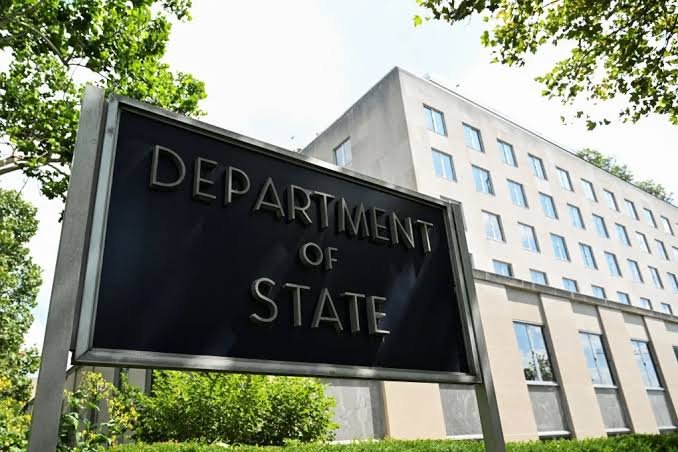
The release of the US State Department’s 2026 Fiscal Transparency Report on August 11 has once again placed Pakistan’s public financial management under an international spotlight. The report argues that Pakistan does not fully meet Washington’s minimum fiscal transparency requirements and recommends, among other measures, timely publication of the executive budget proposal, more detailed disclosure of government and state owned enterprise debt, and greater parliamentary or civilian oversight of military and intelligence budgets. These recommendations deserve serious consideration. Fiscal transparency is important for every country because citizens have a legitimate interest in knowing how public money is raised and spent. Yet acknowledging that principle is very different from accepting the selective political narrative now being constructed around the report.
Much of the Indian social media commentary surrounding the document has focused almost exclusively on its criticism of Pakistan. What is conveniently overlooked is that the same report also records several positive aspects of Pakistan’s fiscal system. It notes that the enacted budget and end of year report were widely accessible to the public, that available budget documents provided a substantially complete picture of most planned revenues and expenditures, that audit reports were published, and that Pakistan maintained accessible information on public procurement and a sound legal framework for its sovereign wealth fund. A serious reading therefore presents a mixed picture of strengths and weaknesses.
Turning that assessment into a sweeping indictment of Pakistan requires removing half the report from the conversation
That distinction matters. International assessments can help governments identify weaknesses, compare practices and improve institutions. They become less useful when political actors treat them as ammunition in interstate rivalry. Pakistan does not need to claim perfection in order to reject such manipulation. It can acknowledge that greater disclosure of public debt, stronger legislative scrutiny and timely publication of fiscal information are worthwhile objectives while firmly maintaining that the pace, structure and legal framework of such reforms remain matters for Pakistan’s constitutional institutions.
The irony becomes particularly visible when commentators associated with India’s information ecosystem portray the report as some extraordinary exposure of Pakistan. Commentators such as Sidhant would be better served by applying the same enthusiasm for transparency and accountability closer to home. Selectively amplifying every critical sentence concerning Pakistan while ignoring inconvenient questions surrounding India does not constitute serious journalism. It is political framing.
If transparency is a universal principle, it cannot suddenly become valuable only when it offers an opportunity to embarrass a regional rival
More importantly, consistency should extend beyond financial governance. No country should use transparency as a diplomatic slogan while ignoring accountability when the issues become politically uncomfortable. Gaza remains a powerful example. The UN Human Rights Council has continued to emphasise accountability and justice regarding the human rights situation in the Occupied Palestinian Territory, while UN humanitarian reporting in 2026 has documented continuing civilian suffering, displacement and severe humanitarian pressures. If openness, scrutiny and accountability are principles rather than political tools, the international community should demonstrate the same determination when human lives and international humanitarian law are at stake.
The same principle should inform discussion of Kashmir. The Office of the UN High Commissioner for Human Rights has previously documented serious human rights concerns in Indian administered Kashmir and called for credible investigation and accountability, while UN experts raised fresh concerns in November 2025 regarding alleged abuses during Indian counterterrorism operations. Fiscal transparency and human rights accountability are obviously different categories, but the underlying lesson is comparable. International standards command respect when they are applied consistently.
Selective scrutiny inevitably creates the perception that rules are being deployed according to geopolitical convenience
Pakistan, meanwhile, has no reason to treat engagement with Washington as a zero sum exercise. Islamabad and Washington have a long and complicated relationship that increasingly requires practical cooperation rather than public lecturing. Pakistan can welcome technically sound recommendations on public financial management without surrendering its right to determine how national institutions are governed. Reform works best when it strengthens domestic accountability rather than appearing to satisfy an external political checklist.
There is also a degree of humility that Washington itself should bring to discussions about financial accountability. In March 2026, the US Government Accountability Office reported that material weaknesses prevented it from expressing an opinion on the federal government’s consolidated financial statements. It specifically identified serious financial management problems at the Department of Defense, difficulties accounting for transactions between federal entities and weaknesses in preparing government wide financial statements. GAO also reported ineffective internal control over financial reporting for fiscal year 2025.
None of this invalidates American recommendations to other countries. It does, however, demonstrate that fiscal accountability is an unfinished project even within the United States
The sensible Pakistani response, therefore, is neither defensiveness nor submission. Islamabad should continue improving financial disclosure because doing so serves Pakistani taxpayers, Parliament and economic stability, not because hostile social media accounts demand it. Washington should frame recommendations as part of constructive institutional cooperation. And Indian commentators should resist the temptation to convert every international report into another chapter of an anti Pakistan information campaign.
Transparency is strongest when it is universal, credible and free from political manipulation. Pakistan should improve where improvement is necessary, but it should also insist on a simple principle. Standards that are presented as universal must be applied universally. Scrutiny cannot stop at Pakistan’s borders while Gaza burns, Kashmir remains contested and even the governments issuing transparency reports confront serious accountability problems of their own. Selective outrage does not strengthen transparency.