

UNSC Reform Without New Permanent Privileges
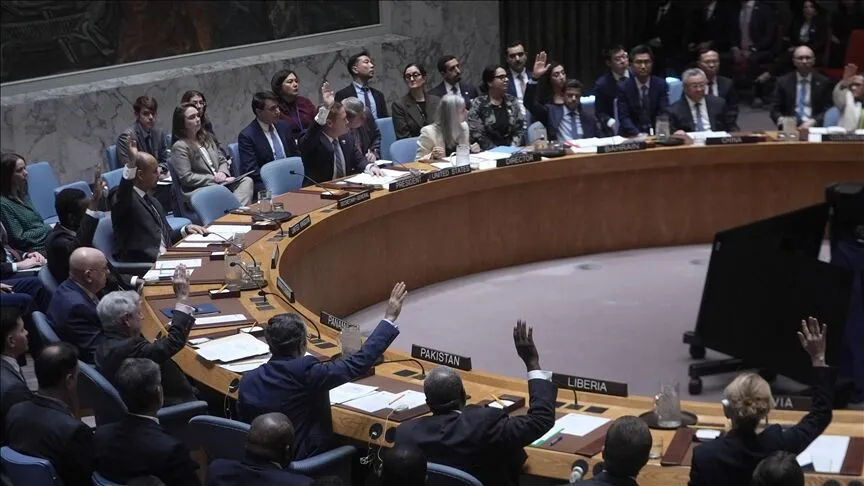
Reforming the United Nations Security Council is no longer a matter of institutional preference. It has become a question of credibility, representation and political legitimacy. The United Nations was created in 1945 after the failure of the League of Nations to prevent another catastrophic global conflict. The Security Council reflected the balance of power that emerged from the Second World War, with five permanent members enjoying veto authority and six elected members representing the wider membership. Although the number of elected seats was increased from six to ten in 1965, the basic structure of the Council has remained largely unchanged. Eight decades later, the international system is vastly different, with 193 UN member states and a global population exceeding eight billion.
The central question, therefore, is not whether the Security Council needs reform, but what kind of reform would make it more representative without making it more rigid. Since formal Intergovernmental Negotiations began in 2009 following the General Assembly’s decision to initiate the process, discussions have concentrated on five major areas including categories of membership, the veto, regional representation, the size of an expanded Council and its working methods.
The difficulty is that states agree broadly on the need for reform while disagreeing sharply on its shape
The strongest case for reform comes from the geographical imbalance of the present system. Africa has no permanent seat despite comprising 54 UN member states. Latin America has no permanent representation. Large parts of Asia, the Muslim world and the wider Global South remain inadequately represented in the Council’s most powerful decision-making category. Emerging and influential states such as Pakistan, Brazil, Türkiye, Indonesia, Saudi Arabia, Egypt, Nigeria, South Africa, Mexico and India understandably seek a stronger voice in matters involving international peace and security. Correcting this imbalance is necessary, but correcting one inequality by creating another set of permanent privileges would be a questionable solution.
This is where competing reform models diverge. The G4 countries, Brazil, Germany, India and Japan, seek expansion in both permanent and elected categories, including permanent membership for themselves and additional permanent representation for Africa. The African Group has demanded two permanent seats with all existing prerogatives, together with additional elected seats, as a correction of Africa’s historical exclusion. The France-Mexico Initiative focuses primarily on restricting the use of the veto in cases involving mass atrocities.
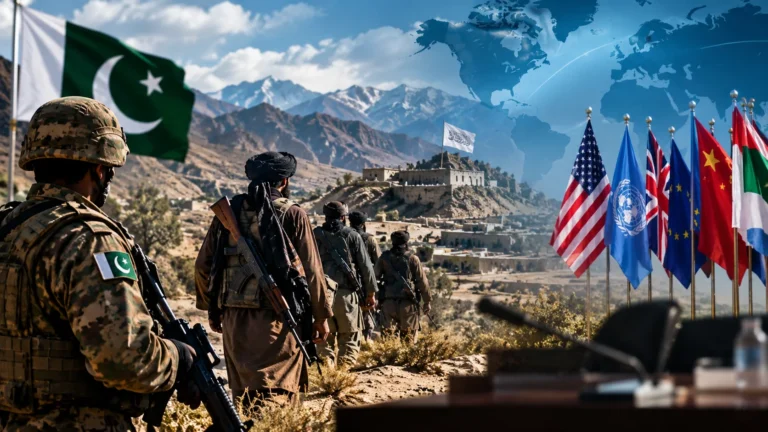
In contrast, the Pakistan-led Uniting for Consensus group opposes the creation of new permanent members and instead supports a significant expansion of elected seats, including longer-term and potentially re-electable arrangements
The logic behind the Uniting for Consensus position deserves greater attention. The most serious weakness of the Security Council is not simply that too few countries possess permanent seats. It is that permanent membership itself creates a privileged category largely insulated from electoral accountability. Adding more permanent states may broaden the club, but it would not eliminate the structural inequality at the heart of the system. New permanent members would not be subject to periodic elections, regional scrutiny or regular political accountability. Once created, such privileges would also be extraordinarily difficult to reverse.
The experience of the veto reinforces this concern. Security Council deliberations over Gaza, Ukraine and other conflicts demonstrate how strategic alliances and national interests can prevent collective action even when substantial international support exists for a particular course. The repeated use of veto power in resolutions concerning Gaza has generated particularly intense criticism of the Council’s capacity to respond consistently to humanitarian emergencies. Expanding the number of permanent members, especially if accompanied by additional veto rights, could multiply rather than reduce the opportunities for institutional paralysis.
India’s campaign for permanent membership also illustrates why candidature must be judged against more than population size, economic strength or geopolitical ambition. Permanent membership carries exceptional political and moral responsibilities. Questions surrounding the Jammu and Kashmir dispute, India’s August 2019 constitutional changes affecting the territory, concerns raised internationally regarding minority rights and religious intolerance, and recent diplomatic disputes involving allegations of transnational repression have complicated India’s claim to unquestioned international confidence. Its decision to place the Indus Waters Treaty in abeyance has further raised concerns about the treatment of long-standing international commitments.
These issues do not diminish India’s importance as a major global actor, but they demonstrate why permanent membership should never be treated as an automatic reward for national power
Germany presents a different problem. It is unquestionably an influential economy, an important diplomatic actor and a committed participant in multilateral institutions. Yet Europe already holds two permanent seats through France and the United Kingdom. Adding another permanent European member could deepen rather than correct regional imbalance. Germany’s strong political support for Israel during the Gaza conflict has also generated debate over the consistency with which humanitarian principles are applied. Economic influence alone cannot be the decisive criterion for permanent membership.
The Uniting for Consensus model offers a more adaptable alternative. Expanding elected representation from ten to around twenty seats would provide substantially greater opportunities for Africa, Asia-Pacific, Latin America and other underrepresented regions. Longer-term or re-electable seats could allow influential countries to remain engaged in Council affairs without turning representation into an irreversible entitlement. Elections would also preserve an essential principle that permanent membership lacks, accountability to the wider UN membership.
Rotation is particularly important in a world where geopolitical influence is constantly changing. Countries that are influential today may not hold the same position several decades from now. A flexible system of elected representation can respond to those shifts. Permanent seats cannot.
Reform should therefore prepare the Security Council for future geopolitical realities rather than permanently freezing another moment in international politics
As the reform debate moves toward the UN’s 81st session in September 2026, member states should resist the temptation to equate reform with the enlargement of permanent privilege. The objective should be a Council that is more representative, more accountable and more capable of acting collectively. Greater regional representation is essential, especially for Africa and the Global South, but it can be achieved more fairly through expanded elected membership.
The Security Council needs democratization, not another hierarchy. Sustainable reform should widen participation, strengthen regional rotation and improve accountability while avoiding additional veto-bearing centers of power. The Pakistan-led Uniting for Consensus approach offers a credible path toward that objective. A Council designed for the twenty-first century should not merely replace the privileges of 1945 with a larger set of permanent privileges. It should give more states a meaningful opportunity to participate, influence decisions and share responsibility for international peace and security.

