

The New Face of Taliban Strategic Warfare
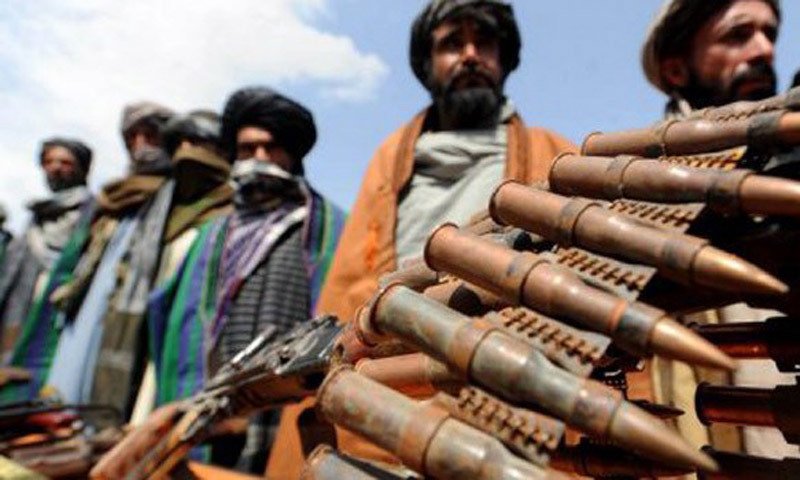
Modern conflicts are no longer decided solely through military strength, territorial control or diplomacy. They are also fought through narrative architecture: the construction of legitimacy, threat, victimhood and sovereignty before international audiences. Joey Moran’s May 2026 study for The Durand Dispatch, based on 137 English-language Al-Mirsad articles published between January 2025 and March 2026, demonstrates how the Taliban authorities have adapted to this reality. Its central conclusion is striking: Al-Mirsad functions less like an independent media outlet and more like an institutionalized strategic-communications platform serving the Islamic Emirate of Afghanistan’s political, ideological and security objectives.
Al-Mirsad’s significance lies in the coherence of its editorial agenda. Its content advances three interlocking objectives: delegitimizing Islamic State Khorasan Province, recasting Pakistan as Afghanistan’s principal external adversary and presenting the Islamic Emirate as a sovereign, diplomatically capable Islamic state within an emerging multipolar order. This constitutes sustained perception management aimed at diplomats, analysts, governments and international media.
Unlike militant publications focused primarily on recruitment, Al-Mirsad seeks to influence how policymakers interpret Afghanistan’s security environment and the Taliban’s claim to political authority
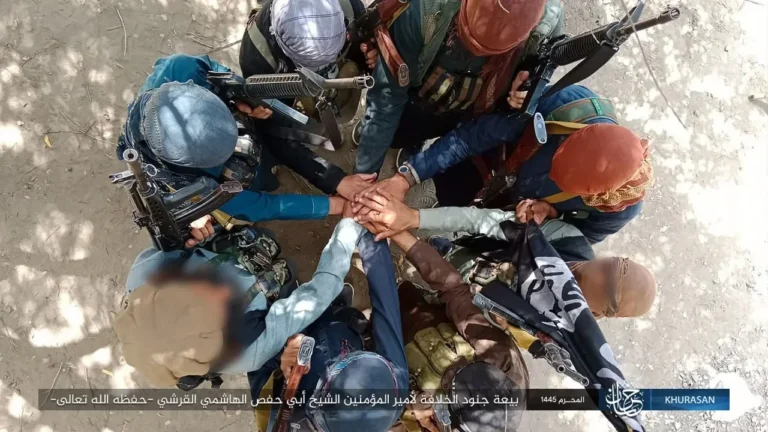
Its campaign against ISKP is the most developed component of this strategy. Al-Mirsad repeatedly employs terms such as Daesh, Khawarij and Fitnah to deny ISKP authentic Islamic standing. The term “Khawarij” is especially powerful because it transforms a security dispute into a theological verdict, placing the targeted organization outside the legitimate religious community. Yet this framing also reveals the political adaptability of doctrinal language. Pakistan uses related terminology, including Fitna al-Khawarij, for the TTP and associated groups. In both cases, religious categorization becomes a strategic instrument intended to isolate an adversary, undermine its legitimacy and justify coercive action.
Al-Mirsad also portrays ISKP as an externally manufactured project allegedly supported by Western intelligence networks and facilitated by Pakistan. Whether these accusations are substantiated is secondary to their communication purpose. The narrative allows the Taliban authorities to claim counterterrorism legitimacy while pre-emptively discrediting Pakistani security concerns. When Islamabad cites militant sanctuaries or cross-border threats, Al-Mirsad can recast such claims as manufactured pretexts for aggression. The presence of these narratives before the 2026 escalation suggests deliberate ideological preparation rather than an improvised response to unfolding events.
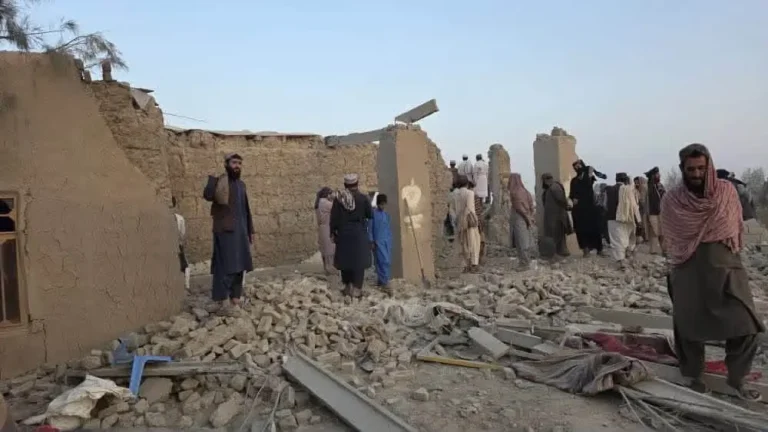
The second pillar is the repositioning of Pakistan as the principal external adversary, effectively replacing the United States following the withdrawal of foreign forces. Al-Mirsad presents Pakistan as a sponsor of ISKP, a state exporting its domestic instability and a declining power whose traditional leverage over Afghanistan has weakened. Pakistan is portrayed as economically dependent, politically fractured and strategically subordinate to Western interests. During the October 2025 and February 2026 escalations, the outlet emphasized sovereignty violations and civilian casualties, particularly among refugees, women and children.
This framing sought to depict Afghanistan as exercising lawful self-defence and Pakistan as practising unlawful coercion
Equally revealing is Al-Mirsad’s silence regarding the TTP, designated by Pakistan as Fitna al-Khawarij. The organization appeared in only four of the 137 analysed articles despite being central to deteriorating Afghanistan-Pakistan relations. This omission should not be mistaken for editorial neutrality; it is an information tactic. When silence becomes impossible, responsibility is redirected by treating the organization as Pakistan’s domestic problem, presenting it as a legitimate political-military actor or describing militants killed in Afghanistan as displaced Waziristani refugees. Selective absence therefore performs the same strategic function as selective amplification.
The third pillar is the construction of international legitimacy. Al-Mirsad highlights Russian recognition, Chinese engagement, Indian diplomatic outreach and other indications of de facto acceptance as evidence that the Islamic Emirate is becoming an unavoidable regional actor. Meanwhile, it minimizes the barriers preventing wider formal recognition, including restrictions on women, exclusionary governance, international legal pressure and concerns regarding links with transnational militant organizations.
The objective is to project diplomatic normalization without inviting equal scrutiny of the unresolved political, security and human-rights questions surrounding Taliban rule
The sophistication of this apparatus is most visible in its management of contradiction. The Taliban reject democracy but seek legitimacy from the international state system. They invoke sovereignty against Pakistan while appealing to pan-Islamic solidarity whenever politically useful. They present themselves as a counterterrorism partner while retaining the language of jihad, martyrdom and ideological resistance. Al-Mirsad does not attempt to resolve these contradictions. Instead, it segments its audiences and emphasizes whichever argument serves the immediate political objective. Communication flexibility must therefore not be confused with ideological moderation.
For Pakistan, the policy lesson is clear. Fragmented, delayed or purely reactive messaging will surrender the information initiative to an opponent that prepares narratives in advance. Islamabad needs an integrated strategic-communications framework linking military, diplomatic, legal, intelligence and media institutions. Its case concerning TTP sanctuaries and cross-border terrorism must rest on verifiable evidence, independently credible documentation, international law and sustained multilateral engagement. Pakistan must also invest in multilingual digital monitoring, rapid rebuttal mechanisms and continuous engagement with foreign analysts, diplomats and media organizations.
Al-Mirsad represents the Taliban’s transition from insurgent propaganda to institutionalized, state-aligned strategic communication. The movement’s ideological core has not fundamentally changed, but its external presentation has become more disciplined, multilingual and geopolitically aware. Future Afghanistan-Pakistan crises will unfold simultaneously across borders, diplomatic forums and digital platforms. Pakistan cannot prevail through episodic statements alone. It must develop the institutional capacity to define legitimacy, sovereignty, counterterrorism and victimhood before hostile narratives harden into international perception.

