



Water Without Borders, Trust Without Treaties
Why the Indus Waters Treaty Must Be Restored
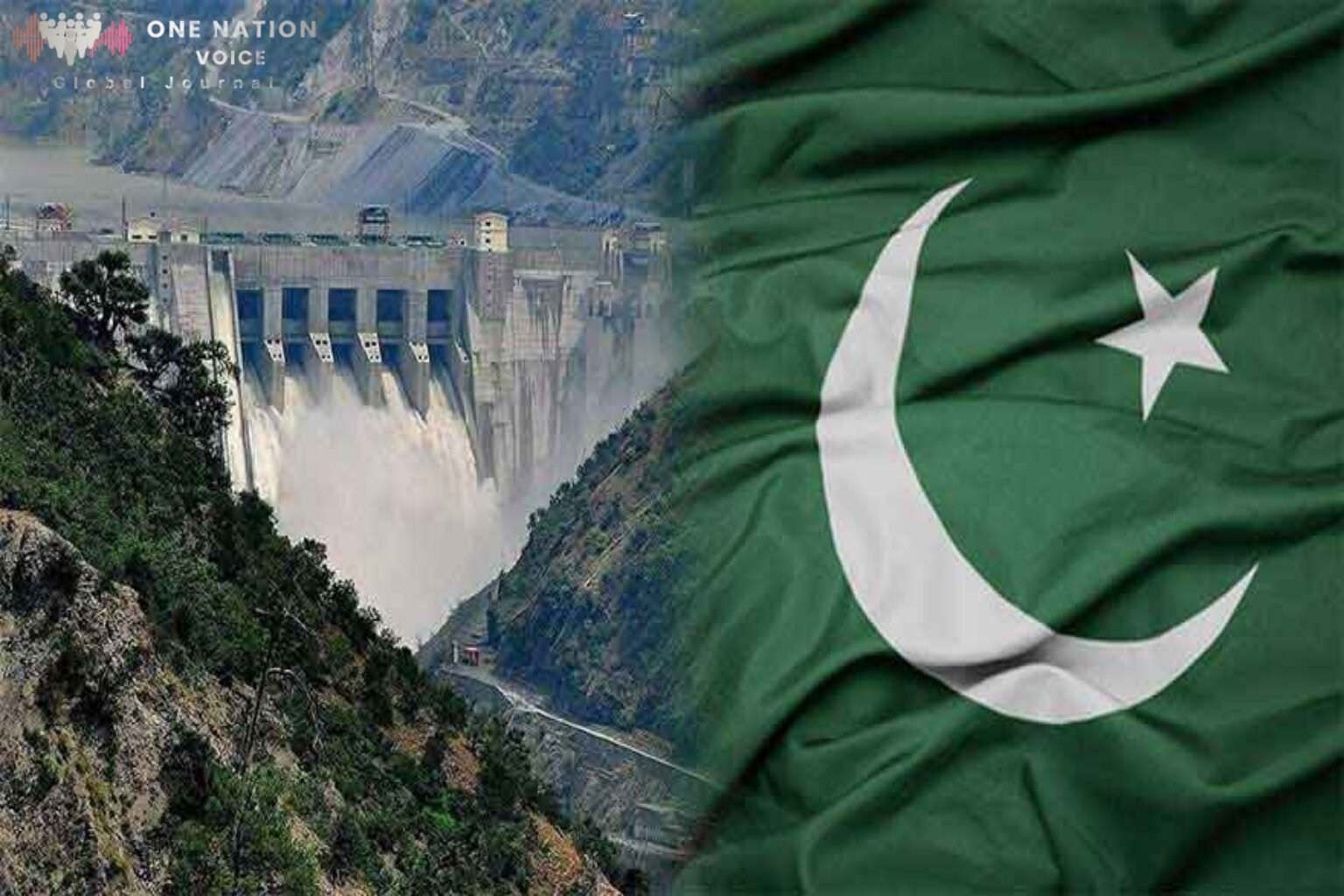
For more than six decades, the Indus Waters Treaty (IWT) stood as one of the rare success stories of transboundary diplomacy in a region otherwise defined by rivalry. Brokered by the World Bank in 1960, it survived three wars and countless diplomatic freezes between India and Pakistan, earning global recognition as a model of water cooperation. That model gave Pakistan a stable, predictable framework to manage the Indus River system and build the Indus Basin Irrigation System (IBIS), the largest contiguous irrigation network on earth. IBIS irrigates roughly 35 million acres, underpins over 90 percent of Pakistan’s food production, and powers a hydropower base that millions of households and industries depend on. For 65 years, this arrangement did more than distribute water, it anchored strategic stability between two nuclear armed neighbours.
That stability has now been placed under real strain. In April 2025, following the terror attack in Pahalgam, India announced it would hold the IWT in abeyance, a decision it has since reaffirmed repeatedly, most recently in July 2026 when India’s Ministry of External Affairs stated the treaty would remain suspended until Pakistan takes credible and irreversible action against cross border terrorism. Pakistan has consistently rejected the linkage of a technical water sharing framework to unrelated security grievances, and has pointed out, rightly, that the IWT contains no provision allowing unilateral suspension.
That legal reading has now been reinforced by the treaty’s own dispute resolution mechanism. In June 2025, the Court of Arbitration ruled that the treaty does not provide for unilateral abeyance and reaffirmed its own jurisdiction. India rejected that ruling, calling the court illegal. Then, in May 2026, the Court issued a further award on the sensitive question of reservoir pondage, reportedly affirming that the treaty places substantive limits on India’s ability to control water flows. India again rejected the ruling. What emerges is a troubling pattern, a bilateral treaty, twice affirmed by its designated arbitral body, is being treated by one party as optional. This is precisely the kind of unilateralism that the global One Water One Vision principle, which calls for cooperative transparent and science based management of shared rivers, was designed to prevent.
The practical consequences for Pakistan are not abstract. Alongside the abeyance, India has suspended the sharing of hydrological data on the western rivers, information that Pakistan has relied on for decades to forecast floods and manage irrigation schedules. During the 2025 flood season, the absence of timely flow data reportedly hampered Pakistan’s early warning systems at a moment when millions of people in flood prone districts needed accurate informatioMaintaining reliablen the most. Meanwhile, upstream infrastructure activity, including the Ranbir Canal expansion and the Chenab Beas Link Tunnel, has continued to advance. Pakistani officials, including Deputy Prime Minister Ishaq Dar, used an international conference in Islamabad on June 30 2026 to argue that these developments, taken together with the treaty freeze, represent a serious violation of international law and a threat to regional water security.
It is worth being precise about what actually worries Pakistan, because the debate is too often reduced to headlines about a single dam or a single canal. The deeper concern is cumulative and structural. No individual project may, on its own, breach the treaty’s technical limits. But taken together, a growing portfolio of upstream works gives India increasing capacity to influence the timing and predictability of flows on rivers that Pakistan’s agriculture energy and drinking water systems were built around. Predictability not just volume is what irrigation scheduling reservoir operation and flood management actually depend on.
The Chenab River sits at the centre of this concern for good reason. It irrigates close to 10 million acres in Pakistan and is deeply woven into the interconnected canal network of IBIS. Because the vast majority of the Chenab’s catchment lies within India, Pakistan has very limited domestic capacity to compensate if upstream regulation is prolonged or intensified. Unlike a country with diversified river basins or extensive groundwater buffers, Pakistan’s dependence on a handful of transboundary rivers means that changes in the Chenab’s flow pattern ripple quickly through the entire agricultural calendar.
Maintaining reliable treaty governed Chenab flows is not a negotiating luxury, it is a precondition for the operational stability of the country’s food and energy systems.
Pakistan’s position, consistently articulated on international platforms, has been to seek restoration of the treaty through legal and diplomatic channels rather than escalation. That instinct deserves support, not because Pakistan has no legitimate grievances of its own on security, but because a nuclear armed region cannot afford to normalise the idea that inconvenient treaties can simply be shelved outside their own amendment procedures.
If one party can suspend a functioning arbitration backed water treaty over a dispute the treaty was never designed to address, the precedent threatens every other transboundary water agreement in the world, at a time when climate stress is making such agreements more necessary, not less.
The path back is not complicated in principle, resume data sharing respect the Court of Arbitration’s findings and return to the Permanent Indus Commission that both countries built for exactly this purpose. What is required now is the political will to treat water as what it has always been under this treaty a shared resource that cooperation not coercion is best placed to manage.
Disclaimer:
The views and opinions expressed in this article are exclusively those of the author and do not reflect the official stance, policies, or perspectives of the Platform.

Author

His academic interests lie in international security, geopolitical dynamics, and conflict resolution, with a particular focus on Europe. He has contributed to various research forums and academic discussions related to global strategic affairs, and his work often explores the intersection of policy, defence strategy, and regional stability.
