
PTM’s International Conference 2026
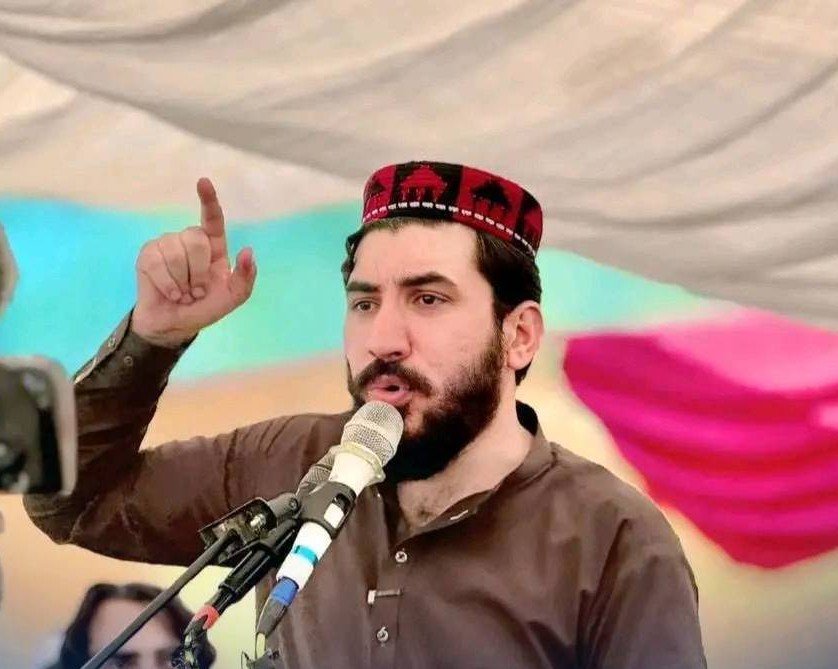
The Pashtun Tahafuz Movement’s proposed International Conference 2026 must be examined not merely as an overseas political gathering but as part of a wider contest over Pakistan’s security, sovereignty and international reputation. PTM-affiliated accounts have advertised the event for 14 July 2026 at the Nelson Mandela Lecture Theatre of Saïd Business School in Oxford. However, holding an event inside a university-owned building does not automatically constitute institutional sponsorship, academic endorsement or recognition by the University of Oxford. Saïd Business School openly markets its premises for conferences and external functions, while a commercial venue listing advertises the theatre for hire from approximately £2,800. PTM should therefore stop allowing a rented venue to be projected as evidence that Oxford University has endorsed its political narrative.
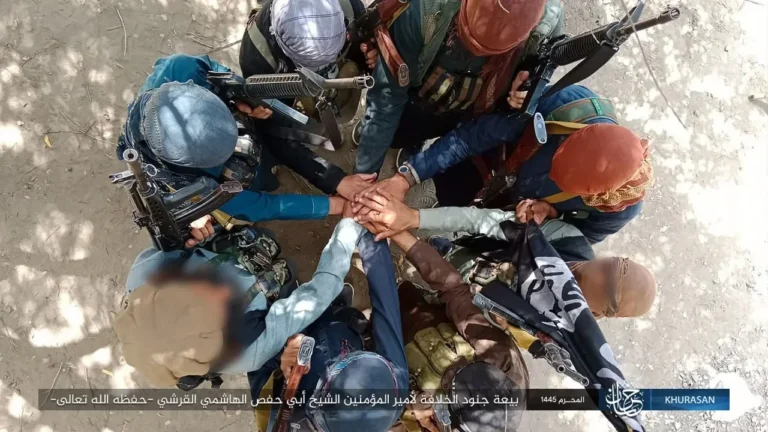
The more serious concern is the selective security narrative likely to be presented before an international audience unfamiliar with the complexities of the Afghanistan-Pakistan border. Any conference that depicts Pakistan as the sole source of violence while remaining silent about Tehreek-e-Taliban Pakistan terrorism offers advocacy without intellectual honesty. In November 2025, a briefing drawing upon the United Nations Security Council’s Analytical Support and Sanctions Monitoring Team described the TTP as having approximately 6,000 fighters, receiving logistical and substantial support from Afghanistan’s de facto authorities and conducting high-profile attacks in Pakistan from Afghan territory.
The TTP is also formally listed under the United Nations sanctions regime for its association with Al-Qaida
These realities cannot be erased by repeatedly labelling Pakistan’s counterterrorism measures as “aggression.” The 2026 Global Terrorism Index ranked Pakistan as the country most affected by terrorism in 2025, the first time it occupied the index’s top position. The report also identifies the Afghanistan-Pakistan borderlands as one of the world’s persistent terrorism hotspots, where difficult terrain, porous borders and weakly governed spaces enable militant organizations to operate. A genuinely representative Pashtun rights platform should therefore be among the loudest voices condemning TTP attacks, forced recruitment, suicide bombings, and the exploitation of Pashtun territory by armed groups.
Human rights advocacy is legitimate, and complaints concerning disappearances, displacement, checkpoints, landmines or civilian harm deserve lawful investigation. But rights advocacy loses credibility when it recognizes only one category of victim and remains ambiguous about the terrorists who have massacred Pashtun civilians, tribal elders, police officers, soldiers, teachers, and children. One cannot demand accountability from the state while offering political silence to an organization such as the TTP.
Nor can a movement claim to protect Pashtuns while failing to challenge the Afghan authorities over the presence and activities of anti-Pakistan militants
Accusations that PTM has received support from India’s Research and Analysis Wing and former Afghan intelligence structures have circulated since a 2019 military briefing. PTM has denied those allegations. Significantly, even a 2023 paper published by Pakistan’s Institute for Strategic Studies, Research and Analysis acknowledged that the government had not publicly released clear-cut proof establishing direct hostile-intelligence funding of PTM. Responsible commentary must therefore distinguish between official allegations, circumstantial political alignment, and judicially established evidence. The strongest criticism of PTM should rest on its observable rhetoric, strategic silences and choice of platforms, not on presenting every disputed allegation as conclusively proven.
Nevertheless, PTM’s messaging frequently appears to converge with narratives promoted by Pakistan’s regional adversaries: portraying the state as an occupying power, describing integration as “internal colonialism,” delegitimizing national security institutions and seeking international intervention in domestic political disputes. Such language does not advance reconciliation. It transforms legitimate grievances into instruments that external actors can exploit to intensify ethnic distrust.
The danger lies not in discussing Pashtun concerns internationally, but in presenting a decontextualized account that erases terrorism, ignores Afghanistan-based militancy and treats Pakistan’s territorial sovereignty as negotiable
Pakistan proscribed PTM in October 2024 under Section 11B of the Anti-Terrorism Act, with the Interior Ministry citing danger to public order and national security. Amnesty International and other rights advocates disputed that decision and described PTM as a peaceful movement. This disagreement makes transparency even more important. PTM should publicly disclose the conference’s organizers, donors, institutional partners, agenda, speakers and financial arrangements. It should also clarify whether Oxford University is sponsoring the event or merely renting a venue.
The sacrifices made in Pakistan’s war against terrorism cannot be reduced to a propaganda footnote. Addressing the United Nations in November 2025, Pakistan stated that it had suffered more than 80,000 casualties and enormous economic losses in confronting terrorism. Whatever broader casualty estimate is employed in domestic debate, the scale of sacrifice is undeniable. Those victims include thousands of Pashtuns and members of the security forces drawn from Pashtun families.
To portray Pakistan’s defenders collectively as oppressors while neglecting those murdered by terrorist organizations is not historical correction; it is historical distortion
PTM’s conference should therefore be judged by several basic tests. Will it explicitly condemn the TTP? Will it demand that Afghan territory not be used against Pakistan? Will it honour civilians and security personnel killed by terrorism? Will it distinguish peaceful constitutional advocacy from separatist or externally sponsored agendas? And will it acknowledge that renting an Oxford lecture theatre is not equivalent to receiving Oxford University’s endorsement?
Pakistan, for its part, should answer hostile narratives through verifiable evidence, transparent investigations, political engagement and accelerated development in terrorism-affected regions. National unity cannot be maintained through slogans alone. But neither can rights language be permitted to become a shield for selective outrage, foreign interference, or the whitewashing of terrorism. The Pashtun cause belongs to the Pashtun citizens of Pakistan, not to hostile intelligence interests, militant sanctuaries or overseas platforms seeking political spectacle at Pakistan’s expense.

