


Gwadar’s Strategic Rise
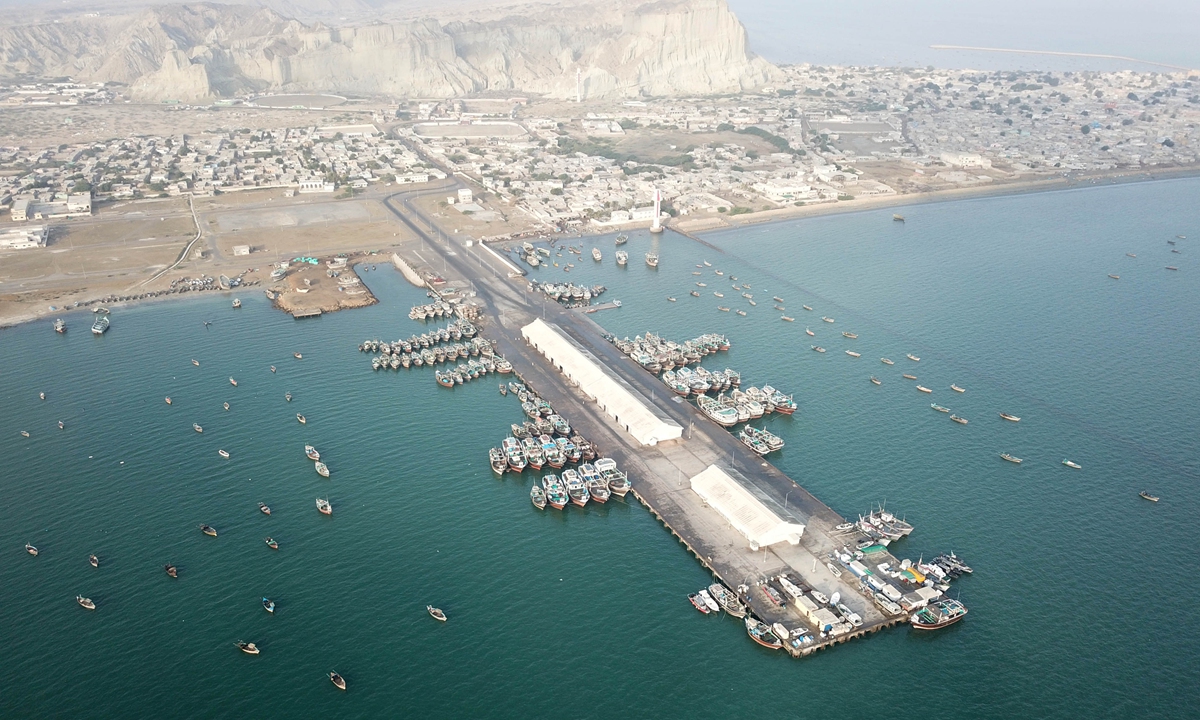
Gwadar is no longer a distant promise on Pakistan’s strategic horizon. It is steadily becoming a functioning maritime, commercial, and logistical reality. At a time when global trade routes are under pressure from geopolitical tensions, regional instability, and uncertainty around major chokepoints such as the Strait of Hormuz, Gwadar’s rise carries significance far beyond Pakistan’s coastline. It represents a national opportunity to reposition the country as a bridge between South Asia, Central Asia, the Middle East, Africa, and western China. Under CPEC Phase 2.0, Gwadar is moving from symbolism to substance, and the developments of 2026 suggest that Pakistan’s long-term investment in this port is beginning to produce visible results.
The most striking evidence of this transformation is the sharp increase in cargo activity. In April 2026 alone, Gwadar Port handled nearly 11,000 standard shipping containers, exceeding the entire annual volume of around 8,300 containers processed in 2025. This is not a routine improvement; it is a major operational leap. For a port that historically received fewer than twenty ships in a year, the arrival of regular commercial vessels within weeks marks a fundamental shift.
It shows that Gwadar is beginning to attract the confidence of shipping companies, traders, and regional stakeholders who see value in its location, infrastructure, and future potential
The momentum continued in May 2026 with multiple cargo vessels arriving from China and Gulf countries. The docking of major ships carrying industrial machinery, fertilizer, pipes, and commercial goods demonstrates that Gwadar is not merely handling token shipments for political optics. It is being tested and used for real trade. The arrival of MV Sho-Long with more than 16,000 metric tonnes of cargo, along with other vessels from Abu Dhabi and Kuwait carrying bulk and commercial goods, reflects Gwadar’s growing capacity to support large-scale transshipment operations. These developments challenge the outdated narrative that Gwadar is only an unfinished dream. The port is now participating in regional commerce in measurable ways.
Gwadar’s rise is also closely linked to changing global trade calculations. The Strait of Hormuz remains one of the world’s most sensitive maritime chokepoints, and any instability around it affects energy flows, shipping insurance, logistics planning, and commercial confidence. In this environment, alternative routes and ports gain strategic value. Gwadar’s location near the mouth of the Gulf gives Pakistan a unique opportunity to offer regional traders a safer, shorter, and more flexible option. If developed with consistency, Gwadar can serve not only Pakistan but also landlocked Central Asian states, western China, and potentially Russia’s future access to warm-water trade routes.
Pakistan’s government deserves credit for taking practical steps to improve Gwadar’s commercial appeal. The reduction of berthing fees for container ships by 25 percent and the 40 percent cut in charges on international transshipment containers are important signals to global shipping companies. Ports compete not only through geography but also through cost, efficiency, predictability, and policy support. By lowering operational costs and offering investor-friendly incentives, Pakistan is making Gwadar more competitive in a crowded maritime environment.
Tax exemptions, free storage facilities, and support for transit trade can further strengthen the port’s attractiveness if implemented with transparency and continuity
Infrastructure development around Gwadar is equally important. A port cannot succeed in isolation; it must be connected to roads, airports, industrial zones, energy systems, water supply, and urban facilities. The completion of the East Bay Expressway has improved connectivity between the port and national road networks, while progress on Gwadar’s New International Airport, desalination plants, export industrial parks, and the Gwadar Free Zone points toward a broader economic vision. These projects show that Pakistan is not treating Gwadar as a standalone dockyard but as the foundation of a modern coastal economic city. The inclusion of additional roads, drainage systems, tourism facilities, and urban infrastructure in the FY2026–27 development planning further reinforces this direction.
However, Gwadar’s success cannot be measured only by cargo volumes, cranes, roads, and ships. Its long-term stability depends on the confidence and participation of the local population. Water shortages, electricity supply, employment opportunities, education, healthcare, and local business inclusion must remain central to the development model. If Gwadar becomes a hub of global connectivity without improving the lives of the people of Gwadar, the project will remain incomplete. Sustainable development, social inclusion, and local ownership are not optional moral additions; they are strategic necessities.
Public trust is the strongest security framework for any major national project
Security threats and external propaganda will continue to challenge Gwadar’s progress. Any project of this scale, especially one linked to regional connectivity and great-power competition, will attract resistance. Yet the best response to propaganda is performance. Every successful cargo operation, every completed infrastructure project, every new job, and every improvement in local services weakens negative narratives. Pakistan must therefore remain focused on delivery, governance, transparency, and continuity. Gwadar’s credibility will be built through results, not slogans.
The developments of 2026 show that Gwadar is entering a decisive phase. It is no longer only a strategic concept discussed in policy papers and diplomatic speeches. It is becoming a functioning center of trade, logistics, and regional connectivity. For Pakistan, this is a rare opportunity to convert geography into economic strength. If managed wisely, Gwadar can help diversify trade routes, attract investment, support industrialization, connect regional markets, and strengthen Pakistan’s role in the emerging economic order. Gwadar’s rise is not just about a port; it is about Pakistan’s ambition to become a gateway of regional transformation.