






India’s Transboundary Water Aggression
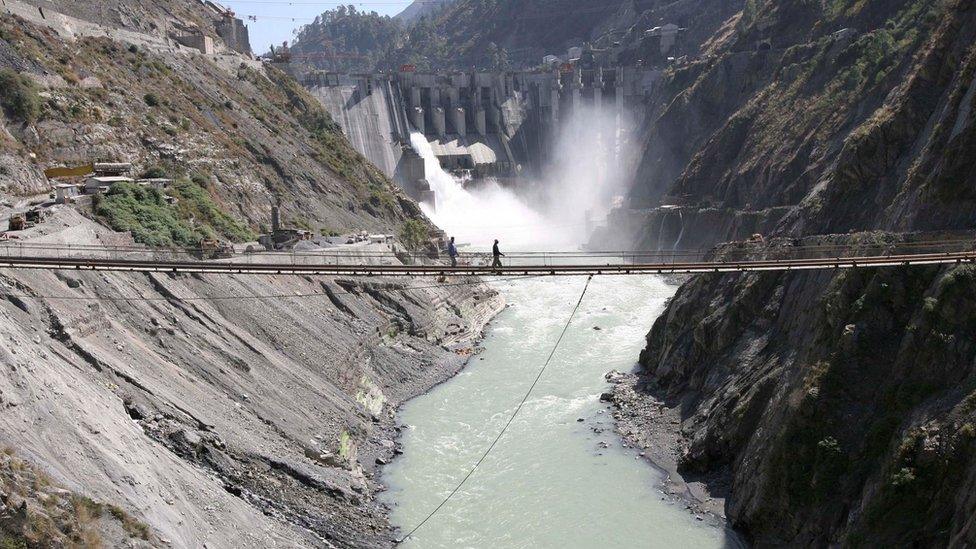
Water has always been more than a natural resource in South Asia. It is the basis of food security, rural survival, public health, energy planning, and national stability. That is why the 1960 Indus Waters Treaty was not merely a technical arrangement between Pakistan and India; it was a civilizational firewall. It placed rules around geography, power and vulnerability, and recognized that rivers cannot be treated as instruments of revenge. India’s unilateral decision to place the treaty in abeyance, coupled with its reckless “not a single drop” rhetoric, tears at that firewall and pushes the region toward coercive hydropolitics.
New Delhi wants to present its posture as sovereign infrastructure planning. That is a convenient fiction. When a state publicly declares that it is working to ensure water does not flow downstream to a neighboring country, it is no longer speaking the language of development. It is speaking the language of deprivation. The Chenab-Beas Link Tunnel project must therefore be seen in its political context, not as an isolated engineering scheme. The Chenab is part of the western river system on which Pakistan’s agriculture and millions of livelihoods depend. Any attempt to divert its flows into the Beas system strikes at the treaty’s bargain.
The most disturbing aspect of this doctrine is its intentionality. India is not accidentally undermining trust; it is consciously advertising water control as strategic leverage. Estimates linked to the diversion debate have referred to volumes as high as 6 million acre-feet, a figure that, even if contested, reveals the scale of ambition being imagined in Indian strategic circles. For Pakistan, the issue is not abstract hydrology. It is wheat fields, rice belts, canal rotations, drinking water, rural employment and the fragile economic life of the Indus Basin.
To choke a downstream country’s river system is to attack its social contract without firing a shot
This is why India’s conduct deserves to be called hydro-aggression. Treaties exist precisely to restrain powerful upper riparian states from exploiting geography against lower riparian states. The Indus Waters Treaty survived wars because both sides understood that water insecurity can turn conflict into catastrophe. By claiming the right to suspend a binding framework at will, India is asserting that legal obligations may be discarded whenever domestic politics demands it. It is the behavior of a state willing to turn ecological dependence into political punishment.
Pakistan’s position is not a plea for charity from New Delhi. It is anchored in law, treaty practice and international adjudication. The western rivers, Indus, Jhelum and Chenab, were allocated to Pakistan subject to limited Indian uses, and those uses were never intended to become a back door for strategic strangulation. Legal processes have forced scrutiny of Indian designs on the western rivers and validated core Pakistani concerns about design limits, data sharing and treaty interpretation. India may reject inconvenient findings, but rejection does not erase legal reality.
The humanitarian danger is equally grave. South Asia is already among the world’s most climate-stressed regions. Glacial melt, erratic monsoons, flash floods and drought cycles are placing pressure on Himalayan river systems. In this context, building upstream control structures while threatening downstream deprivation is not just hostile; it is ecologically reckless. It increases the risk of engineered scarcity in dry periods and sudden disaster in flood periods.
Rivers are living systems, not taps to be opened and closed for political applause
India’s leadership should understand the security implications of its own words. “Not a single drop” is not an administrative slogan; it is a threat. In a region of nuclear-armed rivals, such language lowers the threshold of crisis and widens the field of confrontation. Water is existential in a way that trade disputes are not. A farmer watching his canal run dry does not experience it as a legal technicality. A province facing irrigation collapse does not hear it as campaign rhetoric. Resource starvation creates anger that no border fence, media narrative or diplomatic briefing can contain.
The international community must not normalize this conduct. If the rules-based order means anything, it must mean that an upper riparian state cannot weaponize rivers against a lower riparian population. Silence will only embolden further violations, not only in South Asia but across every basin where power and geography are unequal. The Indus question is bigger than Pakistan and India. It is a test case for whether water-sharing treaties can survive nationalist politics, climate stress and infrastructural coercion.
New Delhi must step back from the brink. The Chenab-Beas diversion mindset, the unilateral treaty abeyance claim and the rhetoric of absolute water denial are creating a ticking time bomb. Pakistan’s water rights do not exist at India’s mercy. They are embedded in a binding treaty, reinforced by international legal reasoning and sustained by the moral claim of millions whose lives depend on the Indus system. To weaponize water is to invite blowback from nature, law and human fury alike. Those who turn life-sustaining resources into instruments of coercion eventually unleash forces they cannot control.

