


Why Pakistan’s Stability Still Matters to the United States?

Why Pakistan’s Stability Still Matters to the United States?
It is easy to forget about Pakistan until something goes wrong in the region. But for the United States, Pakistan’s stability is not just a regional issue anymore. Instead, it is tied to bigger global interests. Pakistan is a nuclear armed country of more than 240 million people and sitting in one of the most complicated neighborhoods in the world. It borders China, India, Iran, and Afghanistan. So, what happens there can ripple through Asia and beyond.
If Pakistan were to seriously unravel economically, politically, or through a resurgence of militancy, it would not just be a local crisis. This will affect trade routes, counterterrorism efforts, and even global migration patterns.
The United States has learned the hard truth that instability in South Asia will not stay in South Asia for long.
Geography and the Nuclear Question
Pakistan’s location is both its biggest asset and its greatest vulnerability. The country is a bridge between South and Central Asia, with ties to the Middle East too. Also, it is the only Islamic country which is a declared nuclear state. That alone keeps it on Washington’s radar. Besides, the United States is not only worried about Pakistan using those weapons but is also concerned about their security. Any hint of chaos or loss of state control raises fears about where that technology could end up.
Over the years, Pakistan has managed its nuclear arsenal with a professional military structure, which gives Washington some reassurance. But it is also why the United States cannot afford to see Pakistan’s institutions collapse or become hostage to extremist politics. Thus, the stakes are simply too high.

The Afghanistan Factor
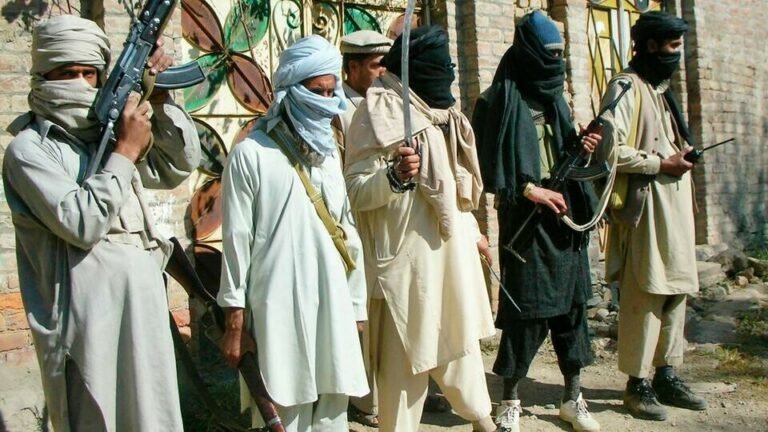
Moving forward, after the United States’ withdrawal from Afghanistan, Pakistan suddenly became even more important again. Many of the same militant networks that once operated in Afghanistan can now move freely across the border. Groups like TTP and IS-K are active again, taking advantage of weak border control and local grievances. The United States does not have boots on the ground in Afghanistan anymore, so it relies on Pakistan for intelligence, logistics, and sometimes quiet cooperation.
This relationship between two states has been rocky. There is mistrust on both sides. But lately, there have been signs of thawing which includes revived military contacts, Senior Pakistani officials meeting with President Trump, and Pakistan’s role in stabilizing the Kashmir ceasefire in 2025.
These moments show that Washington is starting to include Islamabad back into its broader South Asia strategy. Hence, the United States does not have many options in the region, and losing Pakistan entirely to China or Russia would not serve American interests.

Economic Stress and the Domino Effect
Moreover, Pakistan’s economy is a ticking clock. Inflation, debt, and constant IMF bailouts have made it fragile. If the economy goes into freefall, it will not just be about numbers. But this would mean unrest, mass unemployment, and possibly another wave of extremism. Thus, when people lose faith in the system, groups offering “order” often step in. The United States has seen this pattern before in other parts of the world.
Besides, there is also the question of United States’ business interests. Reko Diq in Baluchistan is a case in point. It is a massive copper and gold project involving American firms. So, if the region remains unstable those investments are at risk, along with broader mineral and energy supply chains that feed into global industries. Thus, helping Pakistan stay afloat is not only charity, but is tied to economic security too.
China’s Growing Shadow
Furthermore, it is no secret that China has made major inroads into Pakistan through CPEC (China Pakistan Economic Corridor). The project is a combination of roads, ports and energy projects. It is a full-scale strategy to secure influence and access to the Arabian Sea.
On one hand, for Beijing, Pakistan is a key piece of its Belt and Road puzzle. On the other, for Washington, this is the problem if it loses another strategic partner in Asia to China’s orbit.
However, this does not mean Pakistan has to “pick a side.” It just means the United States needs to stay engaged, offer alternatives, and keep the channels open. Cutting ties only gives China a free hand.
Therefore, by supporting Pakistan in things like infrastructure, education, and governance, and not just weapons sales, the United States can maintain a presence without turning the relationship into a zero-sum game.
A Bridge, not a Bystander
Additionally, the geography of pakistan also gives it huge logistical value. Besides, providing access to Afghanistan, Pakistan can also be used as a bridge for connection to Central Asia and humanitarian corridors that might be needed in future crises. The ports of Karachi and Gwadar are important not just to Pakistan, but to anyone trying to move goods or aid across the region. So, keeping that infrastructure stable benefits everyone, including American interests.
Reopening limited military aid or training programs could also help professionalize Pakistan’s defense sector and maintain cooperation. That is how both sides used to manage tensions before things soured in the 2010s. Also, this is not about rebuilding the old alliance but is about establishing a practical and working relationship.
Strength from Within
On top of that, Pakistan’s biggest threat is not foreign, but it is internal. Weak institutions, political infighting, and mistrust between civilian and military leaders have eroded stability. If the United States really wants Pakistan to be a partner, it should invest in long-term governance. This should consist of education, judicial reform and financial transparency, and not just counterterrorism.
These things take time, but they build resilience from the ground up. Thus, when people have a functioning government and some faith in their future, extremism loses its appeal. That is the kind of slow and patient engagement that pays off in the long run, even if it does not make headlines.
So, Pakistan’s stability matters because its collapse would shake the entire region. This is not about nukes or terrorism but is about preventing a domino effect that could destabilize South Asia and can open new space for powers like China or Russia. The United States does not need to be Pakistan’s closest ally, but it does need to stay connected. So, strategic patience, steady engagement, and a bit of humility about past mistakes might be the best way forward.
The United States has tried walking away from Pakistan before, but it always had to circle back. However, this time staying engaged without committing might be the smarter move.
The views and opinions expressed in this article are exclusively those of the author and do not reflect the official stance, policies, or perspectives of the Platform.

