

Afghanistan’s Children Starve as the Taliban Fails to Govern
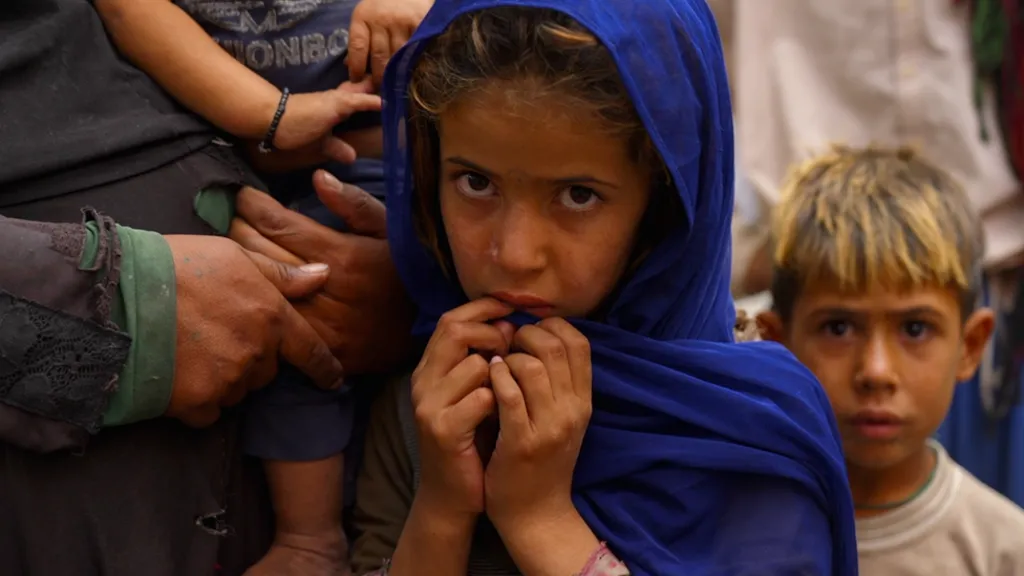
There is a particular kind of silence that follows a child who is too hungry to cry. OCHA’s Afghanistan team encountered that silence last week when they visited community elders in southern Afghanistan, people charged with identifying the most vulnerable families before the winter tightens its grip. What they found was not a crisis unfolding in slow motion. It was one already arrived.
As of this week, 15.9 million people in Afghanistan face crisis level or worse food insecurity, including 3.4 million experiencing emergency conditions, the most severe classification before famine. Child wasting has reached its highest recorded levels for the August to October period. These are not projections. This is November 2026.
And yet, as these numbers pile up, the Taliban regime that holds Afghanistan in its grip has not presented a national budget for four consecutive years. In the 2025 Corruption Perceptions Index, Afghanistan ranked 169th out of 182 countries, with a score of just 16 out of 100, four places lower than the previous year. A government that cannot account for its finances while children starve is not governing. It is looting while the lights go out.
The Hunger Has a Human Shape
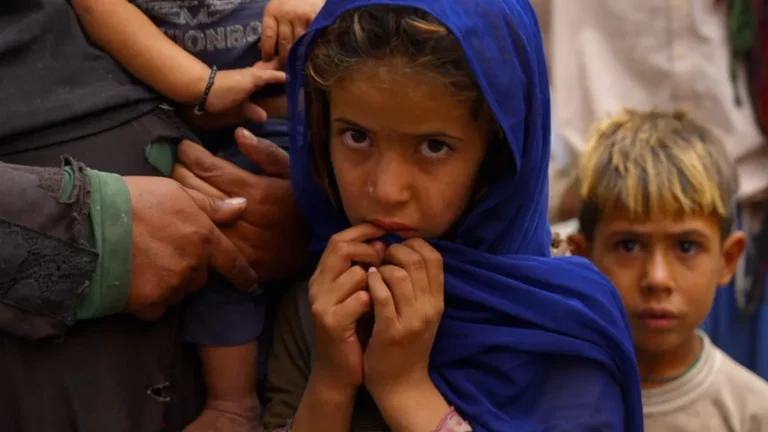
OCHA’s field teams in southern Afghanistan describe something that statistics alone cannot carry: hunger that cannot be seen on a child’s face until it has already become life threatening. Parents skipping meals so their children can eat. Mothers arriving at health centers carrying infants whose bodies have already begun consuming themselves. WFP’s Afghanistan director has described women who are “sacrificing their own health and their own nutrition to feed their children.” This is what the numbers mean when they become people.
UNICEF warns that 3.7 million children under five in Afghanistan are now at heightened risk of malnutrition due to food insecurity, poor diets, and inadequate access to basic services, and the situation has worsened across 26 out of 34 provinces compared with 2025. The peak malnutrition season has not yet even hit its worst point. By 2027, malnutrition cases are expected to increase by nearly 10 percent to four million, with mothers and children at the absolute forefront of this unfolding catastrophe.
A Healthcare System Being Deliberately Broken
Southern Afghanistan’s overcrowded health facilities, flagged directly in OCHA’s latest alert, are not simply underfunded. They are being structurally undermined by the very authority that claims to govern. WHO estimates that 14.4 million Afghans will require health assistance in 2026. Some 445 health facilities were suspended or closed during 2025, including 203 mobile health and nutrition teams, for remote communities, often the only practical connection to healthcare.
In December 2024, the Taliban issued a directive banning women from attending medical and health training institutions, effectively halting the pipeline of new female health professionals entering the workforce. This is not a side policy. It is a deliberate act of institutional self destruction. OCHA warns that Afghanistan could lose more than 25,000 female teachers and health workers by 2030, including thousands of future doctors, nurses, and midwives needed to provide healthcare for women and girls. You cannot fight a malnutrition crisis without female health workers in a society where women cannot be examined by men.
The WHO has reported that daily, 24 mothers and 167 newborns in Afghanistan die from preventable causes. Every single day. That figure has not moved the regime to act. It has not produced emergency measures. It has produced a mahram requirement, a rule forcing women to bring a male guardian to any medical appointment, which has led to increased maternal and infant mortality, severe malnutrition affecting approximately 1.2 million women, and a rise in preventable disease.
The Funding Gap and the Accountability Hole
The humanitarian response to Afghanistan’s crisis is catastrophically underfunded. WFP’s operations for emergency food assistance and nutrition programmes are costed at around $900 million for 2026, but the humanitarian response has been funded to just 26 percent of its target. At the same time, what funding does flow faces systematic diversion.
According to SIGAR, the US watchdog, the Taliban has been profiting from humanitarian operations by diverting aid, extorting humanitarian workers, and colluding with corrupt officials to extract payments, with reports of similar conduct across at least nine UN organizations. As ordinary Afghans sink deeper into poverty, the Taliban’s rulers sit atop a diversified revenue machine, reaching into customs duties, religious taxes, illicit mining, and narcotics trafficking.
It is a system designed to extract from suffering rather than alleviate it. Afghanistan’s opium trade is recovering despite a nominal ban, as poverty pushes desperate farmers back to poppy cultivation, with the UN confirming production has surged with a fivefold year on year increase. Farmers are not returning to poppy because they want to. They are returning because, as one young farmer told a journalist: without it, they cannot even afford basic food.
What OCHA’s Visit Actually Revealed
OCHA’s spokesperson described meeting community elders whose task is to identify the most vulnerable families for food assistance. That image should sit heavily with anyone following this crisis. The situation is expected to deteriorate further during the winter lean season from November 2026 to April 2027, with nearly 19.2 million people, 38 percent of the population, projected to face Phase 3 or above, including five million people at emergency levels.
The organization needs funds. It needs access. And it needs the international community to understand that this is not simply a natural disaster compounded by poverty. It is a governance failure of historic scale, produced by a regime that has systemically excluded women from education, work, and healthcare while failing to publish a single national budget, failing to account for billions in aid, and presiding over 4.04 million children who will require treatment for acute malnutrition in 2027, including approximately 1.09 million facing severe acute malnutrition.
Afghanistan’s people have endured decades of conflict. They have survived invasion, civil war, and economic collapse. But what they face now is a compounding of every crisis simultaneously, hunger, disease, exclusion, and a government that has weaponized poverty rather than fought it. The child OCHA filmed walking barefoot across a dusty courtyard in southern Afghanistan did not create this. She is simply living, or trying to, inside it.
The international community cannot outsource its conscience to underfunded UN agencies working at 26 percent capacity. That little girl deserves more than a tweet and a funding appeal that goes unanswered.

