


JAAC Walks Away
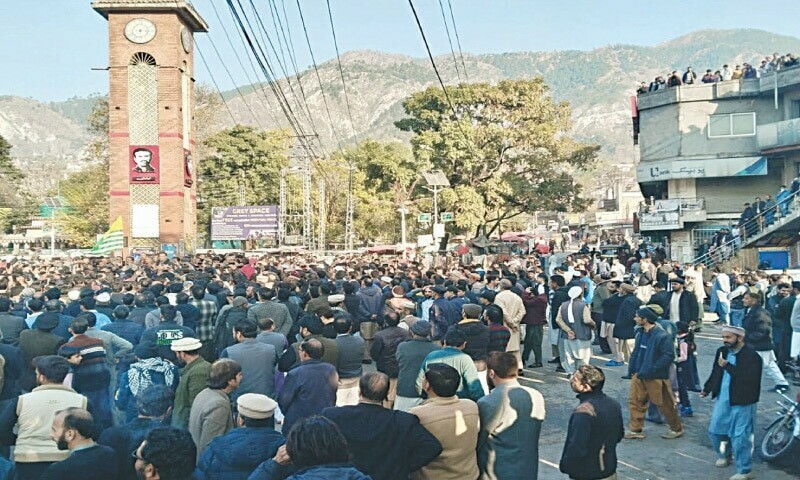
JAAC’s latest posture has made one thing clear. This is no longer only about unmet public demands. It is about what happens when a group keeps the street heated even after the state moves, pays, reforms, and concedes. The Government of Azad Jammu and Kashmir has addressed the central points JAAC itself put forward, yet JAAC continues to refuse dialogue. In politics, refusal can be louder than slogans. When a negotiating door stays open, and the other side will not walk through it, the public has every right to ask whether the real goal is resolution or disruption.
Start with the facts that matter to ordinary people. The health card was a core demand because it touches the most basic fear in any household, illness without support. Its restoration is not symbolic; it is practical relief. Add to that the allocation of funds for improving cellular services, a need tied to business, emergency access, education, and basic connectivity. Then there is the release of detainees, the withdrawal of FIRs, and steps toward institutional reforms within the assembly framework. These are not minor gestures. They are the kind of actions protest groups normally claim as victories.
A responsible movement would treat these as proof that pressure produced outcomes, then pivot to verification, monitoring, and structured follow through. That pivot requires talks. JAAC is refusing that step, and that refusal changes how the public should read its claims
Dialogue is not a favor from the state, and it is not a surrender by protesters. Dialogue is the bridge between demands and implementation. Without it, there is no way to confirm timelines, track delivery, resolve bottlenecks, or prevent misunderstandings. If JAAC truly believes in public welfare, it should want to sit down, check progress point by point, and lock in what comes next. Instead, it is keeping a distance from the table while staying close to agitation. That choice does not look like a movement trying to protect gains. It looks like a movement that cannot afford the calm that comes after gains.
This is where credibility becomes the central issue. A group that lists specific demands and then sees those demands substantially met should have an incentive to engage, not disengage. When the state restores a benefit, releases detainees, withdraws cases, and commits funds, the rational next move for any serious platform is to claim the win, confirm the remaining gaps, and negotiate safeguards. Refusing dialogue after delivery suggests that the demands may have been a vehicle, not a destination. It suggests that the real value lies in keeping the environment tense, because tension keeps a group relevant, visible, and feared. That is disruptive intent dressed as advocacy.
JAAC’s posture also creates a dangerous information problem. Where talks do not happen, rumors grow. Where verification does not happen, exaggeration becomes a tool. Where institutions are not engaged, every administrative delay is framed as betrayal, even when the process is moving. The result is a public stuck between competing narratives, unable to tell what has been delivered, what is pending, and what is being manipulated. This is exactly how mistrust spreads.
It hardens society into camps, one side angry, the other side defensive, both less willing to compromise. That is not public empowerment. It is social fragmentation
The government’s approach, in contrast, has shown a pattern of accommodation and forward movement. Beyond addressing the immediate list, it has signaled longer-term planning through initiatives like an airport feasibility study. Whether one agrees with every policy choice is beside the point. The message of such steps is that the state is trying to shift from crisis management to development planning. In a healthy democratic culture, protest groups do not reject development goals. They shape them, audit them, and ensure fairness. They use talks to secure transparency and equitable distribution. If JAAC dismisses dialogue while development planning is underway, it risks being seen as opposing progress itself, or at minimum, opposing the stability required for progress.
There is also a higher civic cost. Public protest has moral weight when it reflects sacrifice for a clear end, such as rights, reforms, or accountability. But protest loses moral weight when it becomes perpetual performance, detached from outcomes. When demands are met, and agitation continues unchanged, the public begins to suspect that the cause is no longer about people’s needs. It becomes about power, control of the narrative, and the ability to paralyze.
That is why the line “Government delivers, JAAC disengages” is not just a punchline. It is a warning about how movements erode themselves when they treat dialogue as an enemy
None of this means citizens should stop questioning the state. They should not. They should keep demanding timelines, transparency, and proof of delivery. But the same standard applies to JAAC. If it claims to represent the public, it must explain why it refuses the one step that would clarify everything, formal engagement. If the government has truly done nothing, dialogue would expose that. If the government has delivered, dialogue would confirm it and allow the next phase of demands to be framed responsibly. Refusal serves only one side, the side that benefits from confusion.
At this stage, JAAC has a simple choice. It can act like a serious public platform by entering talks, verifying implementation, and presenting a clear, updated agenda based on what remains. Or it can keep rejecting dialogue and confirm what its behavior already suggests, that disruption is the point. The public deserves outcomes, not endless escalation. Stability offered should not be answered with instability manufactured. Public welfare achieved should not be met with misinformation amplified. If JAAC wants trust, it should stop performing anger and start doing the work of resolution, across the table, in the open, with facts.

Author

Sohail Javed is a seasoned media professional, currently serving as Chief Executive of National News Channel HD and Executive Editor of "The Frontier Interruption Report." He brings years of journalistic experience and insight to the newsroom. He can be reached via email at Shohailjaved670@gmail.com for inquiries or collaboration opportunities.
