

Godi Media’s Shameless Distortion of Facts

When the Camera Lies: Indian Media’s Narrative War Over the Hamza Burhan Killing
The killing of Arjumand Gulzar Dar, widely known by his alias Hamza Burhan, in Muzaffarabad, AJK, has once again brought into sharp focus a deeply troubling phenomenon: the industrialisation of misinformation by sections of Indian media, popularly dubbed “Godi Media.” The term has earned international recognition as shorthand for state aligned, sensationalist journalism that subordinates facts to political theatre.
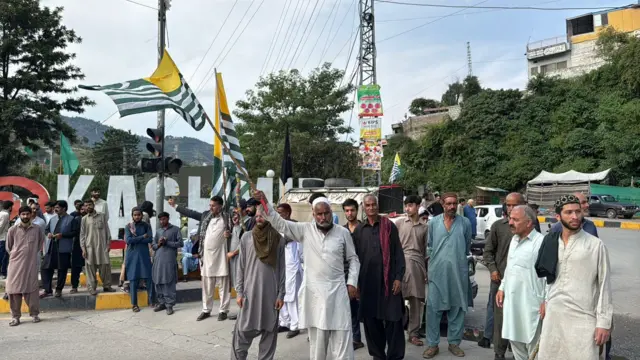
Before any analysis of the media conduct, the basic facts must be established clearly. Hamza Burhan was shot dead by unknown gunmen in Muzaffarabad city of Pakistan administered Kashmir. He was attacked by unknown assailants and reportedly died instantly due to multiple gunshots. While designating him as a terrorist in 2022, the Indian government stated that he was a resident of Pulwama and an associate member of Al Badr, a militant outfit designated under the UAPA. Burhan, who reportedly worked undercover as a teacher in AJK, was shot at close range when he came out of his college in Gojra, Muzaffarabad. These are the verifiable facts, and yet what certain Indian media channels built upon them was something far removed from responsible journalism.
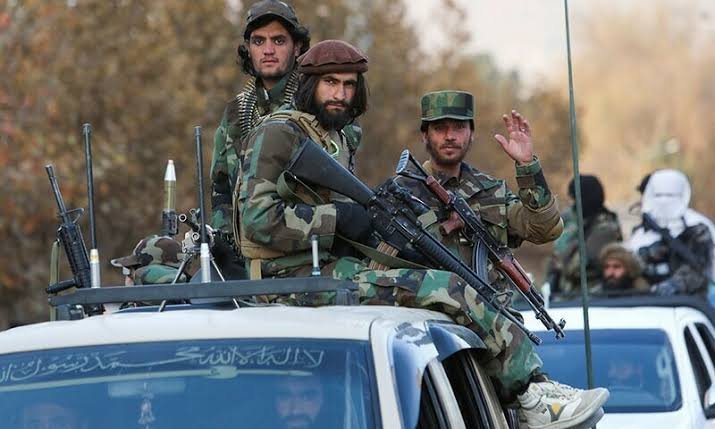
The most egregious distortion centred on the identity of those present at Hamza Burhan’s funeral. According to counter narratives circulating widely on Pakistani social media and corroborated by civil society observers in AJK, Indian media outlets portrayed the armed guards present at the funeral procession as “terrorist commanders,” when in reality these were legally authorised security personnel, police or private security operatives routinely assigned to protect civil servants, educators, and political figures in AJK.
The conflation of licensed security professionals with militant commanders is not a journalistic error. It is presented by critics as a deliberate act of fabrication designed to manufacture a sinister tableau for international consumption.
This is not an isolated incident. Amid heightened India Pakistan tensions in early May 2025, Indian mainstream media flooded the public with fake news, doctored visuals, and sensationalist coverage, fuelling mass anxiety and misinformation. Fact checkers and experts condemned the media’s role, calling it a national embarrassment that undermined journalistic integrity and misled citizens during a critical geopolitical moment. The Hamza Burhan coverage followed this exact template: a kernel of real news, the killing of a designated individual, wrapped in layers of speculation, fabricated audio interpretations, and contextual dishonesty to produce a narrative that served political objectives rather than an informed public.
Reporters Without Borders has noted the rise of “Godi Media,” outlets that mix populism and pro BJP propaganda. Through pressure and influence, the Indian model of a pluralist press is increasingly being called into question. The Hamza Burhan coverage has been described by critics as a case study in exactly this dynamic. India Today’s report, for example, built an elaborate intelligence narrative around audio messages allegedly circulating in “terror linked groups,” claiming Pakistani intelligence was scrambling to manage the fallout of Burhan’s death. These audio messages were presented as “exclusively accessed” material, a phrase that in responsible journalism requires independent verification before broadcast. No such verification was publicly offered to viewers.
What makes this pattern particularly dangerous is its geopolitical timing. The four day military crisis between India and Pakistan in May 2025 became even more dangerous when both countries integrated disinformation and fake images into their conventional warfighting. The speedy generation of false information and realistic deepfakes, aided by AI, made it difficult to verify what was really happening. Even reputable journalists, government officials, and politicians were misled by fabricated content shared as authentic battlefield footage. In this environment, presenting armed funeral guards as militant commanders is not merely irresponsible. It is potentially incendiary, capable of inflaming public sentiment and poisoning diplomatic space at precisely the moment when it needs to be kept open.
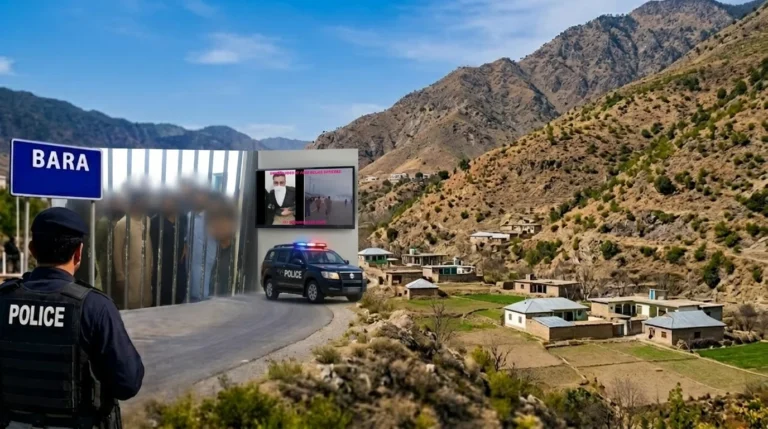
The fatal shooting in Muzaffarabad is not an isolated incident, but part of an ongoing geopolitical phenomenon. Over the past few years, a successive wave of high profile operatives residing in Pakistan have met identical ends at the hands of “unknown gunmen.” Local police in Muzaffarabad cordoned off the area to launch an investigation, though historical precedents indicate that the exact actors driving these clinical executions are unlikely to ever be formally identified or acknowledged. Serious investigative journalism would interrogate this pattern: who is ordering these killings, under what authority, and with what broader strategic objective? Instead, critics argue that sections of Indian media chose the easier route of amplifying intelligence talking points without scrutiny while embellishing the story with invented villainy.
The individual from Indian administered Kashmir who built a life in AJK, working as an educationist, deserved at minimum the basic dignity of factual reporting about his death, irrespective of what Indian authorities alleged about him. International journalism standards require that even accused individuals not be subjected to post mortem character fabrication without corroborated evidence. The funeral footage misrepresentation crossed that line entirely.
There is a broader lesson here for media consumers across South Asia. An investigative report by Fake News Watchdog revealed extensive manipulation and dissemination of false information by Indian media during the recent conflict, exposing how sections of mainstream media engaged in a widespread propaganda campaign using fake videos, images, and misinformation. The credibility of Indian media suffered a severe blow both domestically and globally due to the fake news campaign, which critics alleged enjoyed government backing throughout the conflict.
The Hamza Burhan episode is the latest chapter in this credibility crisis.
When a media ecosystem abandons its foundational obligation to report, verify, and contextualise, it does not merely mislead its viewers.
It becomes an instrument of statecraft, a weapon pointed at regional stability. The international community, and responsible journalists everywhere, must recognise this phenomenon for what critics describe it as: not news, but narrative warfare dressed in the costume of journalism.
Disclaimer:
The views and opinions expressed in this article are exclusively those of the author and do not reflect the official stance, policies, or perspectives of the Platform.

