



India’s Sawalkot Dam Initiative Deepens Hydro Political Tensions in the Indus Basin
Water as Weapon: The Sawalkot Dam and the Unraveling of the Indus Basin Order
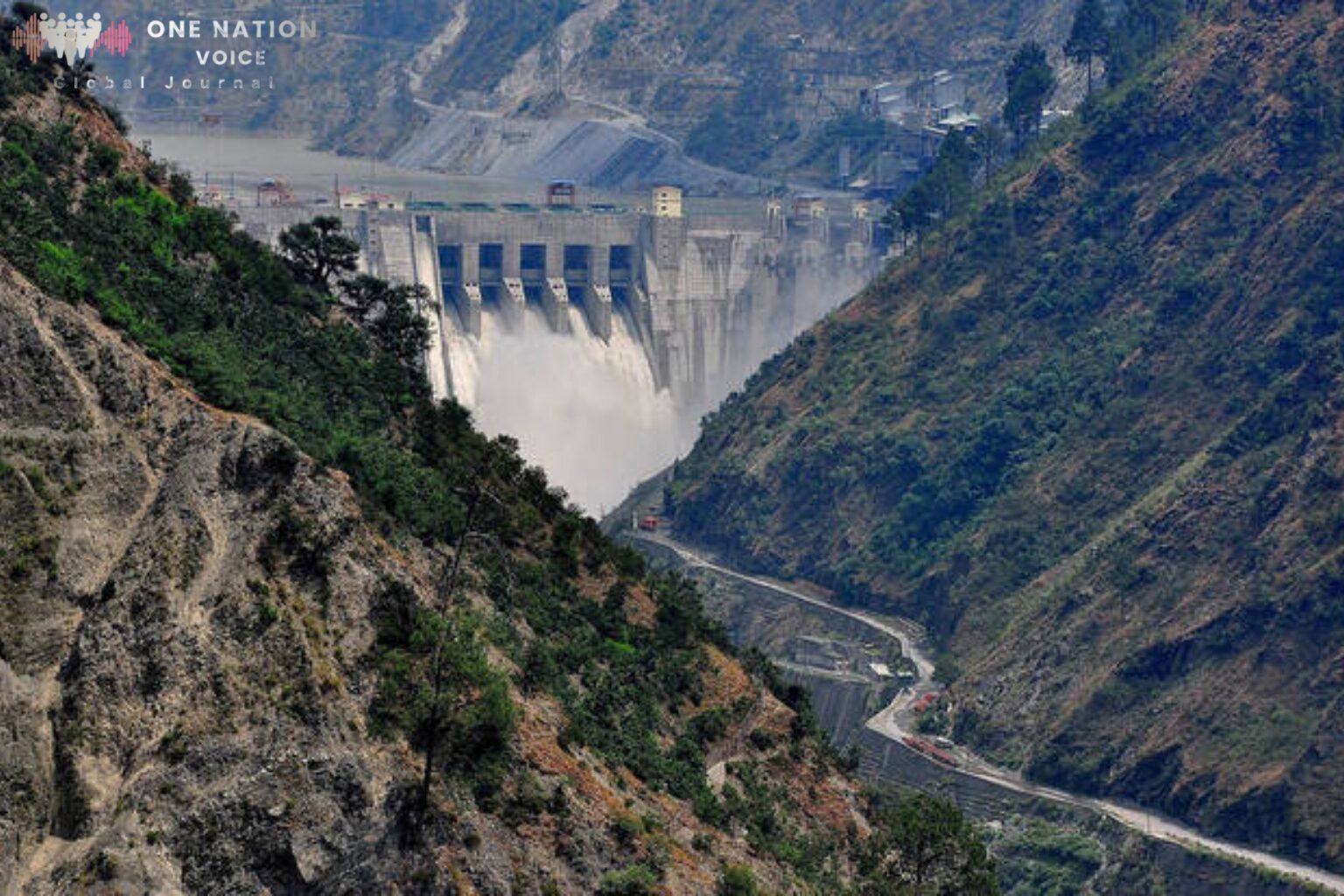
There are moments in regional history when a single infrastructure project carries implications far beyond its engineering blueprints. India’s Rs 5,129 crore tender for the Sawalkot Hydroelectric Project on the River Chenab is one such moment. Floated by the National Hydroelectric Power Corporation in February 2026, the 1,856 MW project involving a 192.5 metre concrete gravity dam, underground tunnels, coffer dams, and diversion works across Ramban district is not merely a power generation initiative. Set against the backdrop of a suspended Indus Waters Treaty, withheld hydrological data, and accelerating upstream infrastructure, it represents a fundamental challenge to transboundary water governance in South Asia.
The Sawalkot project received fresh environmental clearance in 2025, an approval that came directly after India suspended the Indus Waters Treaty following the Pahalgam attack, expediting strategic projects on western rivers. The timing is not incidental. The tender explicitly comes in the wake of India’s suspension of treaty proceedings, which gave New Delhi greater freedom to fast track hydropower projects on western rivers. What was once a decades long dormant proposal, first conceived in 1984, has now been declared a Project of National Importance and propelled into active construction planning with remarkable speed.
The hydro political dimensions of this shift are difficult to overstate.
The Indus River Basin is a lifeline for more than 300 million people across both countries, supporting agriculture, energy production, and livelihoods.
Signed in 1960, the Indus Waters Treaty divided the basin’s rivers between India and Pakistan while establishing detailed rules for cooperation, data sharing, and dispute resolution. For more than six decades, it proved remarkably durable and acted as a stabilizing force for broader regional relations. That institutional architecture is now under serious strain.
Eighty percent of Pakistan’s cultivable land relies on water from the Indus system, and 93 percent of this water is used for irrigation, forming the agricultural backbone of the country. The Indus water system supports over 237 million people. Agriculture accounts for nearly a quarter of Pakistan’s GDP and employs close to 40 percent of its workforce. Any disruption to seasonal river flows whether through upstream storage manipulation, construction phase diversions, or the absence of timely hydrological alerts translates directly into damaged crop cycles, compromised irrigation planning, and deepening food insecurity for tens of millions of ordinary citizens.
The withholding of hydrological data is particularly alarming. India’s decision to suspend the treaty and withhold hydrological data disrupts Pakistan’s ability to prepare for floods and droughts, along with its ability to allocate its domestic water supply and maintain the stability of its agricultural sector. Seasonal forecasting, planting schedules, and reservoir management downstream all depend on the kind of real time and predictive river flow information that was routinely exchanged under treaty obligations. Without it, farmers in Punjab and Sindh are left navigating critical agricultural windows in the dark. Pakistan’s Deputy Prime Minister Ishaq Dar has noted that abrupt variations in river flows from India have created uncertainty for farmers in Punjab during critical periods of the agricultural cycle.
Pakistan has taken the matter to the highest levels of international engagement. Pakistan has urged the United Nations Security Council to address India’s suspension of the Indus Waters Treaty, warning of serious peace, security, and humanitarian consequences. Islamabad called for full restoration of treaty obligations and data sharing. Meanwhile, the Permanent Court of Arbitration at The Hague has not been silent. In May 2026, the court issued an award concerning maximum pondage and reportedly affirmed Pakistan’s position that the treaty places substantive limits on India’s water control ability. India rejected the award and maintained that the court is illegally constituted. This rejection of an internationally constituted legal body’s ruling is a troubling signal for the future of rules based transboundary water management not just in South Asia, but globally.
Pakistan’s Ambassador to the United Nations stated that since April 2025, India had committed several serious violations of the treaty, including unannounced disruptions of downstream water flows and the withholding of critical hydrological data. He stressed that for more than six decades, the Indus Waters Treaty had provided a time tested framework for the equitable and predictable management of the Indus River Basin, which sustains one of the world’s largest contiguous irrigation systems, providing over 80 percent of Pakistan’s agricultural water needs and supporting the lives and livelihoods of more than 240 million people.
The Sawalkot project does not exist in isolation. On 16 January 2026, India also unilaterally approved the Dulhasti Stage II Hydropower Project on the River Chenab, with analysts warning that the unilateral suspension and expedited approval of upstream projects including the withholding of hydrological data, diversion of river flows, and alteration of natural regimes jeopardize Pakistan’s agriculture, food security, hydropower generation, and ecological stability. A pattern of sequential upstream interventions on the very rivers that sustain Pakistan’s agrarian economy is taking shape with speed that leaves little room for diplomatic remediation.
Climate change adds yet another layer of urgency to this crisis. Accelerating glacial melt in the Himalayas is already transforming the hydrology of the Indus system in unpredictable ways, increasing the volatility of seasonal flows and threatening both flood events and lean season shortages. In this environment, the cooperative exchange of river data is not a diplomatic nicety but a survival mechanism for downstream populations. Withdrawing that cooperation does not merely inconvenience state planning apparatuses. It exposes millions of farmers and communities to risks they cannot independently anticipate or manage.
India’s suspension of the treaty in response to security concerns signals a broader shift in bilateral relations, with water emerging as a geopolitical lever. As trust declines and treaty interpretations diverge, dispute resolution has become more difficult. The world’s water governance architecture, already under stress from climate change, cannot absorb a precedent where a powerful upstream state unilaterally suspends a functioning treaty, withholds flow data, and simultaneously accelerates infrastructure expansion while rejecting the jurisdiction of arbitral bodies convened to adjudicate the dispute.
The Sawalkot Dam is being built of concrete. But the structure it is erecting around Indus Basin cooperation is made of something far more consequential:
the erosion of predictability, transparency, and shared responsibility over a river system that millions depend upon simply to survive. The international community, and particularly institutions designed to uphold water law, must recognize this trajectory for what it is and press for the restoration of cooperative governance before irreversible harm is done downstream.
Disclaimer:
The views and opinions expressed in this article are exclusively those of the author and do not reflect the official stance, policies, or perspectives of the Platform.