

PAKISTAN’S CONTRIBUTION TO GLOBAL PEACE AND DIALOGUE
Pakistan’s Hour on the World Stage: The Islamabad Talks and the Architecture of Peace
History rarely announces itself with fanfare. More often, it is forged in quiet corridors, in marathon negotiating sessions that stretch through the night, in the careful words of diplomats who know that the wrong phrase can send nations back to war. In April and June of 2026, one of those defining historical moments took shape in Islamabad and it bore an unmistakably Pakistani stamp.
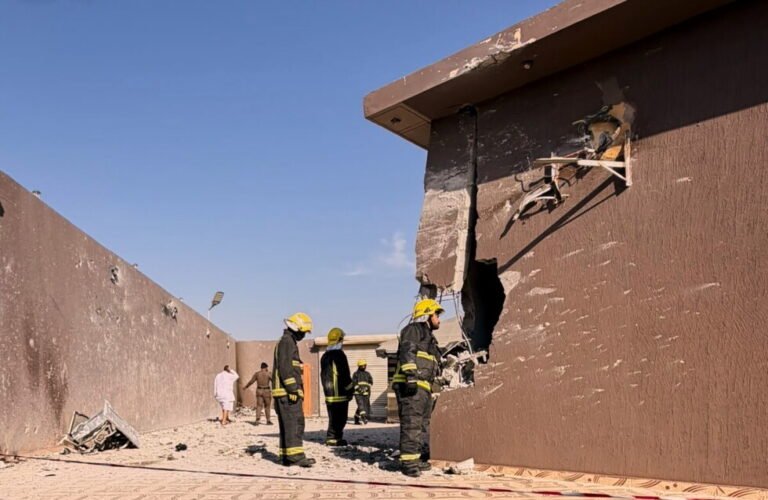
The backdrop was a world on edge. The 2026 Iran war, triggered by US and Israeli strikes on Iranian military infrastructure beginning in late February, had pushed the Middle East to a precipice not seen in decades. The Strait of Hormuz, the jugular vein of global energy supply, was blocked. Iran had accumulated a significant enriched uranium stockpile.
The two sides, Washington and Tehran, were separated not just by distance but by half a century of mutual distrust and zero diplomatic contact. Into this volatile vacuum stepped Pakistan.
Pakistan emerged as an unexpected mediator in the conflict, offering to bring Washington and Tehran to the negotiating table. Islamabad stepped into the role because it maintained relatively good ties with both capitals and had much at stake in seeing the war resolved. This was not accidental. It was the product of years of careful, principled diplomacy, relationship building, and strategic positioning that had quietly transformed Pakistan’s image on the world stage.
A diplomatic outcast just a year prior, Pakistan became a trusted regional partner and mediator between the US and Iran, a remarkable transformation driven significantly by Field Marshal Asim Munir. The journey from pariah to peacemaker did not happen overnight. It required cultivating trust at the highest levels. Pakistan formally nominated President Trump for the Nobel Peace Prize following his role in the India Pakistan ceasefire, which resonated deeply with the US president. Field Marshal Munir was subsequently invited to a private White House lunch and later to the Oval Office alongside Prime Minister Shehbaz Sharif to discuss investment in Pakistan’s critical minerals sector. These were not ceremonial visits; they were the building blocks of an indispensable strategic partnership.
Senior Pakistani leadership maintained active contact with both capitals during the crisis. Prime Minister Shehbaz Sharif held talks with Iranian President Masoud Pezeshkian, stressing the need for de escalation and a return to dialogue. Meanwhile, Field Marshal Munir was in direct communication with President Trump around the time the US announced its decision to defer strikes. That decision to defer strikes was itself no small matter; it was a breathing space that Pakistan helped create.
The Islamabad Talks were held on 11 and 12 April 2026 at the Islamabad Serena Hotel, aimed at stabilizing the ceasefire and negotiating a potential resolution to the conflict. Pakistan played a central role in brokering the ceasefire and facilitating the talks, moderating a process that involved three rounds of negotiations, the first indirect, and the second and third direct. The talks lasted 21 hours, with both sides reporting progress on key points, though core issues remained unresolved at the time.
Yet the measure of diplomacy is not always the immediate result; it is whether the table remains standing. Though the initial negotiations ended without a deal, Pakistan drew extensive international attention and praise for its efforts. With the truce expiring, Islamabad worked actively to help create conditions for a second round of talks. Field Marshal Munir traveled to Tehran, and Prime Minister Sharif visited Qatar, Saudi Arabia, and Turkey. This diplomatic shuttle, tireless, purposeful, and grounded in genuine relationships, kept the door from closing permanently.
Pakistan not only organized the first ever high level direct contact between Washington and Tehran in over five decades, but also managed a ceasefire in Lebanon. That alone is a historic achievement by any measure. The Islamabad Declaration, as it came to be known informally, carries Pakistan’s name not merely as a host city but as recognition of the country’s indispensable role in making dialogue possible when dialogue seemed impossible.
As one analyst noted, Pakistan has achieved a feat comparable to its role in the 1970s, when it served as a bridge between East and West by facilitating rapprochement between the United States and China. Then, as now, Pakistan demonstrated that a nation does not need to be a superpower to shape the course of history. It needs vision, credibility, and the courage to act as a bridge when others build walls.
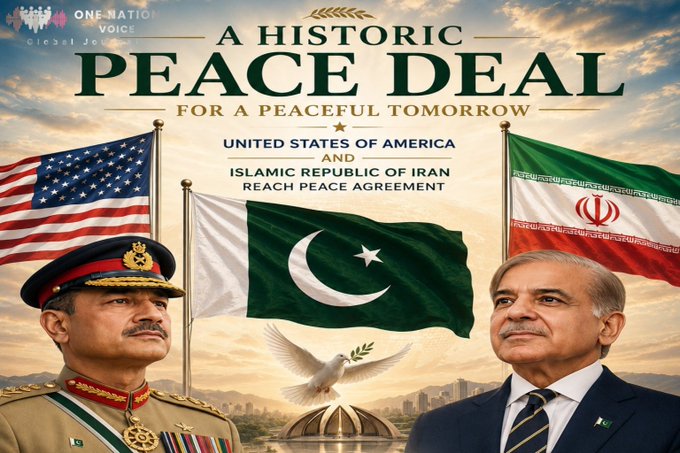
By mid June 2026, Pakistan’s Prime Minister announced that the text of the peace deal had been reached, a milestone that the world received with cautious but real hope. The agreement, still being finalized, represents the culmination of months of Pakistani diplomatic engagement that held the process together at every critical juncture.
Credit, as it should, is being widely acknowledged.
Trump publicly thanked Prime Minister Sharif and Field Marshal Munir, calling him “my favourite Field Marshal,” for their efforts in advancing the peace process, effectively acknowledging Pakistan’s central role in Middle Eastern diplomacy.
Pakistan’s emergence as a global peacemaker is more than a diplomatic success story; it is a statement about what this nation stands for. It is a testament to the belief that principled engagement, sustained effort, and the willingness to stand in the middle of history’s most dangerous moments can make a difference. The Islamabad Talks will be remembered not just as a chapter in the history of US Iran relations, but as the moment Pakistan reclaimed its rightful place as a responsible, respected, and indispensable voice for peace in the world.
The world was watching. Pakistan delivered.
Disclaimer:
The views and opinions expressed in this article are exclusively those of the author and do not reflect the official stance, policies, or perspectives of the Platform.

