


National Youth Summit Gwadar 2026
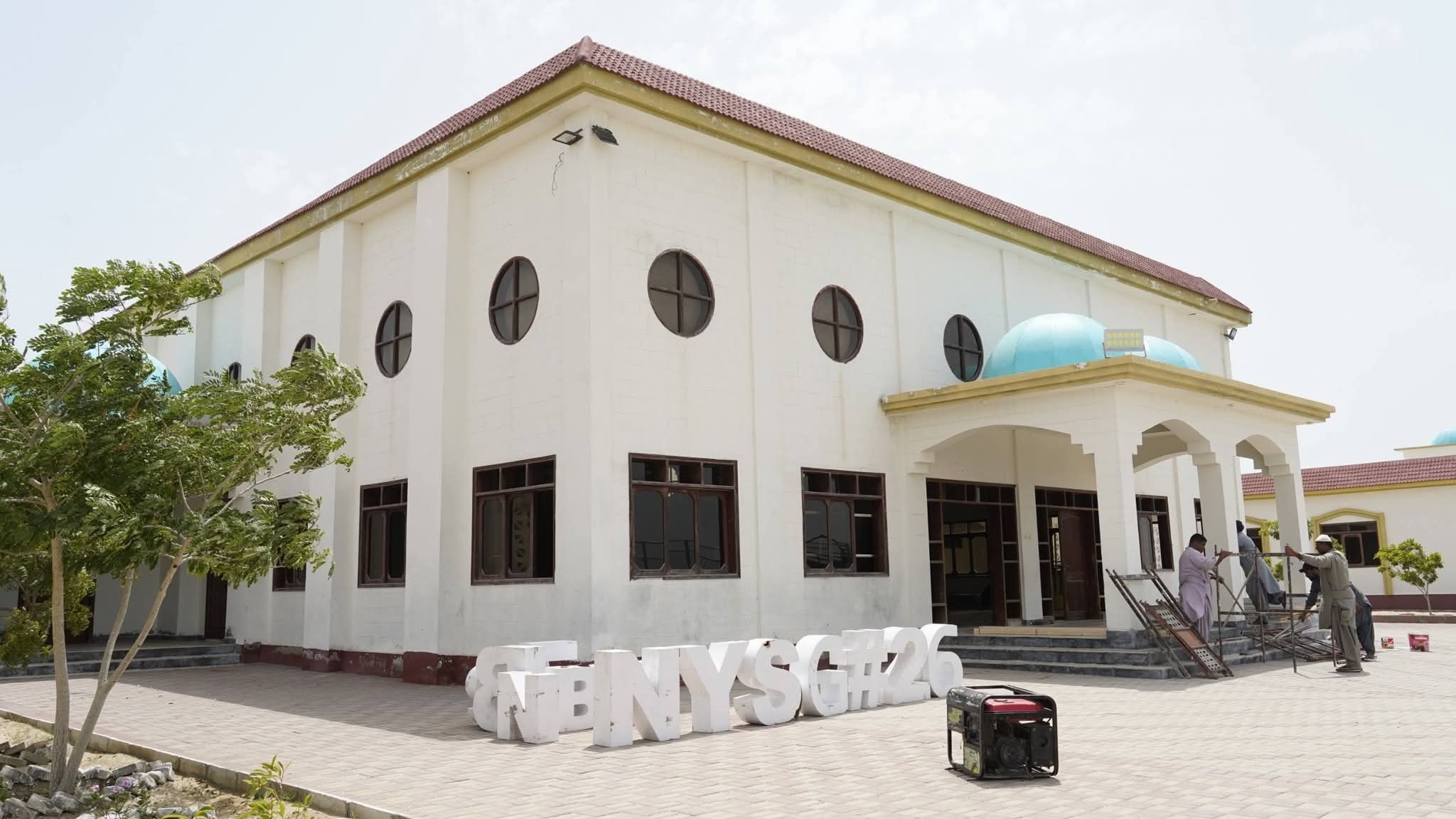
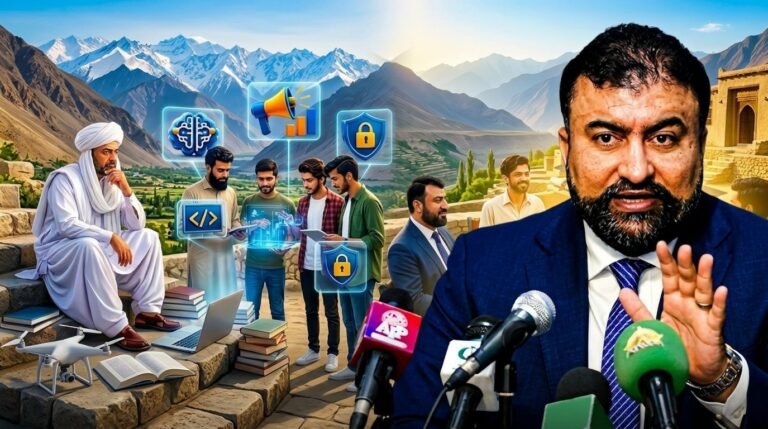
Gwadar has once again become more than a city on the map; it has become a national argument about what kind of Pakistan is still possible. The closing ceremony of the National Youth Summit and the broader visibility created by the Gwadar Youth Summit 2026 mattered because they shifted the conversation away from despair and toward agency. When young people from across the country gather in Balochistan to debate ideas, present solutions, and talk about leadership, the symbolism is powerful. When Chief Minister Mir Sarfraz Bugti appears at such a forum and speaks directly to youth, the symbolism becomes political: the state is saying it wants to be heard, but also wants to listen.
Yet the real importance of this summit lies beyond ceremony. Pakistan is not a country that can afford to treat youth engagement as event management. It is a country whose future is numerically, socially, and politically tied to its young population. According to UNDP’s work on a young Pakistan, 64 percent of the country is younger than 30, while the UNFPA Pakistan Population 2025 dashboard places the total population at 255.2 million. In other words, youth are not a side story in Pakistan; they are the main story. That is why a summit in Gwadar should not be read as a public-relations success alone, but as a test of whether the country is finally ready to align its politics, education, and economy with demographic reality.
Youth Power Needs Policy, Not Applause
This is where the harder truth begins. Pakistan’s youth are energetic, patriotic, and ambitious, but energy without opportunity curdles into frustration. The latest ILOSTAT Pakistan profile shows a 2025 youth NEET rate of 29.3 percent, while Pakistan’s overall unemployment rate is listed at 7.1 percent; the World Bank’s indicators on youth unemployment and NEET reinforce the same policy concern. Meanwhile, data on the PBS portal shows literacy at 63 percent and internet usage at 57 percent in the 2024-25 HIES. These are not just statistics. They describe a generation that is connected enough to compare itself with the world, but not yet supported enough to compete with it.
The contradiction is even sharper in Balochistan. Pakistan’s telecom story looks impressive on paper: the PTA Annual Report says the country has crossed 150 million broadband connections, telecom coverage above 92 percent, and broadband penetration above 60 percent. But education remains the real bottleneck. A recent World Bank out-of-school publication says as many as 25 million Pakistani children aged 5 to 16 are out of school. The PSLM record and Census 2023 Balochistan tables show why this matters locally: Balochistan’s literacy rate for the 15-24 age group is 45.33 percent, far below where a province at the heart of national strategy should be.
Why Gwadar Is More Than a Port
That is why Gwadar matters. It is not only a maritime location; it is a referendum on whether development in Pakistan can become inclusive rather than extractive. The CPEC official website and a recent CPEC review meeting note that 43 projects worth about $25 billion have been completed and nearly 9,000 megawatts have been added to the national grid. These are serious achievements. But the next question is even more serious: how much of that momentum is reaching local youth in the form of training, hiring, scholarships, entrepreneurship, and civic confidence? Institutions such as the Gwadar Port Authority and the Gwadar Development Authority cannot become meaningful to ordinary families unless they are linked to visible ladders of opportunity.
Gwadar also now has physical infrastructure that can support a new development story. The Gwadar International Airport was inaugurated in October 2024, and the Pakistan Airports Authority now has a platform to build the connectivity that the city has long needed. But airports and ports do not create social legitimacy on their own. Roads can move cargo, but they cannot automatically move a young graduate from hope to employment. That requires policy discipline: maritime and logistics institutes, local internship quotas, fisheries modernization, tourism skills, digital freelancing hubs, and merit-based recruitment that is visible enough to be trusted. If Gwadar’s youth only watch development happen around them, then development will remain fragile.
Peace Is an Economic Strategy Too
The other reason the summit resonated is that it unfolded against a wider national desire for stability. Recent Islamabad negotiations and reporting on Pakistan as a mediator suggest that Islamabad is increasingly being seen as a venue for dialogue rather than only a reaction. That matters for Gwadar too. Investors do not separate peace from economics, and young citizens do not separate dignity from security. A country that wants innovation in Gwadar must also want de-escalation in Islamabad. In that sense, the youth summit and the peace diplomacy are not separate stories. They are two parts of the same national message: conversation is stronger than chaos, and stability is the first condition of opportunity.
National Youth Summit 2026 should be remembered not for slogans, but for standards. If the state is serious, it should publish one-year targets for youth scholarships in Balochistan, district-level skills programs, women’s participation, startup financing, apprenticeships linked to Gwadar’s economy, and public scorecards on merit recruitment. Pakistan does not need more speeches about youth being the future. It needs proof that youth are part of the present. Gwadar has already given the country the right image: young faces, serious debate, national flags, and a message of peace. Now the burden shifts to policy. If peace holds and youth are trusted, Gwadar can become a door to development. If not, it will remain another promise admired from a distance.

