

Pakistan’s Push for Regional Trade Harmony
In a huge move towards promoting trade and cooperation in the region, the Government of Pakistan has decided to introduce its new visa policy whereby Afghan drivers and transporters will get one-year multiple entry visas. With an affordable fee of only 100 dollars, this policy move is daring and progressive on the part of Islamabad to be able to enhance economic and trade links with its landlocked brother, Afghanistan. Pakistan’s Push for Regional Trade Harmony The measure is more than a mere bureaucratic readjustment as it denotes the fact that Pakistan is committed to the issues of regional integration, economic interdependence and peaceful coexistence through trade way beyond the short term.
This is because of Pakistan offering better and predictable regimes of visas to Afghan transporters, showing once again that Pakistan was a responsible player in the region and cared immensely about trade connectivity and mutual prosperity. Not only does this initiative eliminates major logistical obstacles to Afghan traders but also leaves a message that is very clear: Pakistan is willing to do business with the world and is willing to deal with its neighbours in a constructive way to benefit each other economically. Trade, however, is not only economic but also diplomatic, trust establishing and strategic thinking.
The history of Afghanistan is characterized by the heavy reliance on Pakistan to have a passage to the sea trade through Karachi and Gwadar ports. The overland route to Pakistan will continue to be critical to exports and imports by Afghanistan especially that the country is rugged in nature and has limited access to other markets. Laborious and unpredictable visa and border-crossing rules have been long allegedly named by Afghanistan traders as significant barriers to effective trade. The new visa policy in Pakistan resolves these issues as it brings certainty and fewer delays as well as an increased level of confidence between both parties on each side of the Durand Line.
Such shift should be viewed in a larger context of economic interdependence in the region. Pakistan does not merely see itself as a conduit to the region but also as a facilitator of connectivity in the region. The visa program is well-coordinated with other frameworks, such as, the Central Asia Regional Economic Cooperation (CAREC) Program, the Economic Cooperation Organization (ECO) and developing China-Central Asia connectivity highways. The purpose of these platforms is to minimize the trade barriers, harmonise the customs procedures and allow good and service to flow freely across the borders. The creation of a favourable environment in which Afghan transporters are no longer hindered in their activities within Pakistan is what will set the stage of an even greater integration of this country with the Central and South Asian economic environment.
Further, this policy portrays an honest and realistic pursuit by Pakistan to create a goodwill with Afghanistan people through their economic involvement. In the era when the world tends to be obsessively focused on the political turmoil in various countries or a humanitarian catastrophe, Pakistan has demonstrated a down-to-earth and compassionate approach. It sends the right message that despite the security and legal realities, which include deportation of the undocumented persons, the fundamental good will by Pakistan towards the people of Afghanistan has not been wavered. The legal framework that forms the basis of deportation should not impose itself and misrepresent the importance of this step towards facilitating trade.
The strategy also supports the significance of the people-to-people relationships, particular about the border zones where family and community network is usually used to carry trade between the peoples on either side of the border. Beyond the lore of the village to offer an organic kind of diplomacy, the kind that flourishes on mutual advantage and an informal knowledge base, cross-border kinship and trade have done so over decades. Through institutionalized peace with formal and easy access through predictable visa regimes, Pakistan is merely introducing the norm of sustainability to a region that is not quite used to it.
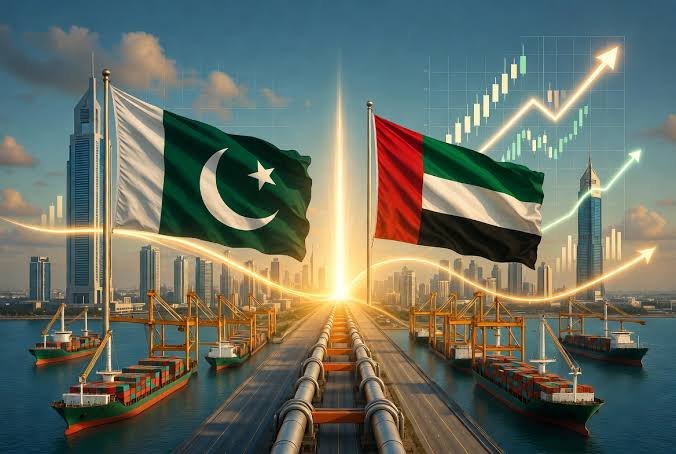
This is not the only significance of this move. True, Pakistan is on its road to solidify its reputation as a trade and transit hub as it naturally finds itself in a position to reap the rewards of pan-continental projects like the Belt and Road Initiative (BRI) and the China-Pakistan Economic Corridor (CPEC). In both projects Pakistan is seen as a pivotal link between Central Asia republics with abundant sources of energy and a vibrant market in South Asia. Facilitation of efficient goods movement, through the effective visa and customs clearance processes, is one of the key facilitators of this vision. The new visa policy is a strategic move to make certain that Pakistan is ingrained into the new Eurasian trading system in this sense.
Timing of this initiative is also very important. At a time when fragmentation and protectionist inclined global trade are the buzzwords, the stimulating motion of Pakistan on regional integration is a current but not so common counter-story. Rather than guarding it to seclude, Pakistan is deciding to open its borders, encouraging trade, ease of connectivity and economic diplomacy. It is a lesson that in the contemporary world, economic strength does not lie in closed societies but through smart partnership with neighbours.
The move to provide one year multiple-entry visas to the Afghan drivers and transporters will be a landmark in Pakistan regional economic policy. It reflects the maturity of Islamabad, its vision, and its determination to pursue proper and sustainable development not just of Islamabad but overall, of the region. When trade routes come to life and economic connections are strengthened, it will be recalled that it is through Pakistan that a new era of regional cooperation has been facilitated. With this initiative, Pakistan has not only facilitated business but also added new hopes of a closer connected, prosperous and peaceable South and Central Asia.

